
FOR THE FIRST TIME EVER IN OUR 16 YEAR HISTORY WE ARE ABLE TO HAVE 2 EXHIBITIONS OPEN SIMULTANEOUSLY IN OUR OWN SPACE- LOOKING AT YOU, CURATED BY JAN PIETER VAN VOORST VAN BEEST AND OF HOME AND PLACE CURATED BY OUR DIRECTOR DENISE FROEHLICH. THIS WOULD NOT HAVE BEEN POSSIBLE WITHOUT YOUR SUPPORT. THANK YOU ALL FOR MAKING THIS HAPPEN AND PLEASE COME ENJOY THE FRIUTS OF YOUR GENEROSITY.
Of Home & Place
A JAMES R. SALOMON MEMORIAL PHOTOGRAPHY EXHIBIT
With an original composition by contemporary composer Barry Morse
June 5 - August 1, 2026
Talks: Friday, June 26 + Friday July 24, 5-8m
THE LATEST PORTLAND PRESS HERALD ARTICLE ON MMPA
Home is not merely a structure; it is a fabric woven from the landscapes we inhabit and the roots we decide to put down. My own path- shaped by the tidal marshes of Connecticut and the rugged permanence of Maine - has been a lifelong study of place-making. From designing spaces to managing properties, I have always looked for the point where conservation, stewardship and personal history converge. conservation, longing, nostalgia, alter ego, experience of place, the subconsciencius experience, time, peace+war, domesticated animals, the romanticism of the woods, echo and syphoning through experience, mans relationship to lanscape, site specificity, home as theatre, inheritance, designing the landscape, time before the abyss, and the moon are just some of the topics covered in this exhibition.
Of Home and Place is born from this shared language of looking. It is presented in the memory of James R. Salomon (1963 -2024), a distinguished photographer whose thirty - year career was defined by a sensitive eye for the intersection of architecture and light. A graduate of the School of Visual Arts, Jamie possessed a rare ability to capture the soul of a home. Whether photographing major magazines or documenting the Maine woods and waters he loved, his work was always and act of deep observation.
The artists gathered here join Jamie and me in a vital inquiry: What does it mean to belong to a place or have a home? We are proudly grateful to the Salomon family for their generous sponsorship of this exhibition. It is an honor to celebrate Jamie’s legacy through a dialogue that invites us all to consider where we are rooted, and why it matters. —Denise Froehlich, Dir. MMPA
Jon Pelletier
Todd Watts
Kelly Anderson Staley
Jeffery C. Becton
James Mullen
Cole Caswell
Lin Lisberger
Jodi Colella
Gary Green
Barry Morse
justin Kirchoff
Chris Schiavo
jim Nickelson
Suzanne Theodora White
Jean Noon
Eugene Cole
Emily Belz
Megan Jones
Joan Fitzsimmons
Thank you to the applicants of this exhibition. The work sent to us was so extraordinary that we realized immediately the idea of home and place is a poignant and timely topic in our culture. We have decided to open our new location with the reception and exhibition—A celebration of MMPA’s new home too! Please forgive us for the delays and have patience with us while we finalize our arrangements. Please join our mailing list for updates.
Todd Watts
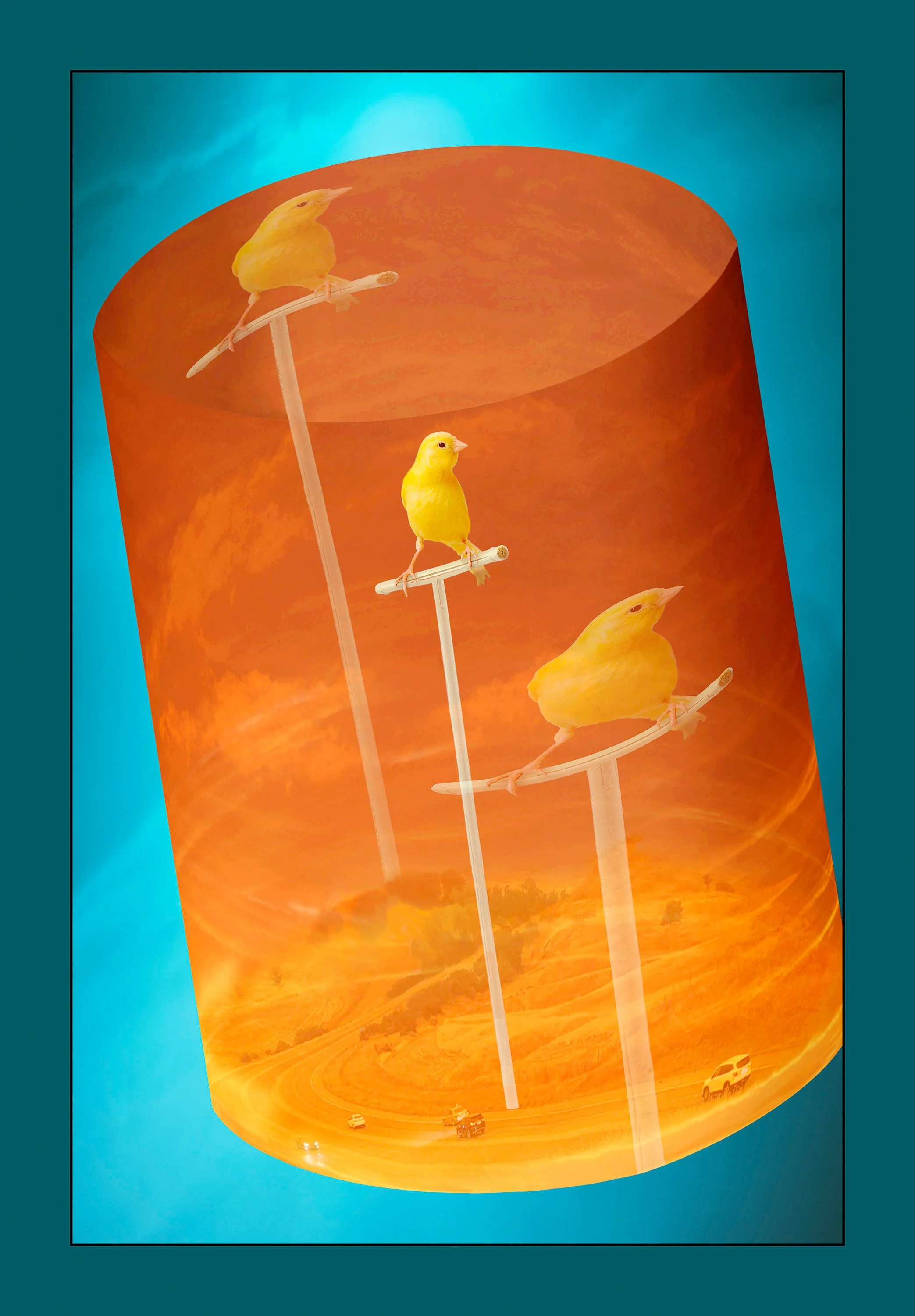
Todd Watts, Canary, 1/5, 2025, Inkjet print, 66 x 46 inches, $12,000
I make photographs. It is said that a photograph captures a moment in time, an event perhaps. That may be, but the source of this notion originates from the mechanical manifestations of cameras, lenses, and film. People do not capture moments of time. How would we do that? Our personal experience of time is fluid. The events in our lives do not hold still.
My pictures do not capture moments. They are photographs, but they do not depict particular events. Grace Hartigan put it this way, “One of the most difficult things of all, is not to have the painting be a depiction of the event but the event itself.” Her words are a well known mantra of contemporary art. But we don’t need to know the histories surrounding a picture to add it to our personal history. In every way, art and life are inseparable. At the beginning of each day, I can speculate but cannot know what will happen. An unexpected conversation may completely alter my assumptions or the lack of an ingredient may impact my dinner plans. It is the same when I make art.
When I make my pictures I speak to them, often out loud, and they whisper back. The work is completed when, as in any conversation, the subject changes. The conversation remains encapsulated only in the work, to be continued by myself or by anyone else. After lunch, perhaps, or during a long flight to Paris, or right now. – T.W.
Todd Watts is an artist / photographer. Born In New York in 1949, he received a scholarship to study at Pratt Institute in 1961. He then attended the High School of Music and Art in New York, and graduated from the School of Visual Arts in 1971. He became an adjunct professor of photography at The School of Visual Arts and at Hunter College, lecturing at New York University, and the New School for Social Research in New York, from 1973 to 1980. He is the founder of RadioRain publishing, producing and printing fine artworks in photography. He is also the director of the Abbott Watts Photography Residency in Monson Maine. His artwork has been exhibited and collected internationally.
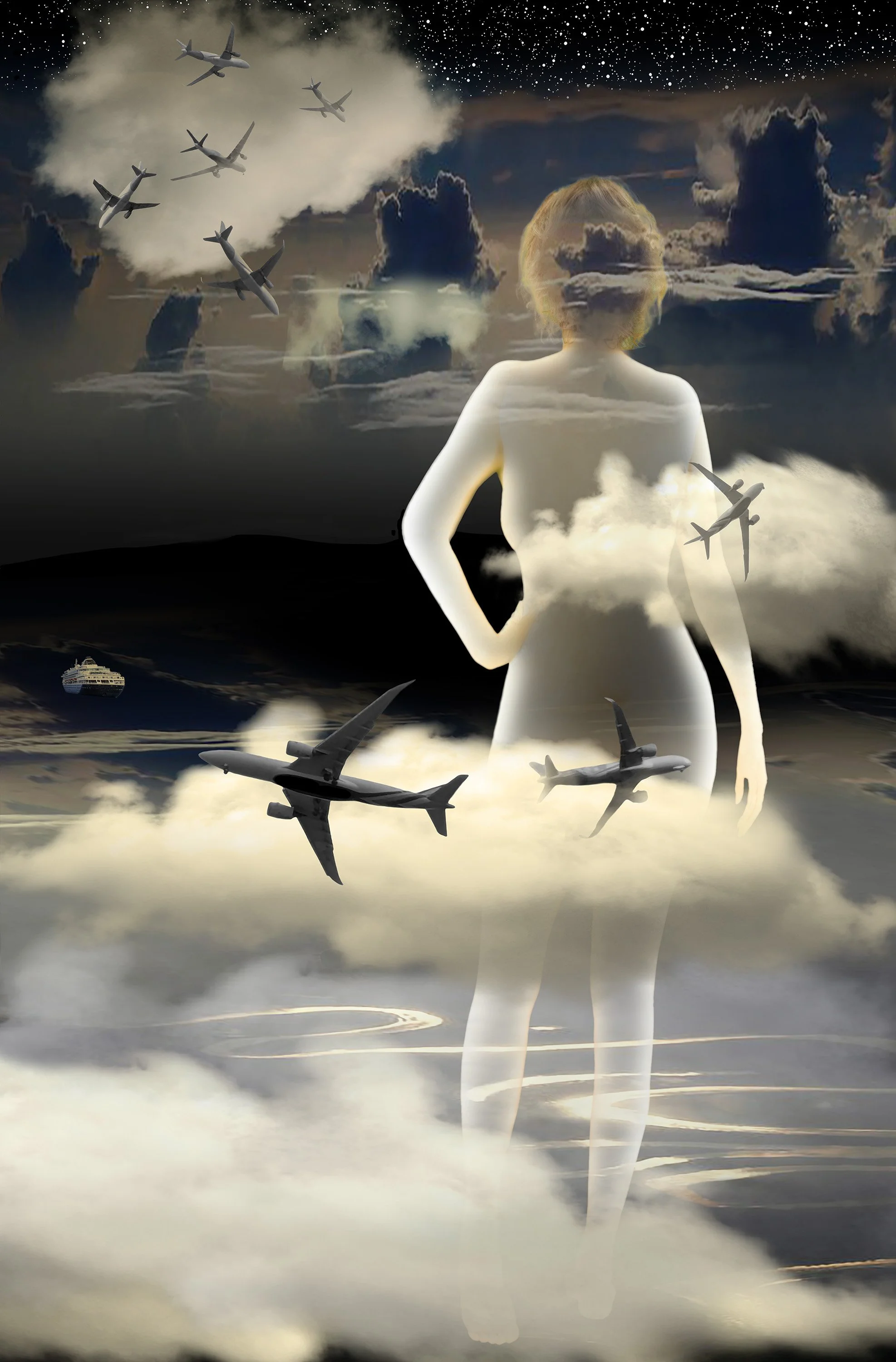
Todd Watts, Longing, 1/5, 2026, Inkjet print, 66 x 46 inches, $12,000
Gary Green
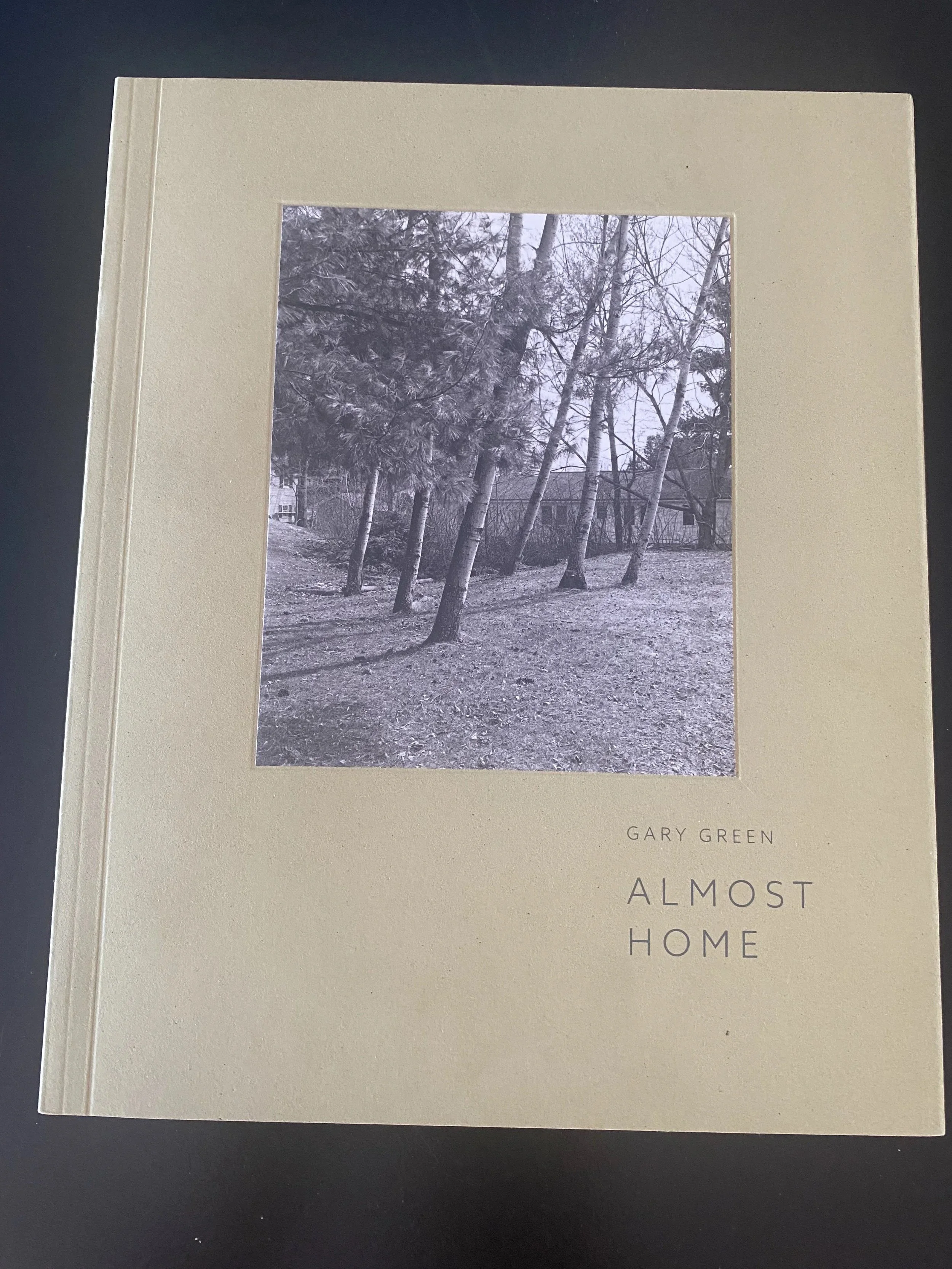
Gary Green, Almost Home, L'Artiere, 2025, Tritone-Printed Volume, 80 pages, 8.27 x 0.3 x 10.32 inches, $40
Through the lens of his camera, Green frames “wounded landscapes” — dilapidated structures, abandoned storefronts, and silent, crumbling environments — all imbued with a sense of history in dialogue with nature. Despite the desolation, hints of hope shine through: a shaft of light across a backyard lawn or the delicate texture of sun-drenched brick and concrete. These moments transform the banal into something quietly beautiful and deeply human.
Almost Home isn’t a nostalgic lament for what has been lost, but a subtle meditation on intersection: between past and present, man-made and natural, decline and grace. Gary Green’s photography invites us to linger, observe, and find meaning in the spaces we often overlook.
Sense of place is the sixth sense, an internal compass and map made by memory and spacial perception together. The desire to go home that is a desire to be whole, to know where you are, to be the point of intersection of all the lines drawn through all the stars, to be the constellation-maker and the center of the world, that center called love. To awaken from sleep, to rest from awakening, to tame the animal, to let the soul go wild, to shelter in darkness and blaze with light, to cease to speak and be perfectly understood. - Rebecca Solnit
Megan Jones
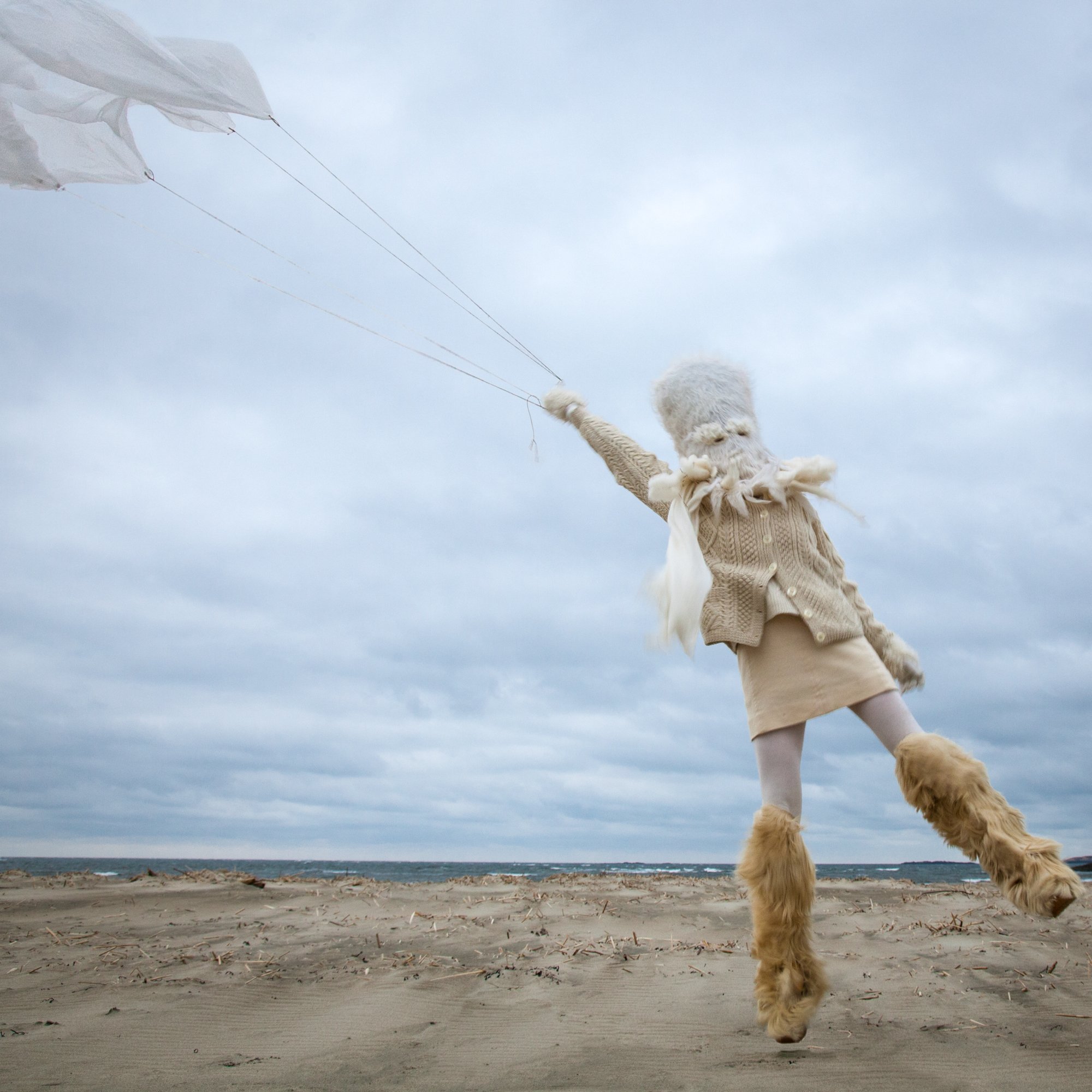
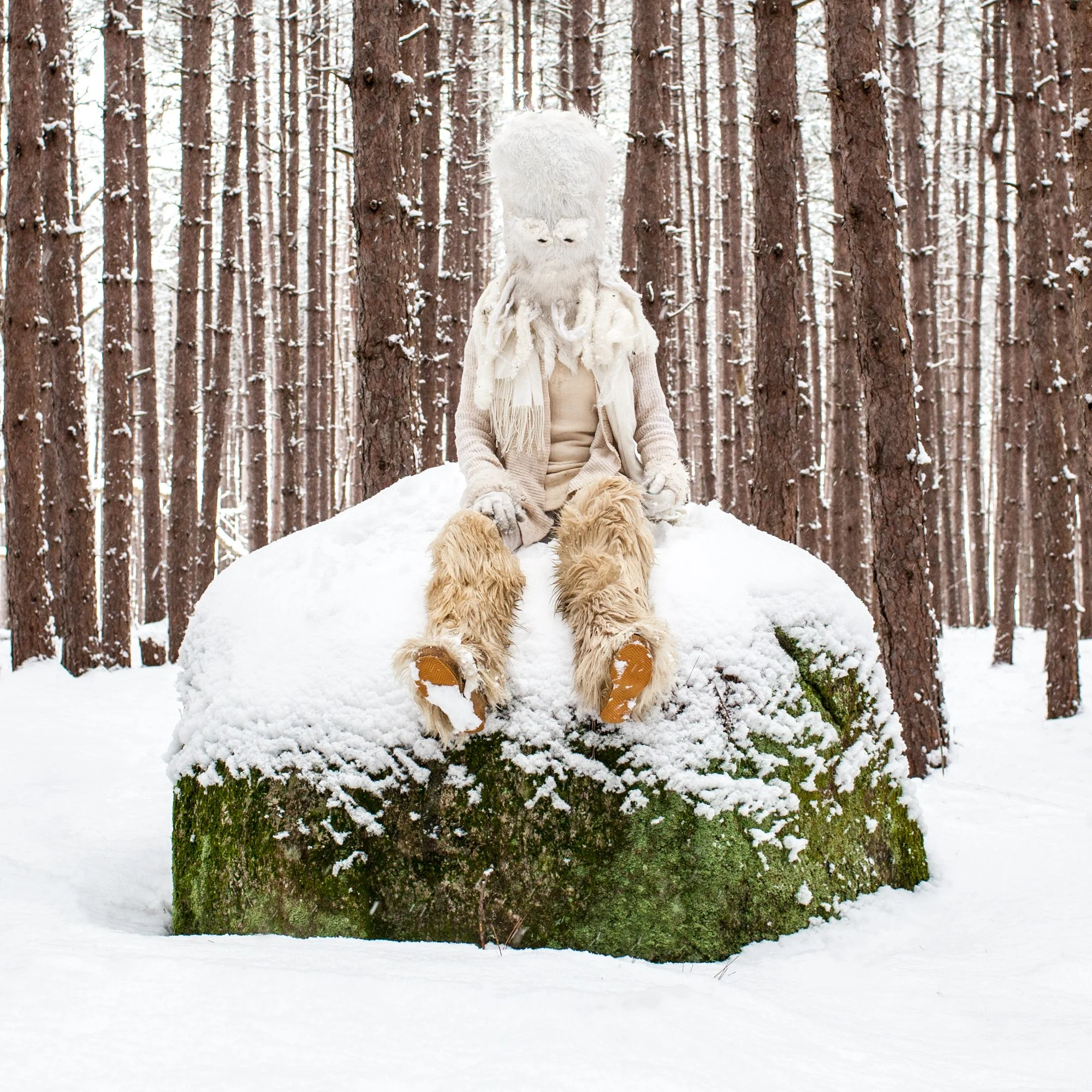
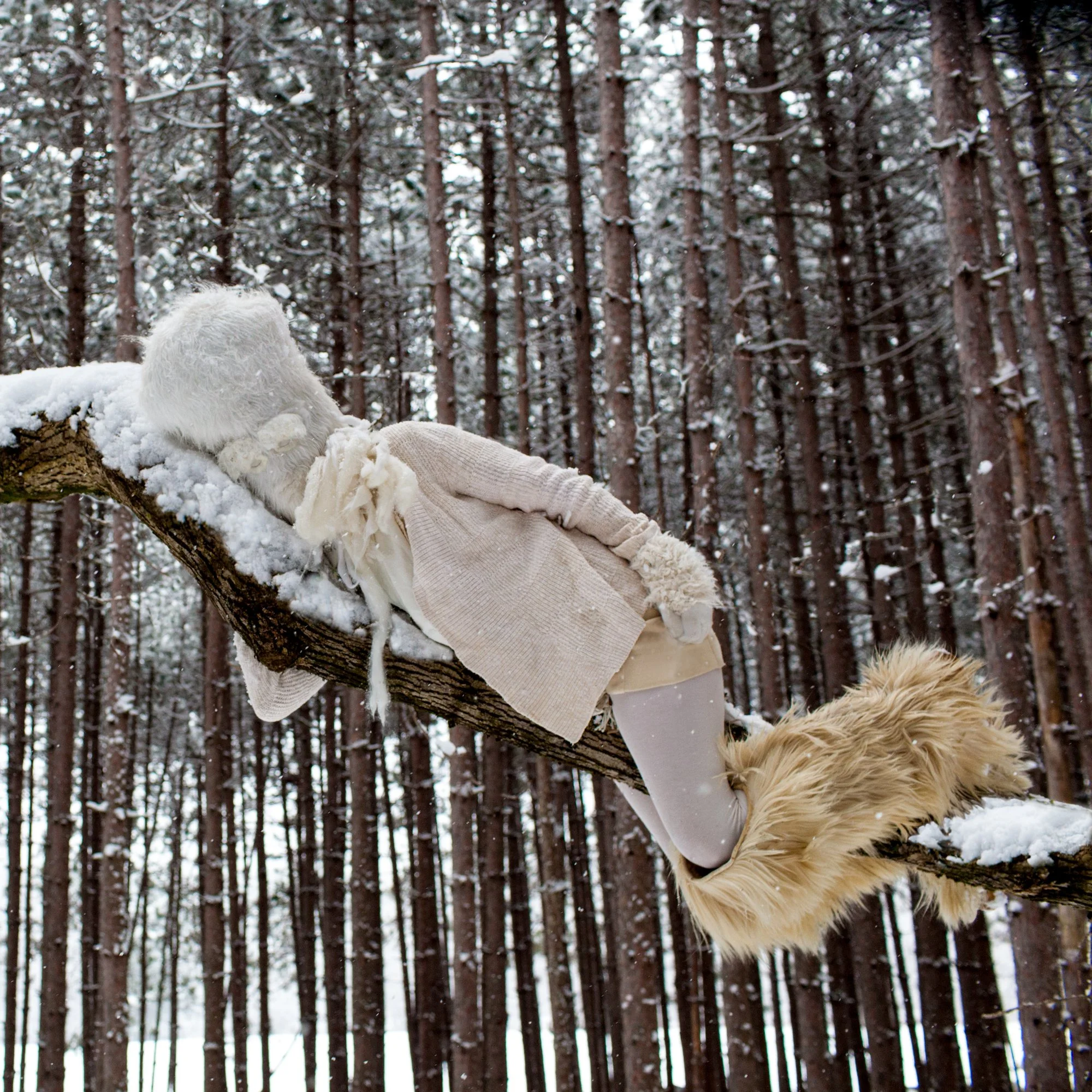
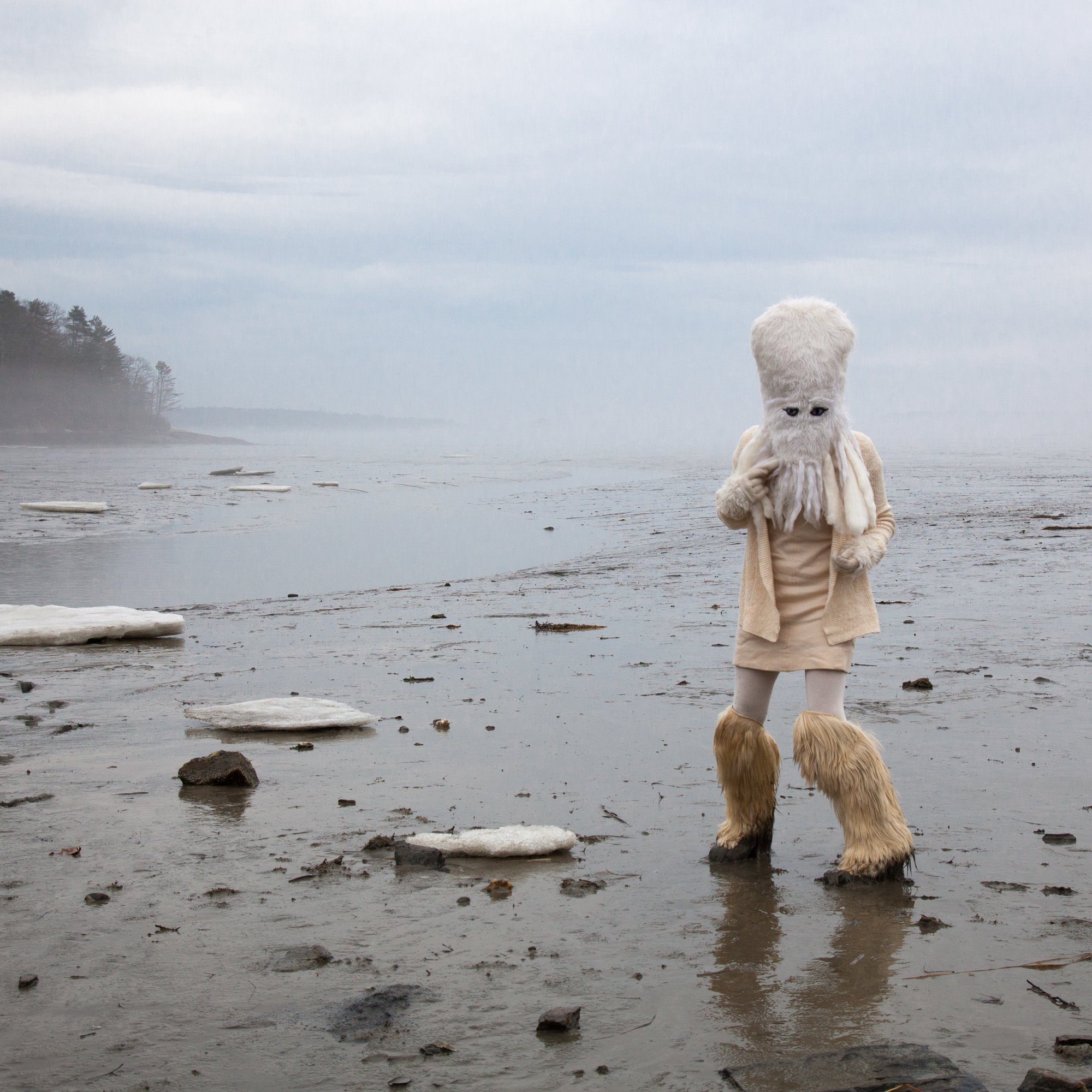
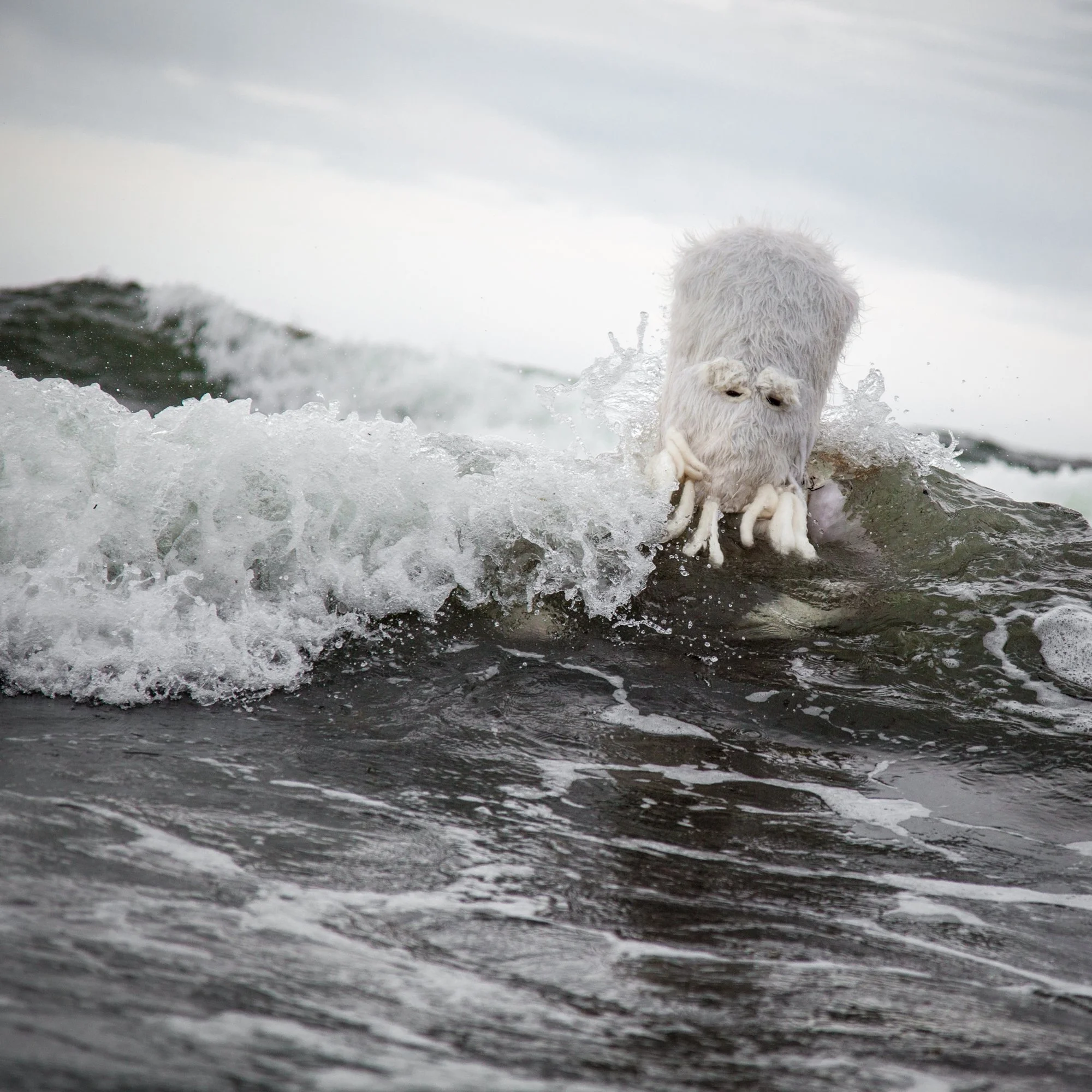
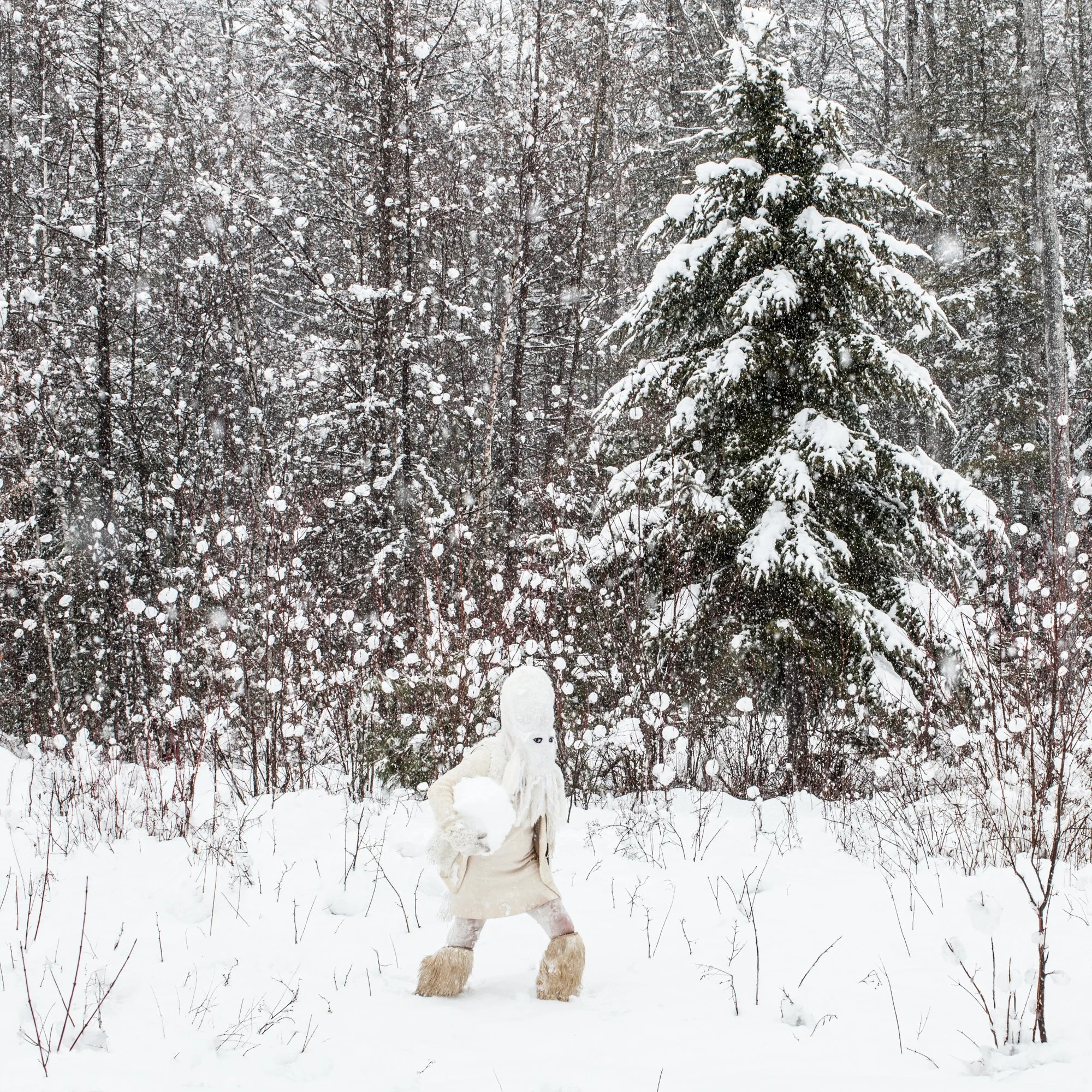
The Yeti series is a collection of self-portraits in which Megan inhabits her whimsical and unpredictable alter ego, Yeti. Through this imaginative creature, she explores themes of identity, wildness, and solitude, set in the cold, wintry landscapes of Maine. Yeti is mysterious, elusive, often naughty and mischievous, sometimes playful, precarious, and usually in trouble. Blizzards bring out the beast in her. The series invites viewers to wonder where myths and legends originate and to find humor in the unexpected.
Raised in a big family in rural Maine, Megan began photographing at age 12. She has worked for the past 20 years as both a fine art and commercial photographer. Collecting images and capturing moments, she photographs with an eye for beauty and mystery.
Lin Lisberger
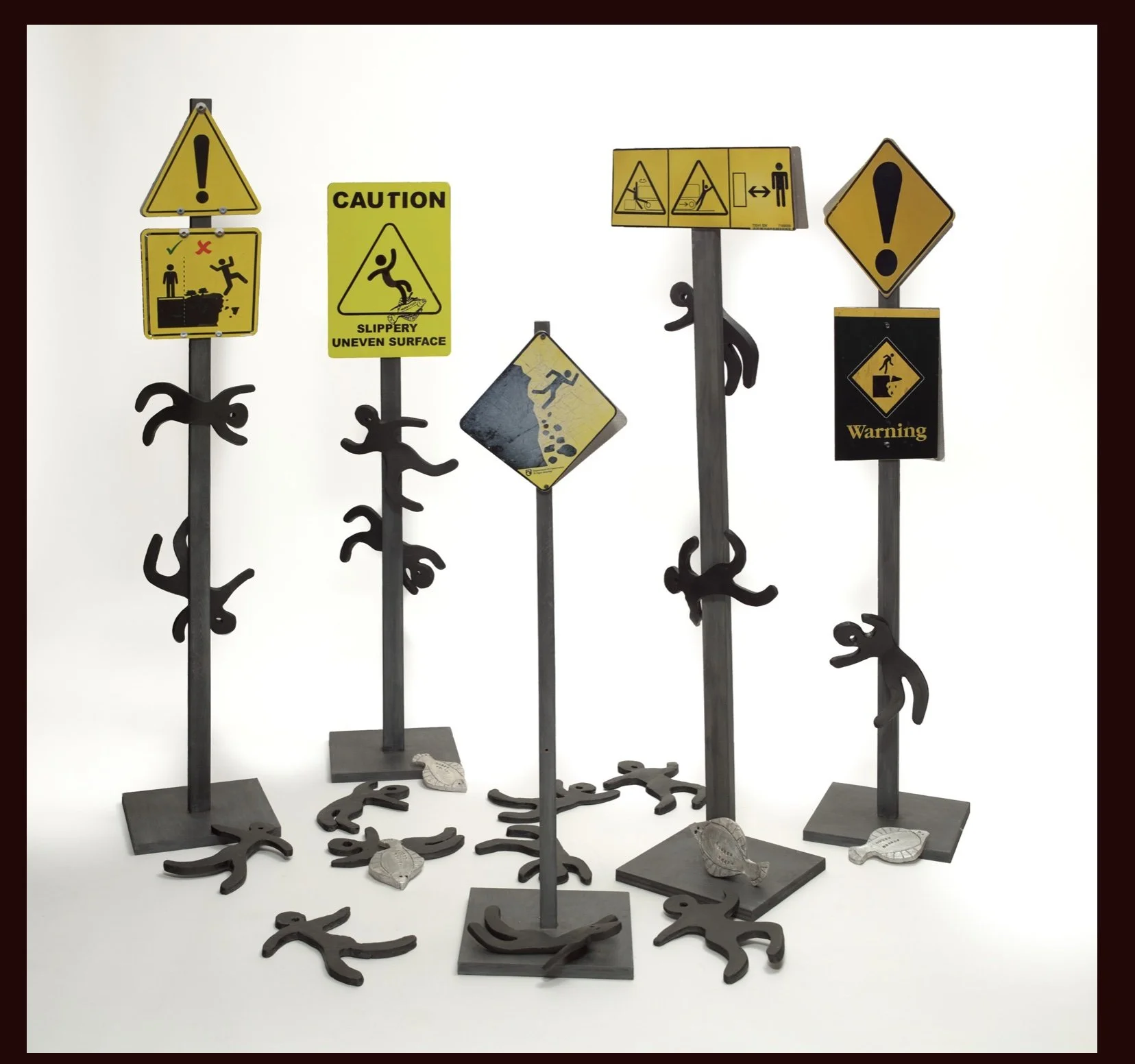
Lin Lisberger, Warning!, 2025, Photographs, Wood, Clay, Paint, 52 x 60 x 36 inches, $1,200
20 Walks is a series of sculptures that began in 2019 about memories of several walks in many places around the world. Each piece captures a sense of place along with the memory of a particular personal moment or sight. 2025 Warning! is a response to walk signage on a Tasmainian trek that took place just as the US government was changing in a fearful way
Lin Lisberger has been a sculptor and wood carver since the 1970s. She taught sculpture, drawing, and design in the University of Southern Maine Art Department from 1981 until retirement in 2017. She lives and has a studio in Portland, Maine. Lisberger’s attention to form has been consistent, describing both object and space, and thus creating a foundation upon which an abstract narrative can be built. 2025 Warning! is from her 20+ Walks series, and is layered with many different narratives, physical, emotional, and political.
Jeffery Becton
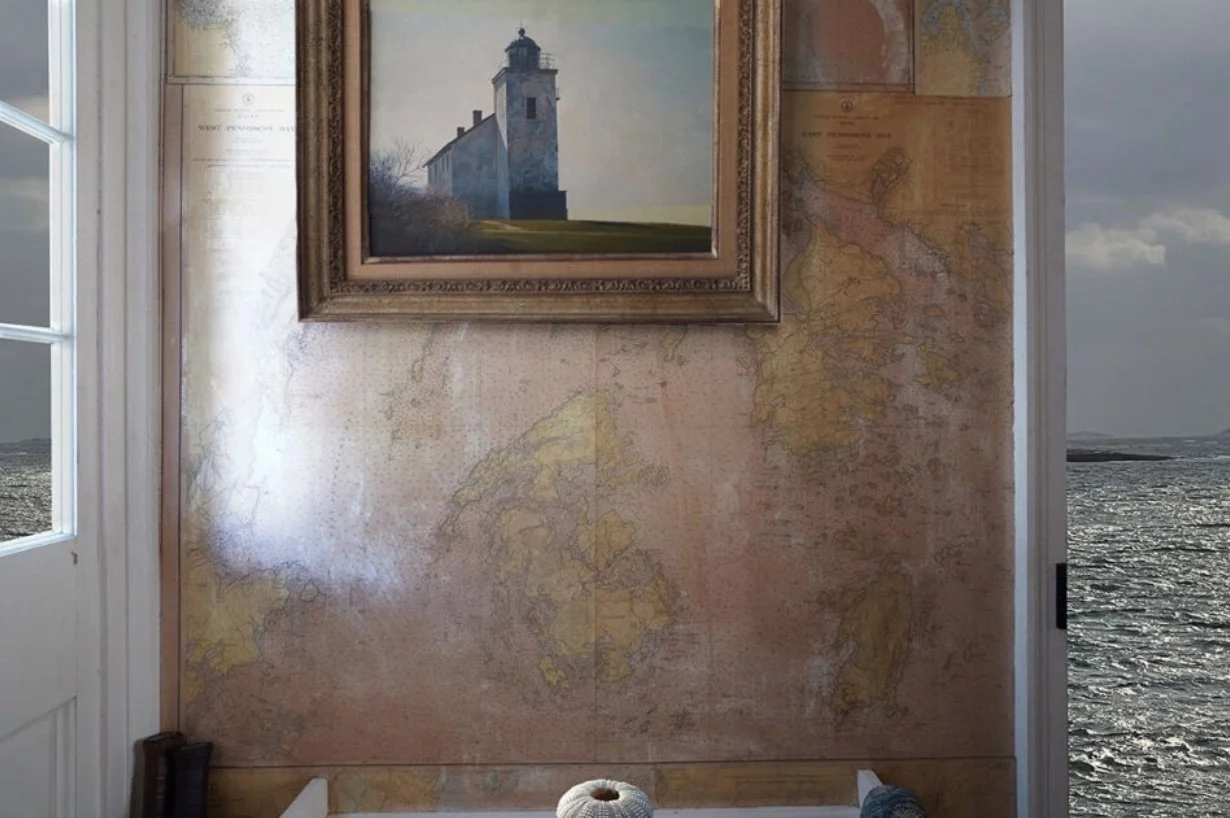
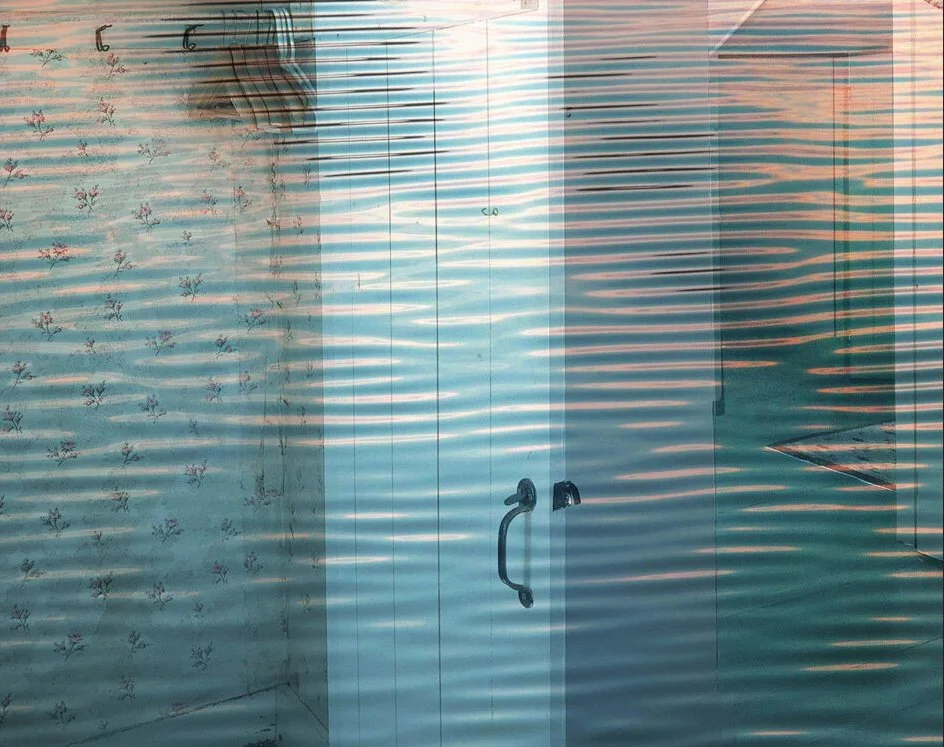
Since 1990 I have worked in the medium of digital montage — Combining primarily elements of photography as well as painting, drawing, and scanned materials. The techniques I use foster and give form to intriguing ambiguities, reexamining the boundaries of mixed media and creating altered realities that merge into images rich in symbolism both personal and archetypal. It is not my intention to school the viewer or place before them a fully resolved work that is clear in message, but rather to invite or draw them into an emotional connection, a recognition and unfolding of their own inner experience and understanding. Something akin to finding a unique feeling or emotion that is truly their own. That is the completion of the work. - JB
One of the pioneers of the digital revolution, Jeffery Becton is a visual artist who has lived and maintained a studio in Deer Isle Maine since 1977. He received formal training at the Yale School of Art earning an MFA in graphic design in 1976.
As a full time resident of Maine, Becton is a member of a family with roots there since the 1700s. As an islander, Becton is especially drawn to the ocean, finding meaning and inspiration in its challenging and mercurial presence, the embodiment of the beauty and harshness of life and proximity of death. With material drawn from his natural surroundings, local homes, and personal imagery, Becton also draws from a vast collection of his ongoing photography to create his compositions. The resulting images exist as a medium somewhere between photography, collage, and painting that he refers to as digital montage. He prints all of his work himself in his studio.
Keily Anderson Staley
These works are park of “exploded autobiography,” that incorporates my photographs alongside paper documents I recovered from the off-grid Maine cabin where I grew up before it was burned by its new owners. I print directly onto my source archive, forming palimpsests on which the layers challenge and erase each other, creating new associations. I walk a thin, uncomfortable line between total obliteration of the original archive and preservation — highlighting certain parts of the family history to tell the story from a self-conscious, subjective, feminist perspective. My process of making and remaking, taking apart and reassembling, define an idea of family history as an evolving story, in continual flux. Beyond its autobiographical elements, the work explores how public history and private archives intersect and how individual identities are forged in the context of broader cultural developments. - K.A.
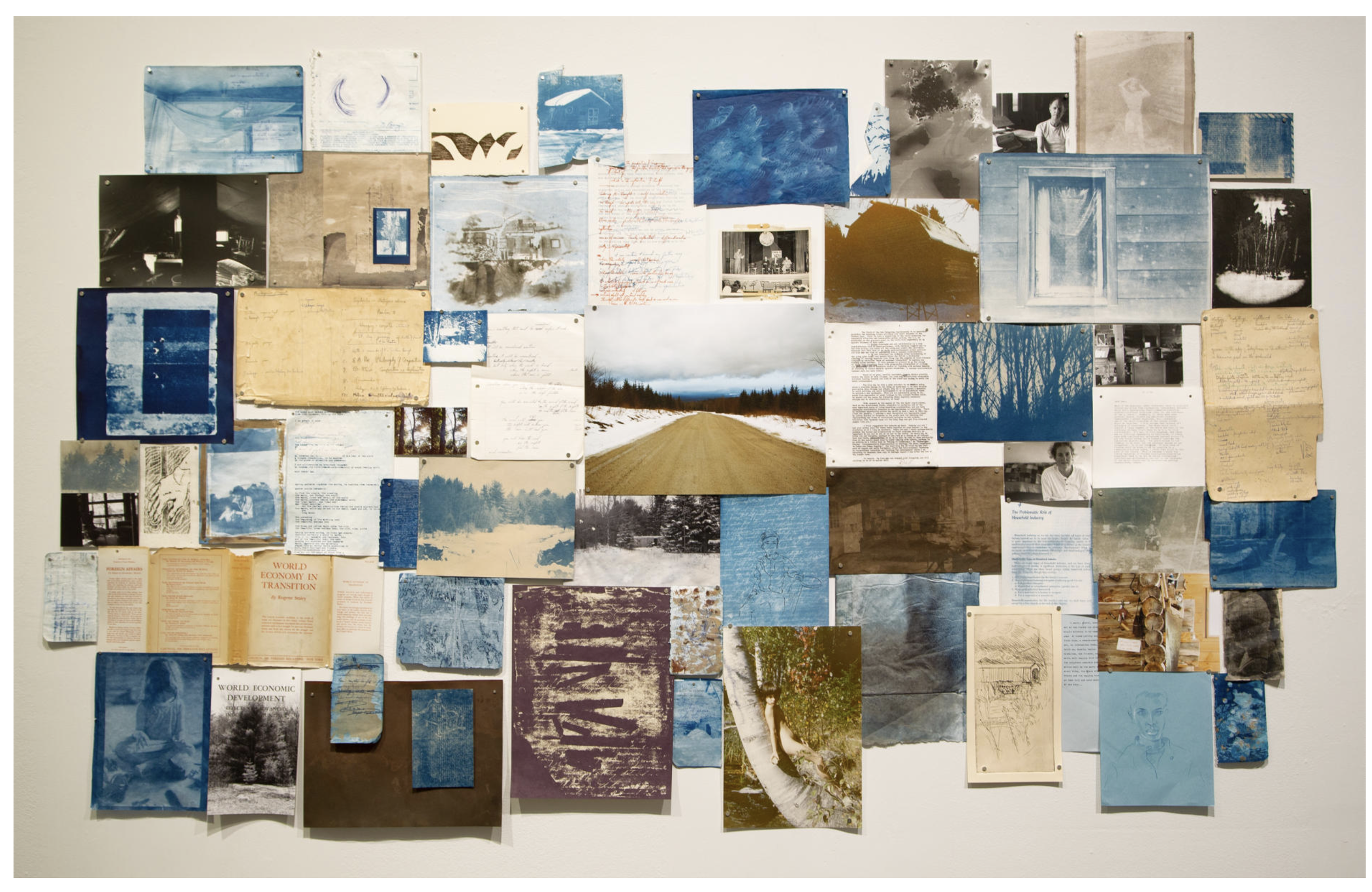
Keily Anderson Staley, Double Sun, 1/1, 2022, Inkjet Print, Silver Gelatin Photocopy Silkscreen, Cyanotype and Ink on New and Found Papers, 58 x 88 inches, $9,500
Keliy Anderson-Staley is a 2022 Guggenheim Fellow, a 2008 New York Foundation for the Arts Fellow and a 2013 George and Eliza Gardner Howard Foundation Fellow. Her work has been exhibited widely, including at Akron Art Museum, Bronx Museum of the Arts, , Cedar Rapids Museum of Art Portland Museum of Art, Smithsonian National Portrait Gallery, Southeast Museum of Photography, Shelburne Museum and Riverside Art Museum. She is Professor of Photography | Video at the School of Art, University of Houston.
Jon Pelletier
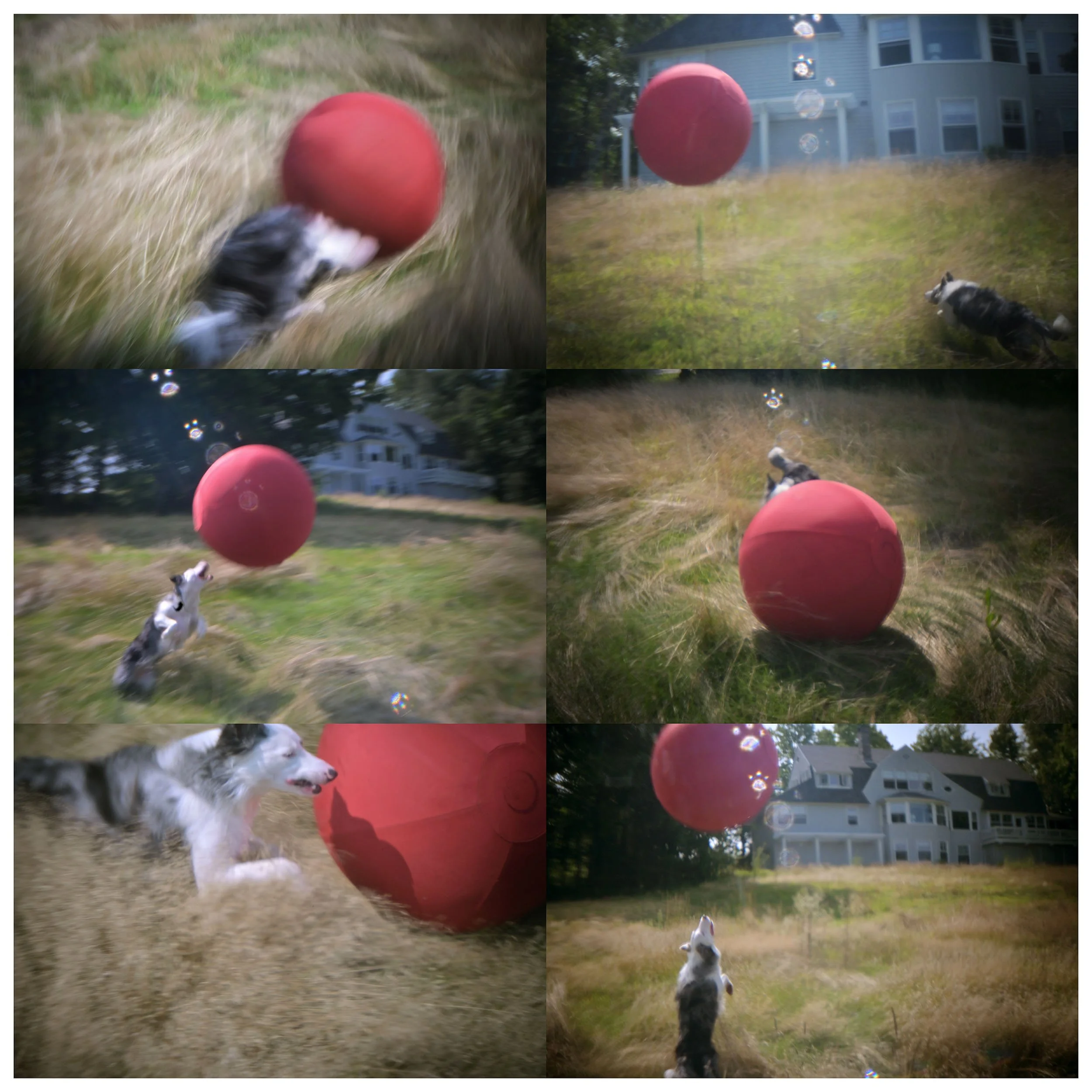
Jon Pelletier, In Circles, 1/10, 2025, Archival Inkjet Print, 40 x 40 inches, $1,600
My work often suggests multiple readings within the same image. In Circles is both a visual play that fluctuates between the object/field relationship, as well as a metaphor for the repetition of our daily routines. - J.P.
Educated at the Maine Photographic Workshops, University of Southern Maine, and Tyler School of Art, Jon Pelletier explores the unexpected through an interest in oddball film cameras and alternative processes.
Joan Fitzsimmons
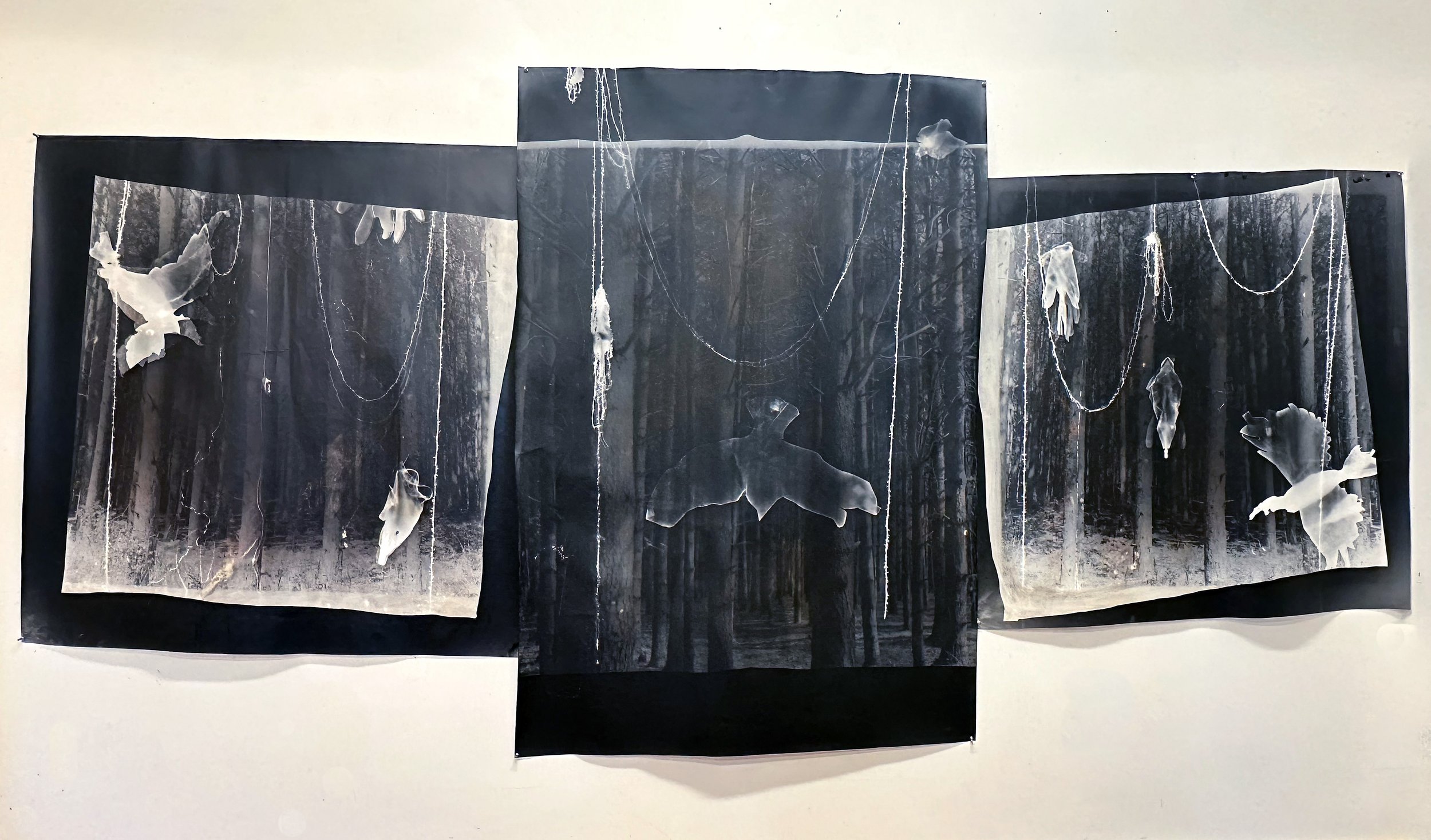
Joan Fitzsimmons, The Woods.26, 1/1, 2025, Hand-toned Gelatin Silver Prints, with Applied Photographic Bleach Toners and Inks, 12'6 x 5'1 inches, $5,000
The Woods is my personal reflection on landscape. I bring to it warnings of potential danger and a sense of fantasy. With this series, I have responded to the scale of the woods, and its depth, by augmenting the scale of my medium, creating a loose collage that considers the linear dynamics of spare winter branches, constructing an interior space that was embracing, yet claustrophobic. The resulting photos also referenced abstract painting. I continue to address the same fears and fantasy, but additional thoughts on the current state of the environment, the socio-political currents, work their dark magic.
Joan Fitzsimmons' practice spans more than 40 years. Her photographic work examines the quotidian. Working with incidental observations and materials of daily life, she constructs images for the camera and photograms. The scale varies from intimate inkjet prints to large-scale gelatin silver collages.
Jodi Colella
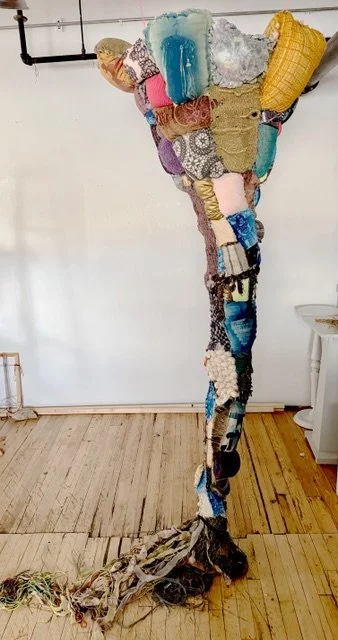
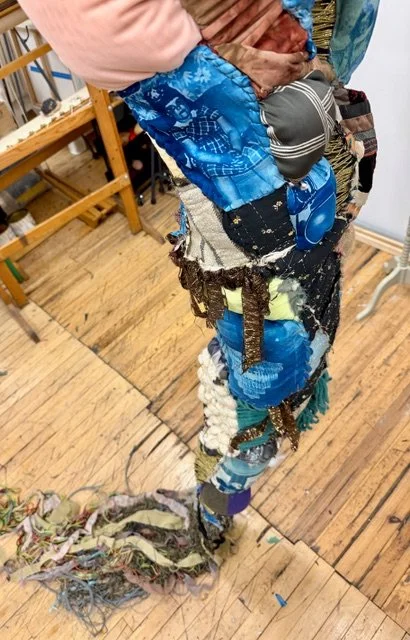
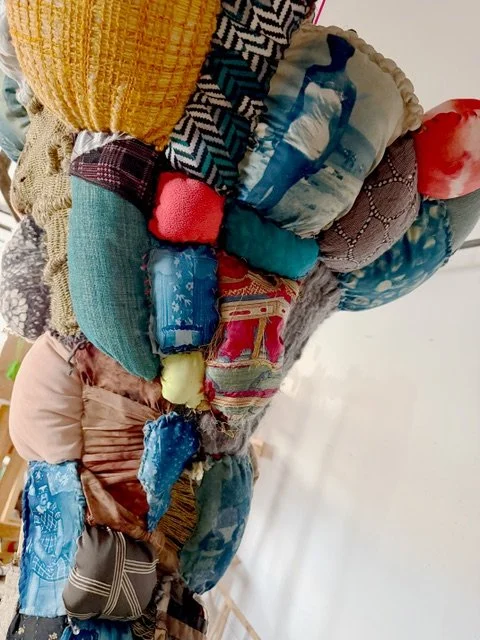
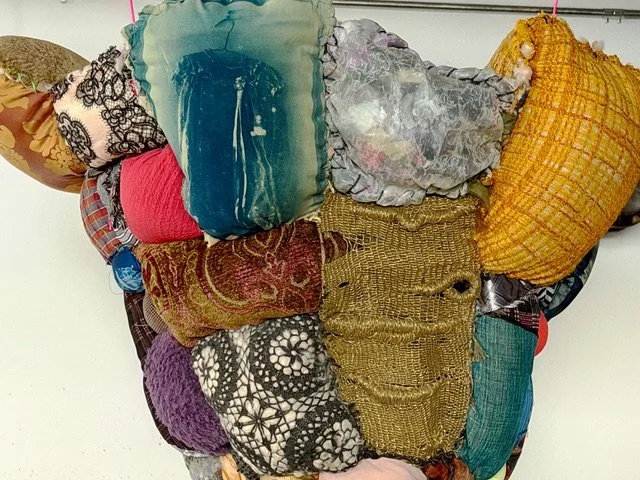
Jodi Colella, Vortex, Wire Armature, Mixed fibers, Texture Photo Prints Cyanotype, 80 x 32 x 33 inches, $7,500
A sculptural funnel created from autobiographical fibers and photographic textiles that capture fleeting memories of those who came before me. My mother’s drapes, father’s trousers, grandmother’s lace reveal identity and place. Tufted and stitched there’s an affection and a knowing in the act of making by hand. The touch allows a vulnerability to be visible as a vortex of texture and sensations from my childhood recollections –connecting with a longing to go home. - J.C.
Jodi Colella exhibits and teaches internationally. Currently residing in Portland Maine, she is a member of Boston Sculptors Gallery and the recipient of a 2019 Massachusetts Cultural Council Fellowship Award for Sculpture. Her exhibitions include The Textile Museum in Washington D.C.; Textile Center, Minneapolis; Fuller Craft Museum, Brockton; World of Threads, Toronto; and Da Wang Culture Highland in Shenzhen China among others. She has collaborated on several public art projects, and her work is held in multiple museum collections. Interviewed for WGBH’s Open Studio with Jared Bowen, her work has featured in The Boston Globe, Surface Design Journal, The Woven Tale Press, Vasari 21, Artistry in Fiber, POSIT and TextileArtist.org. Colella is the founder of the fiber arts study group FiberLAB. She serves on the Artist Advisory Board for Gather 2025 Fiberart Symposium, Chair of Executive Committee for Boston Sculptors Gallery, Collections Committee for Fuller Craft Museum and Events Committee for Surface Design Association. She has held residencies at Haystack Mountain School of Craft, Fruitlands Museum in Harvard MA, Society of Arts + Crafts in Boston MA, Da Wang Culture Highland in Shenzhen China, Compeung in Doi Saket Thailand, Weir Farm in Ridgefield CT and is the recipient of a Pollack Krasner Fellowship at Vermont Studios Center in Johnson Vermont.
Jean Noon
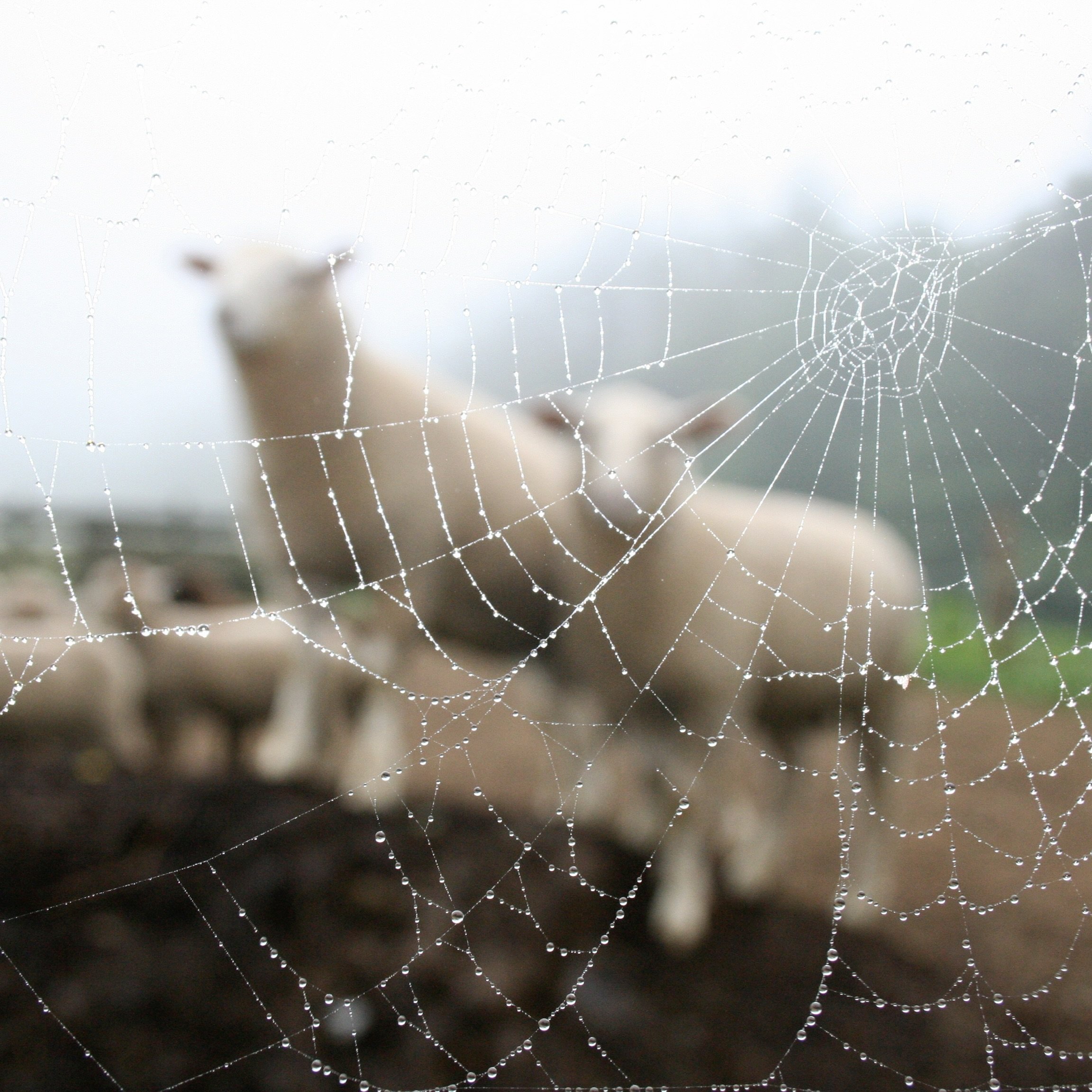
Jean Noon, Noon Web Lambs 2, 1/1, 2011, Photo Print, 16 x 24 inches, $500
As a farmer I have a life long passion, practice and particular opportunity for careful observation of the natural world. Being a sculptor/photographer and a farmer establishes a deep connection for me between my interpretations of nature, and the timeless continuum of positive creative human energy. - J.N.
Jean Noon grew up in Concord Mass. She always wanted to be an artist & farmer, her dream was realized through hard work , support and help from her husband Bill Noon. They started farming while attending Goddard College where Jean studied Art, Agriculture, and Education. They moved to Maine as “Back to the Landers” and managed to purchase a small farm in Southern Maine in 1974. Most of Jean’s early work was constructing wire fences for the sheep, driving tractor to make hay, and raising her two boys. She did manage to complete a few paintings, and some photography. During the 80s Noon returned to School to complete her BS in Art Education and over the thirteen years of teaching art she became more involved with sculpture, built her studio and continues. The shifts of the seasons and the farm workload mesh well with her art time in the studio. Her life is a mixture of art think and do, farming, riding her horse, work, and enjoyment of the natural wonders of the seasons on the farm. She also volunteers considerable time to the local Three Rivers Land Trust working to conserve lands for future generations. Most of Noon’s current work in sculpture includes recycled materials and shifts between figurative, non-objective, minimalist, complex forms, and photography.
Eugene Cole
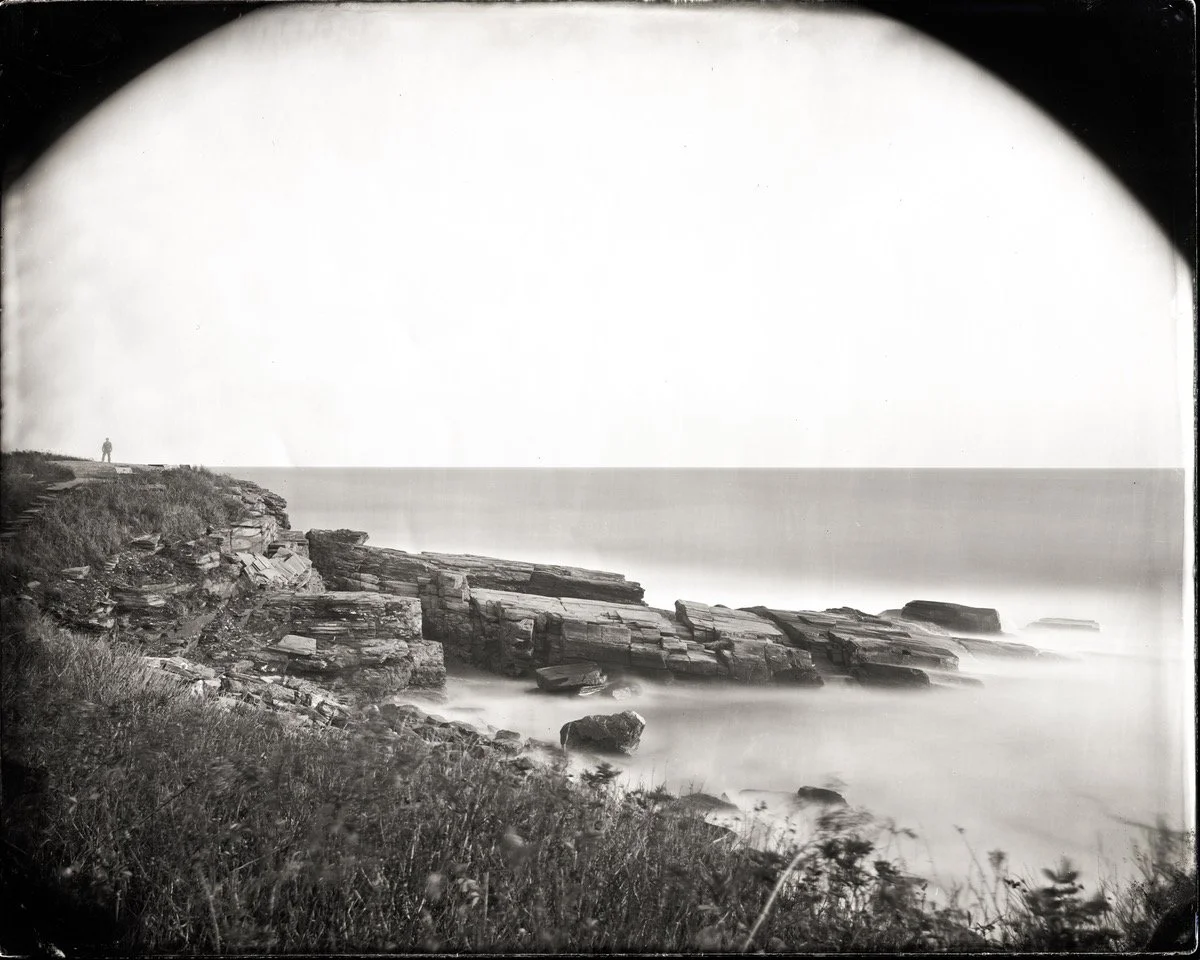
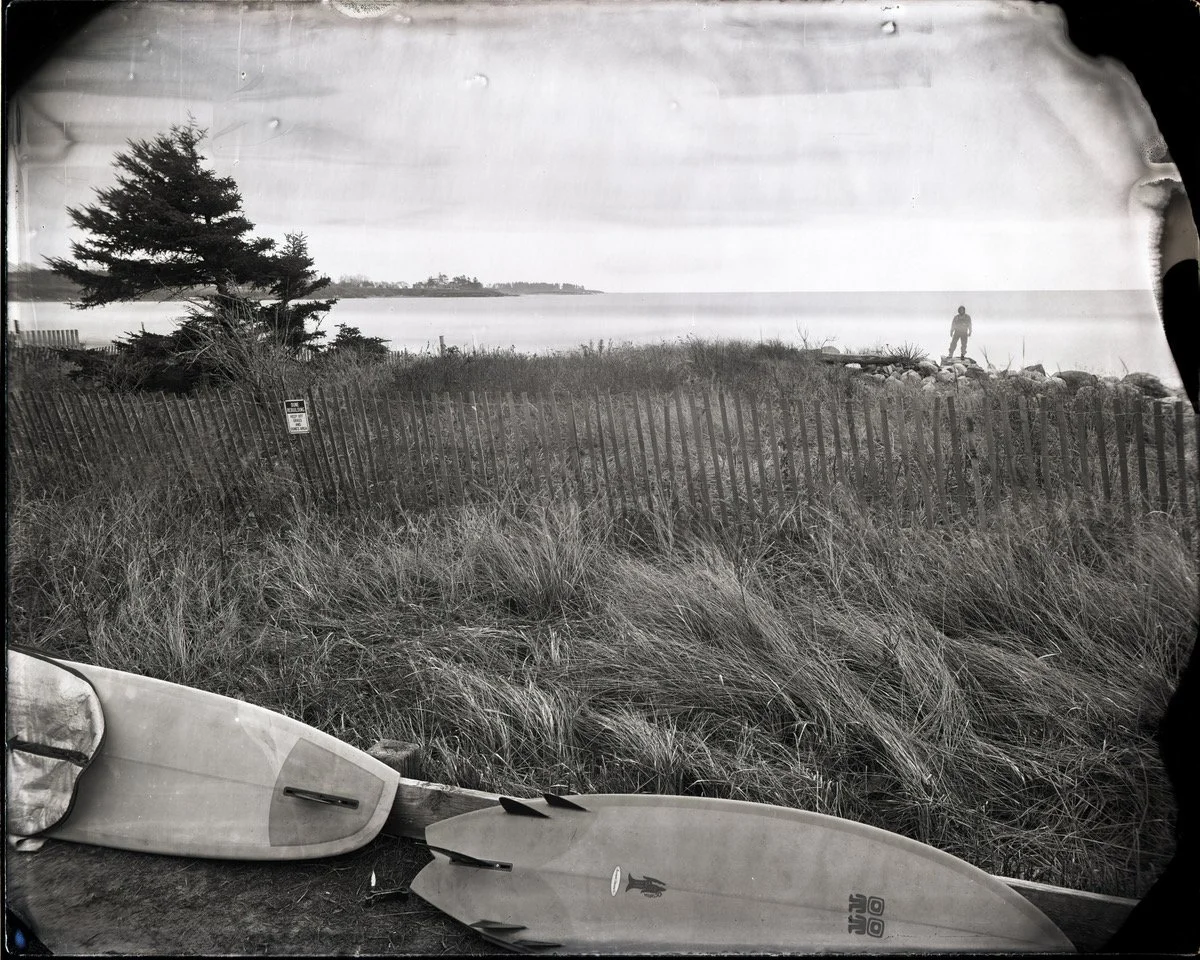
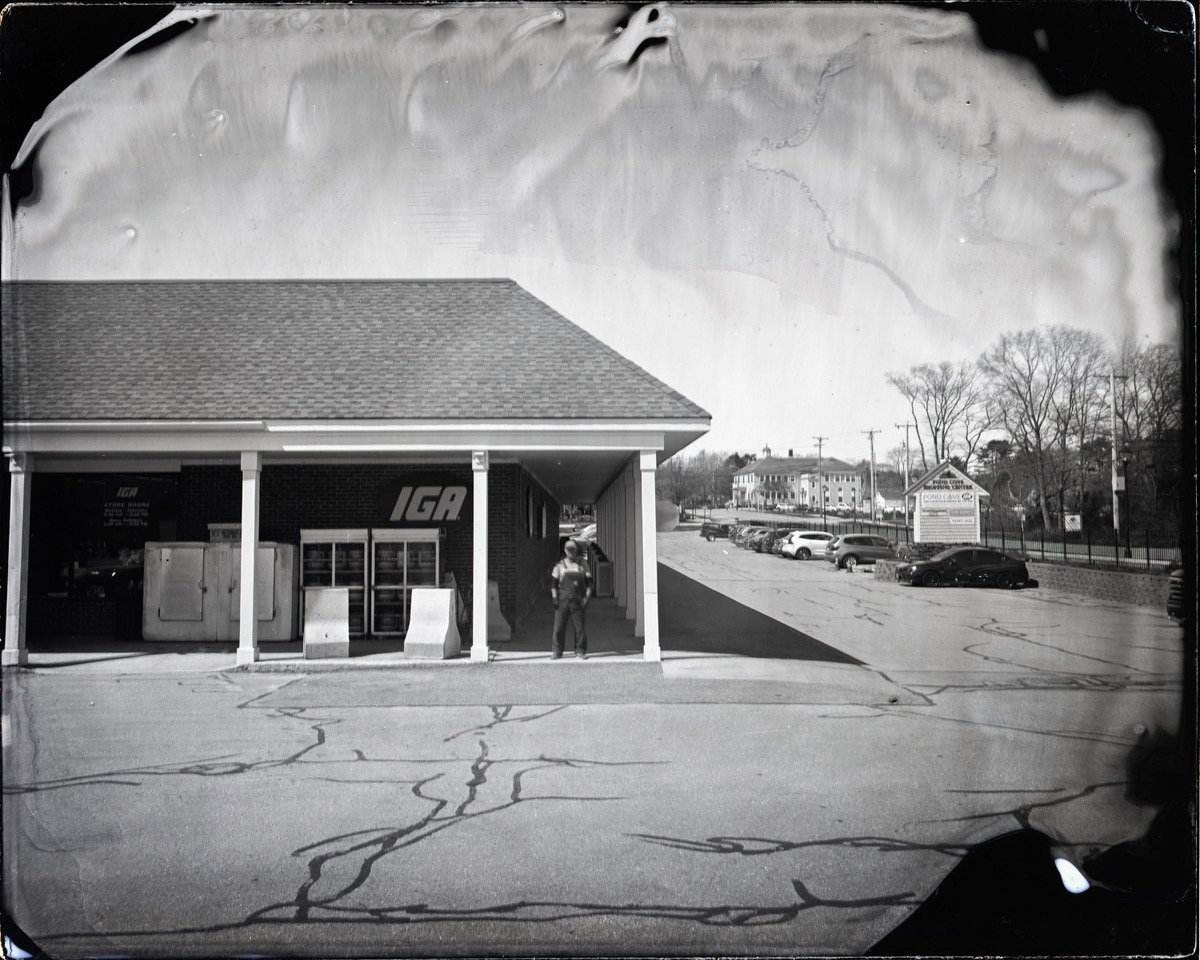
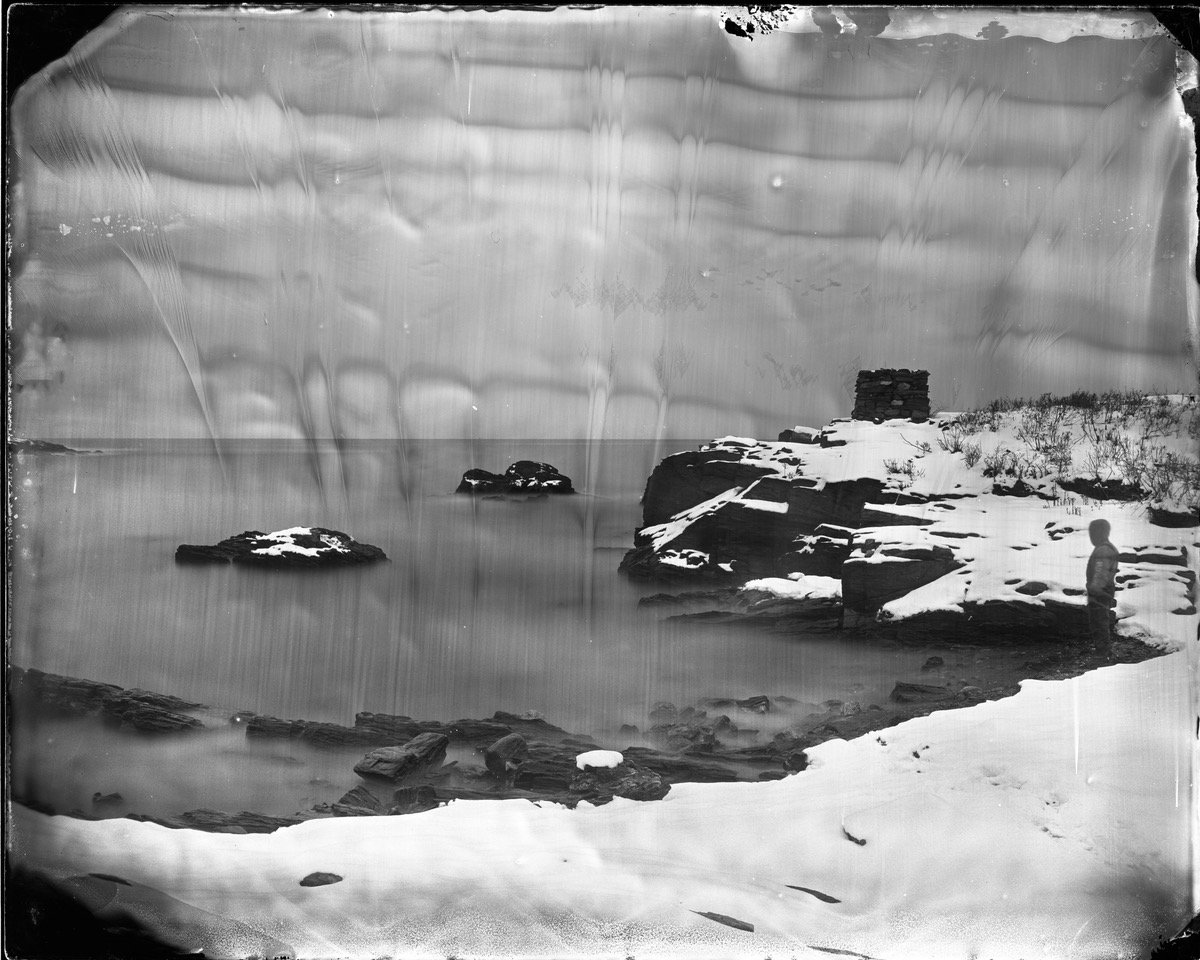
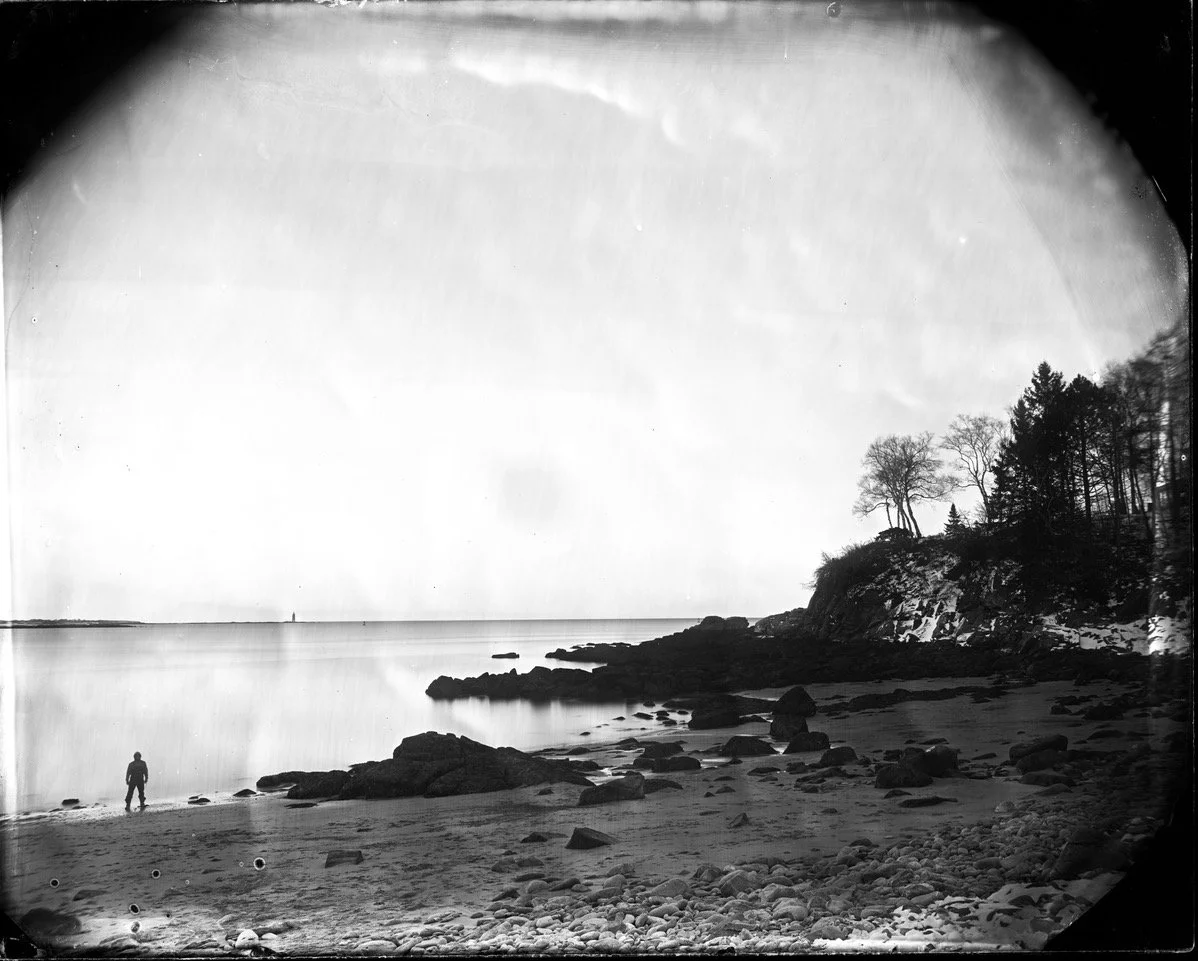
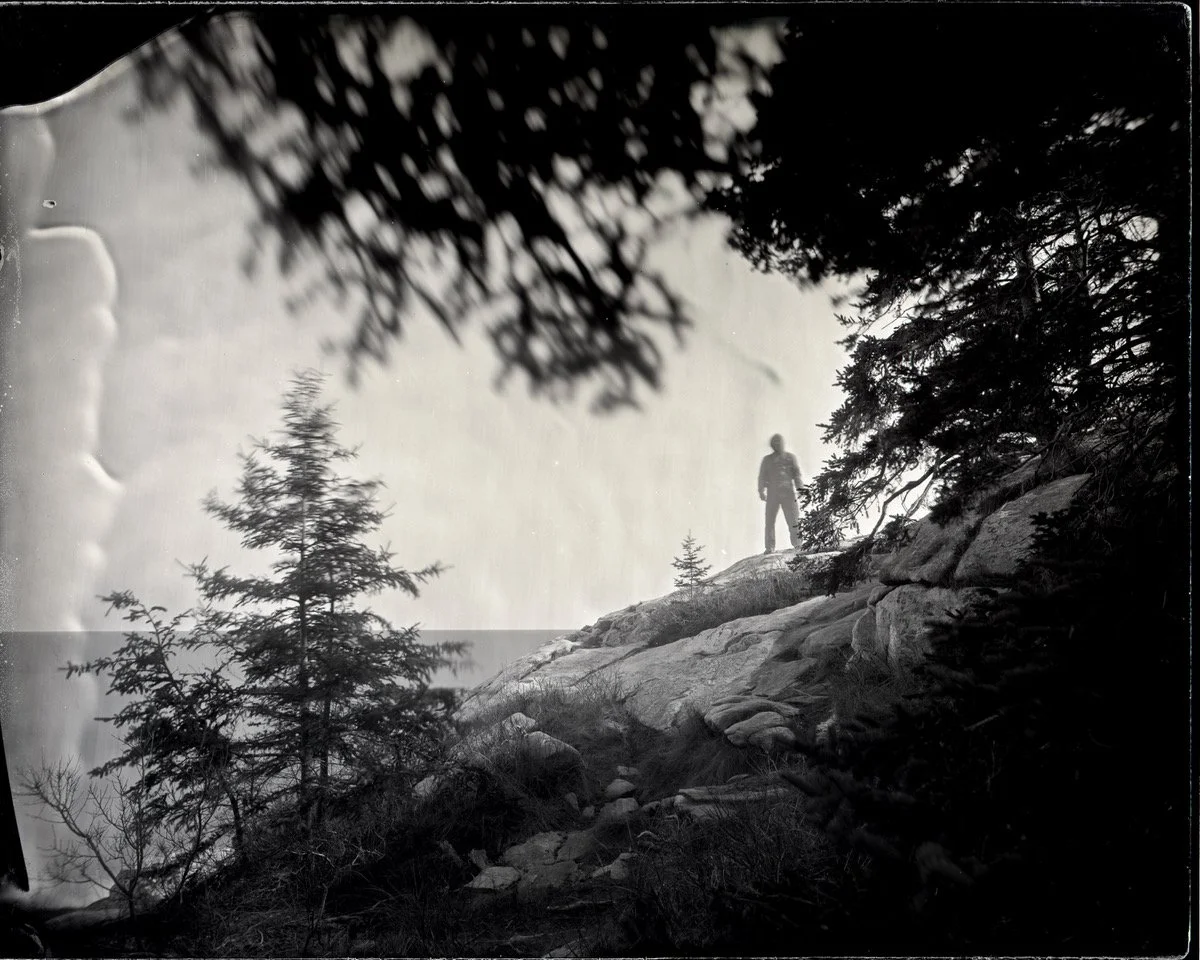
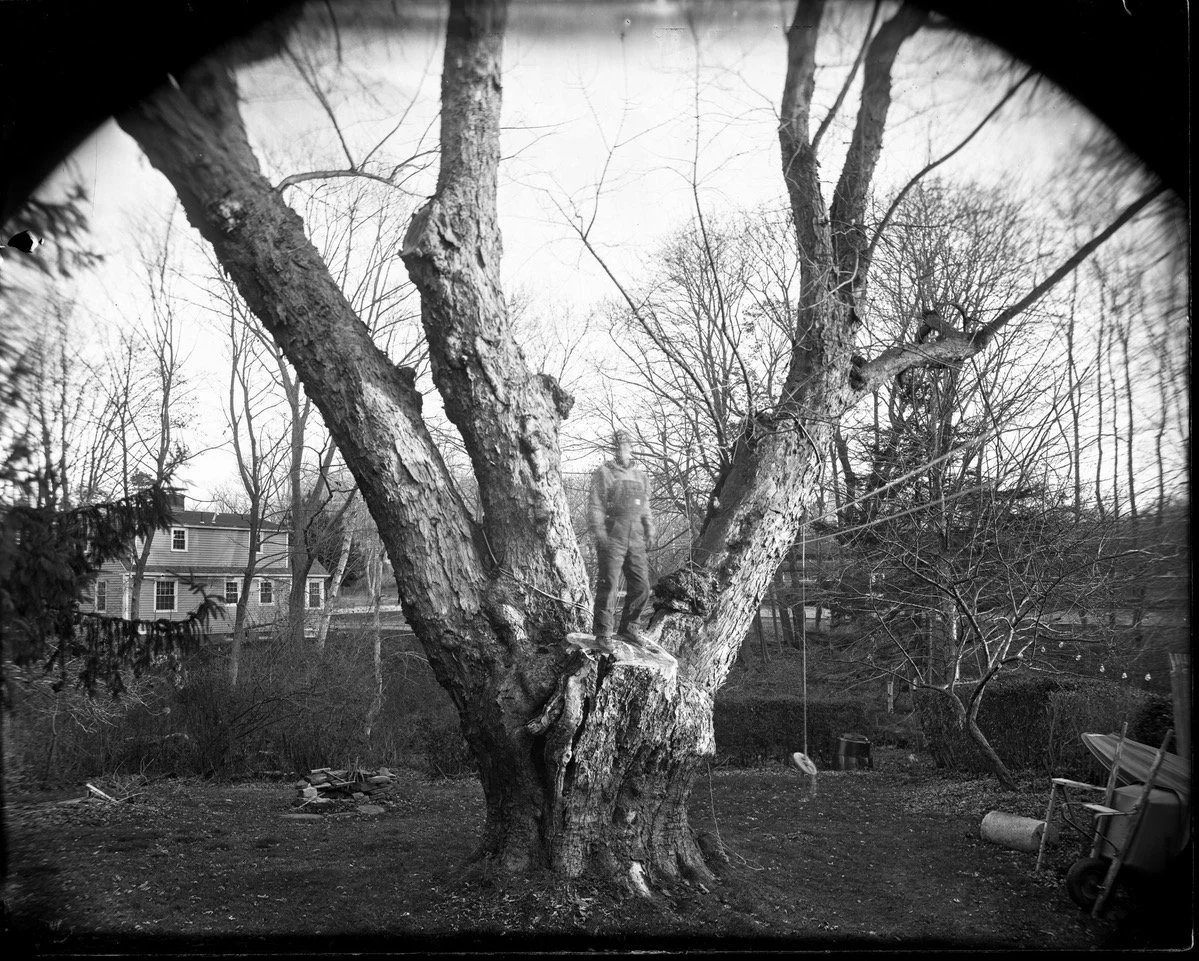
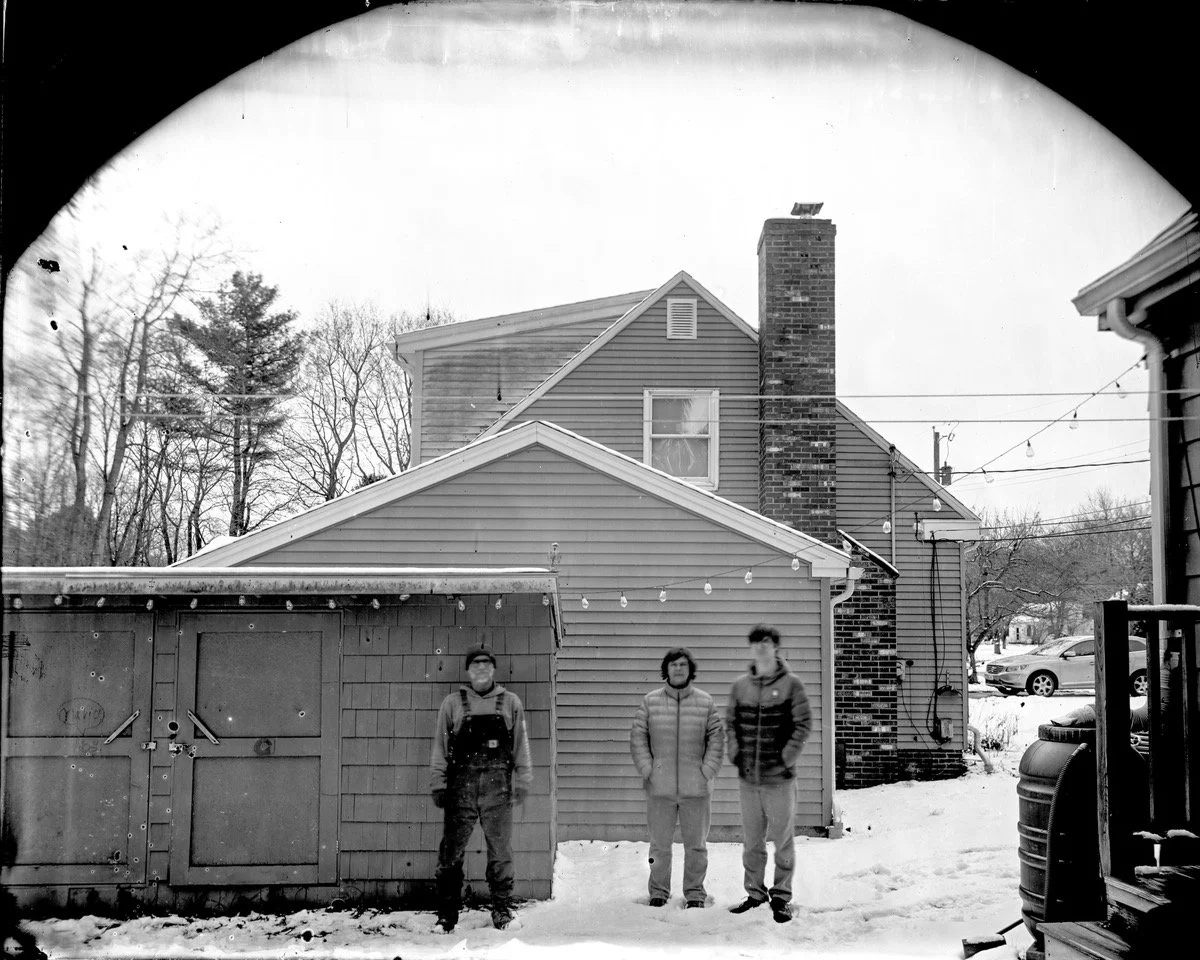
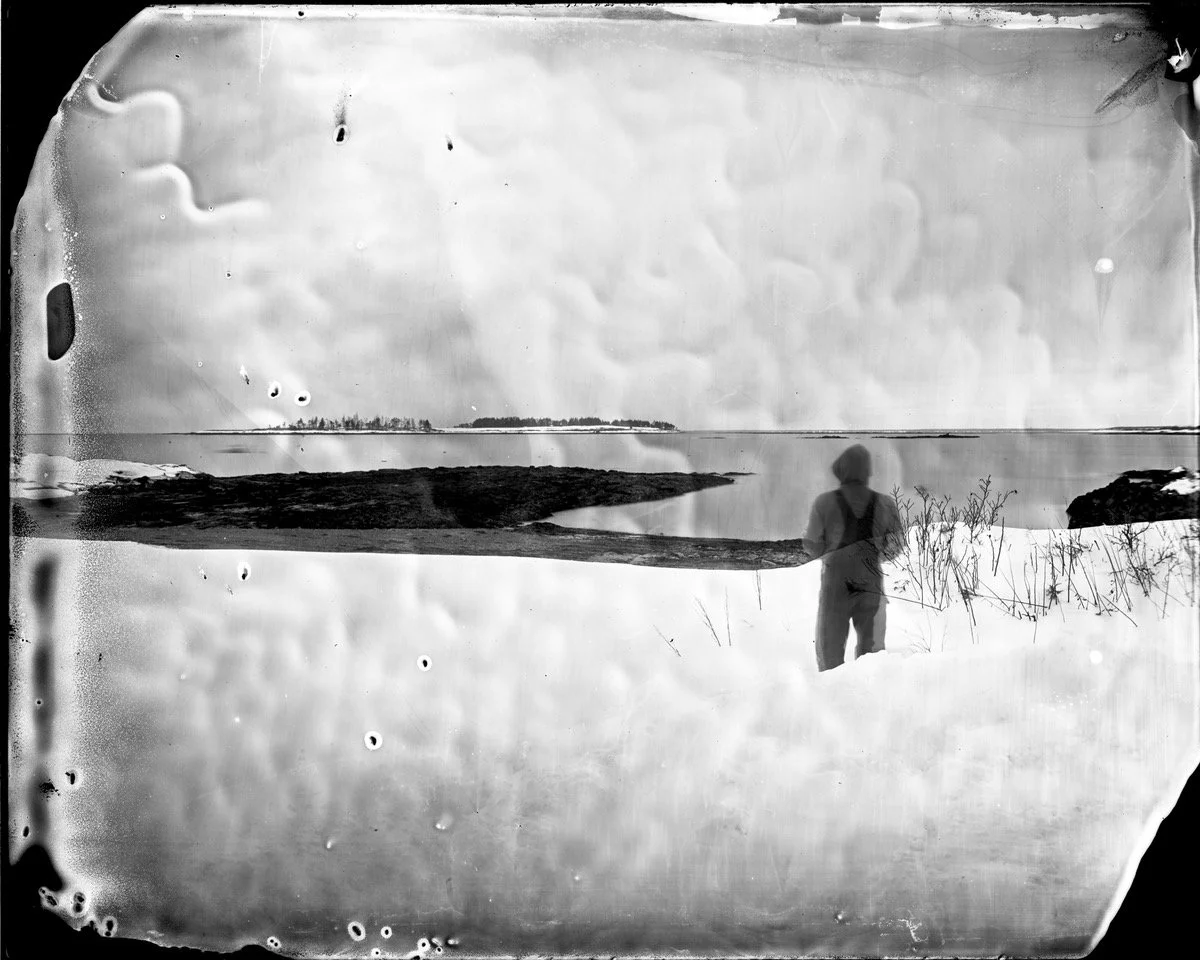
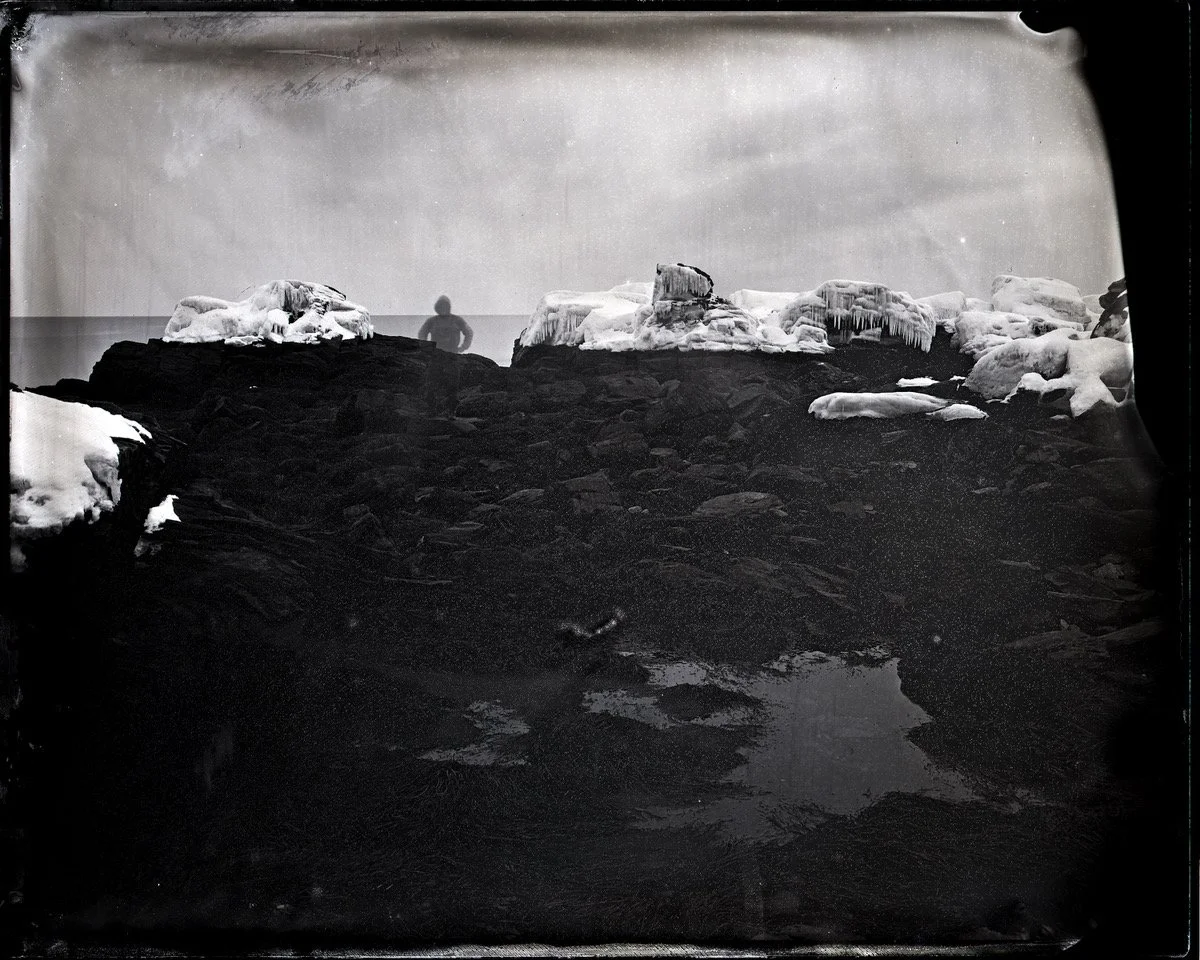
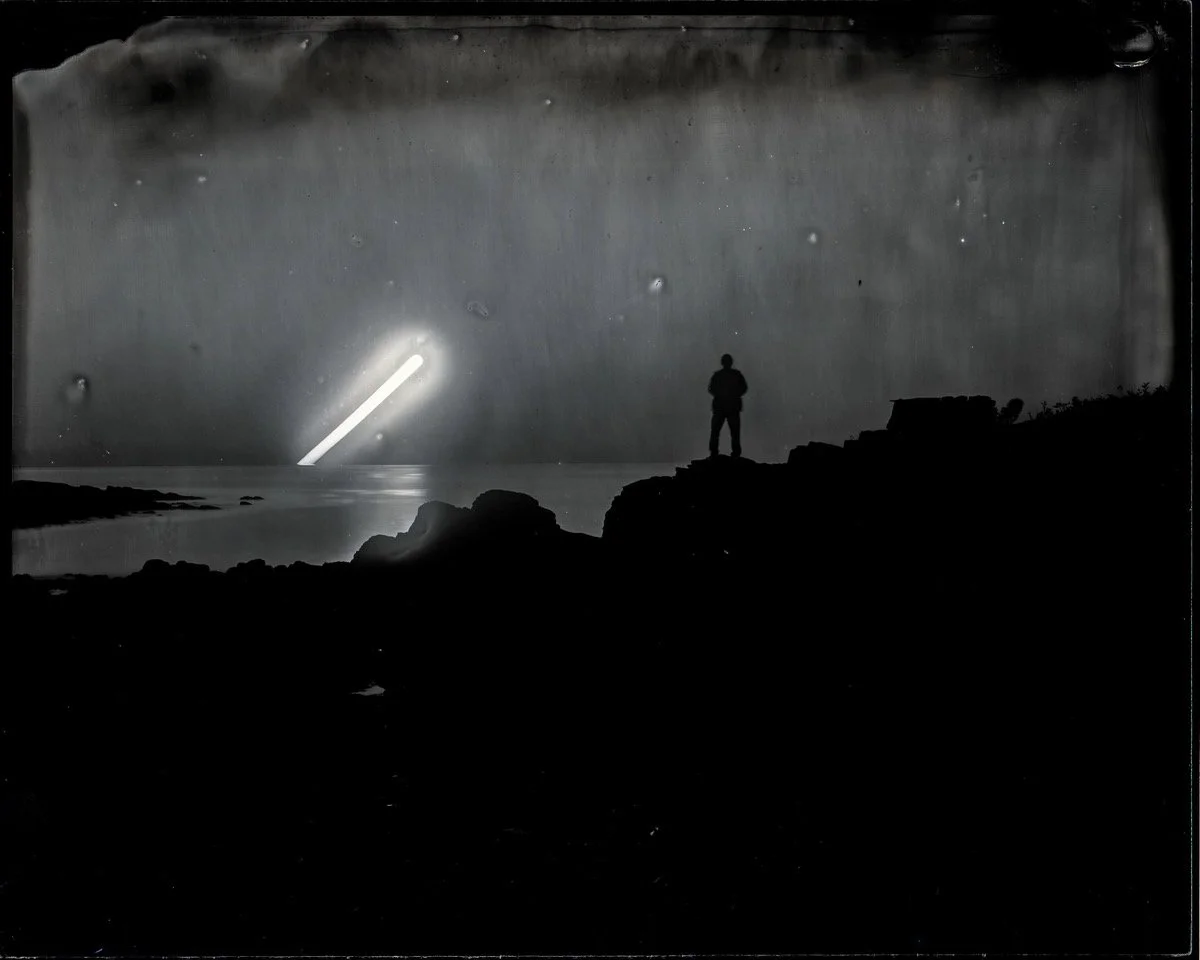
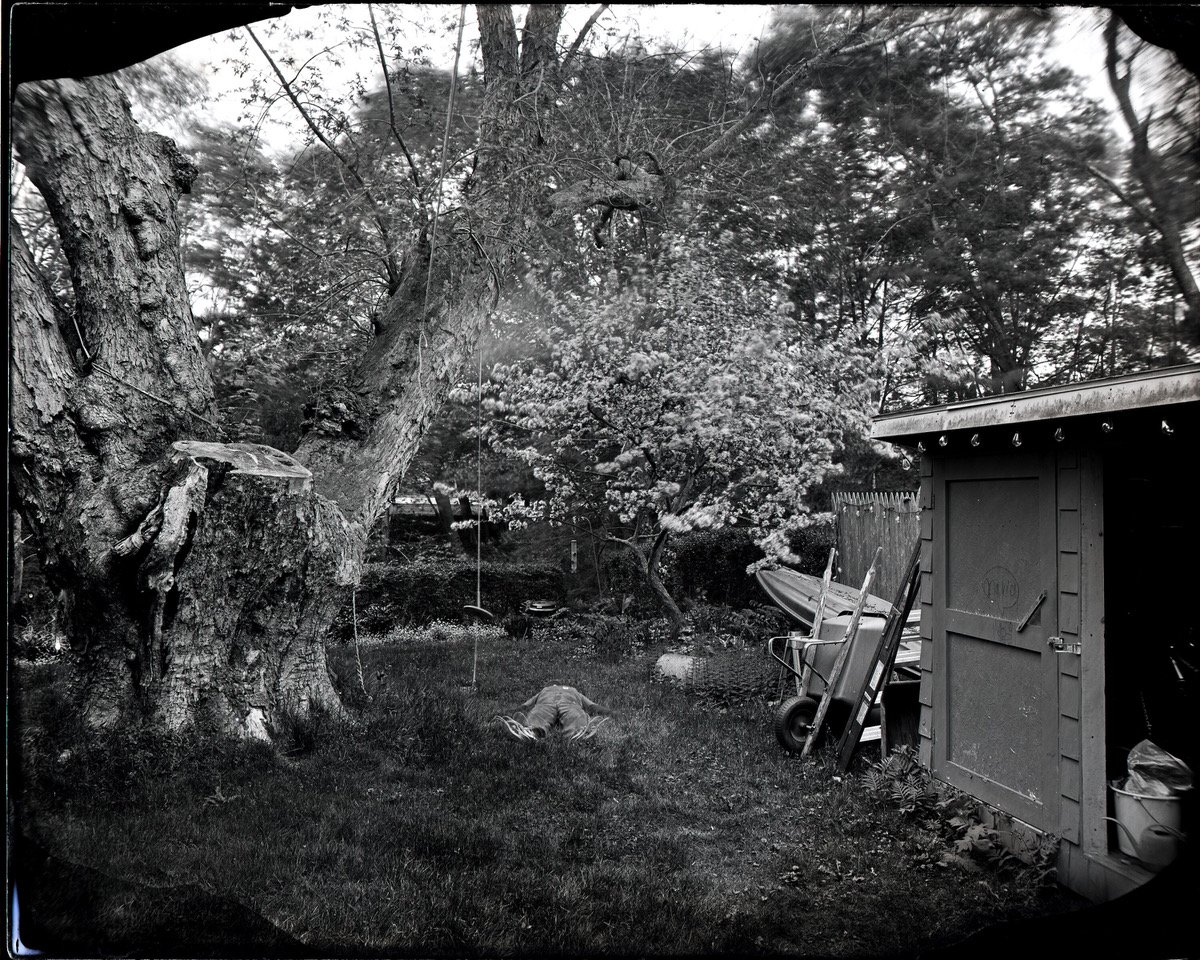
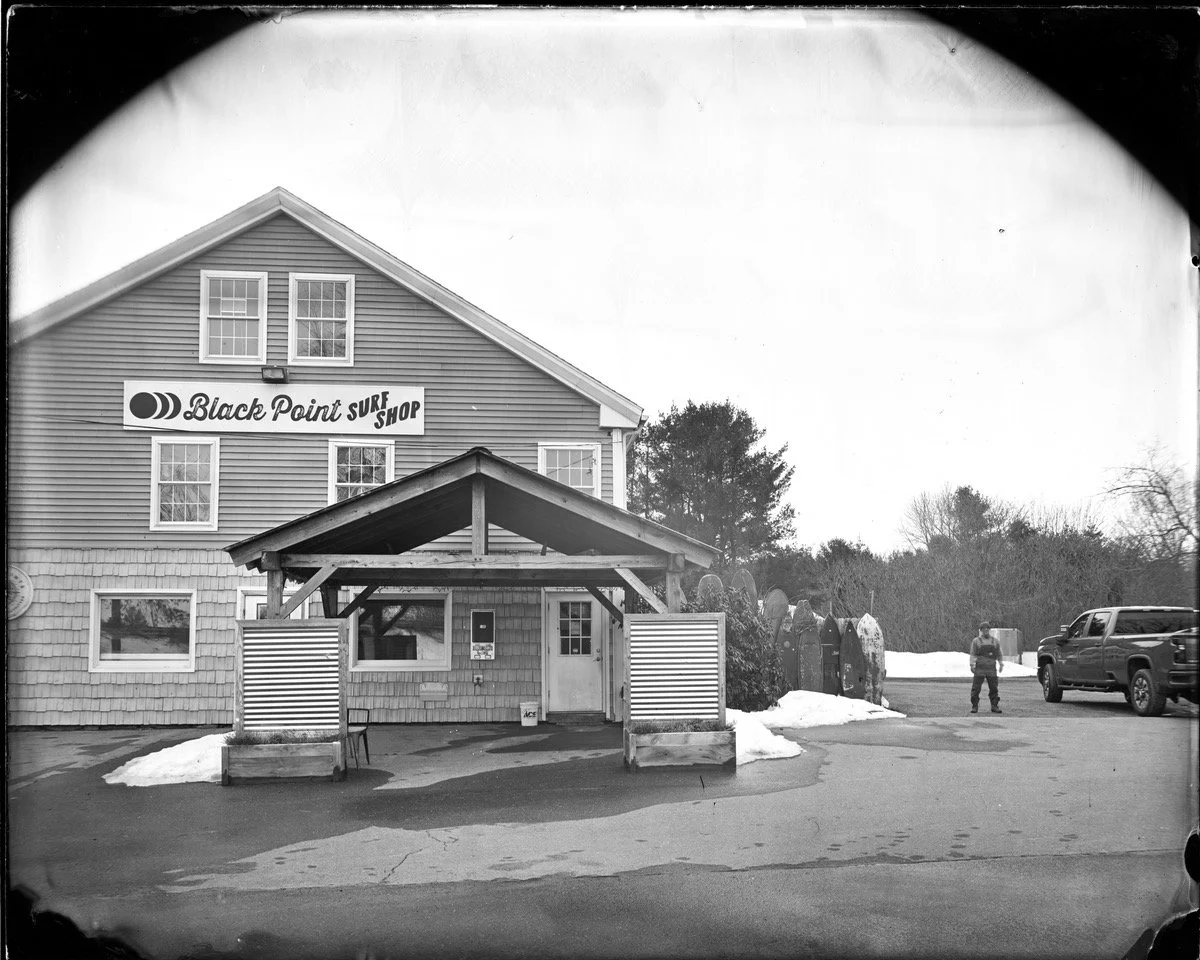
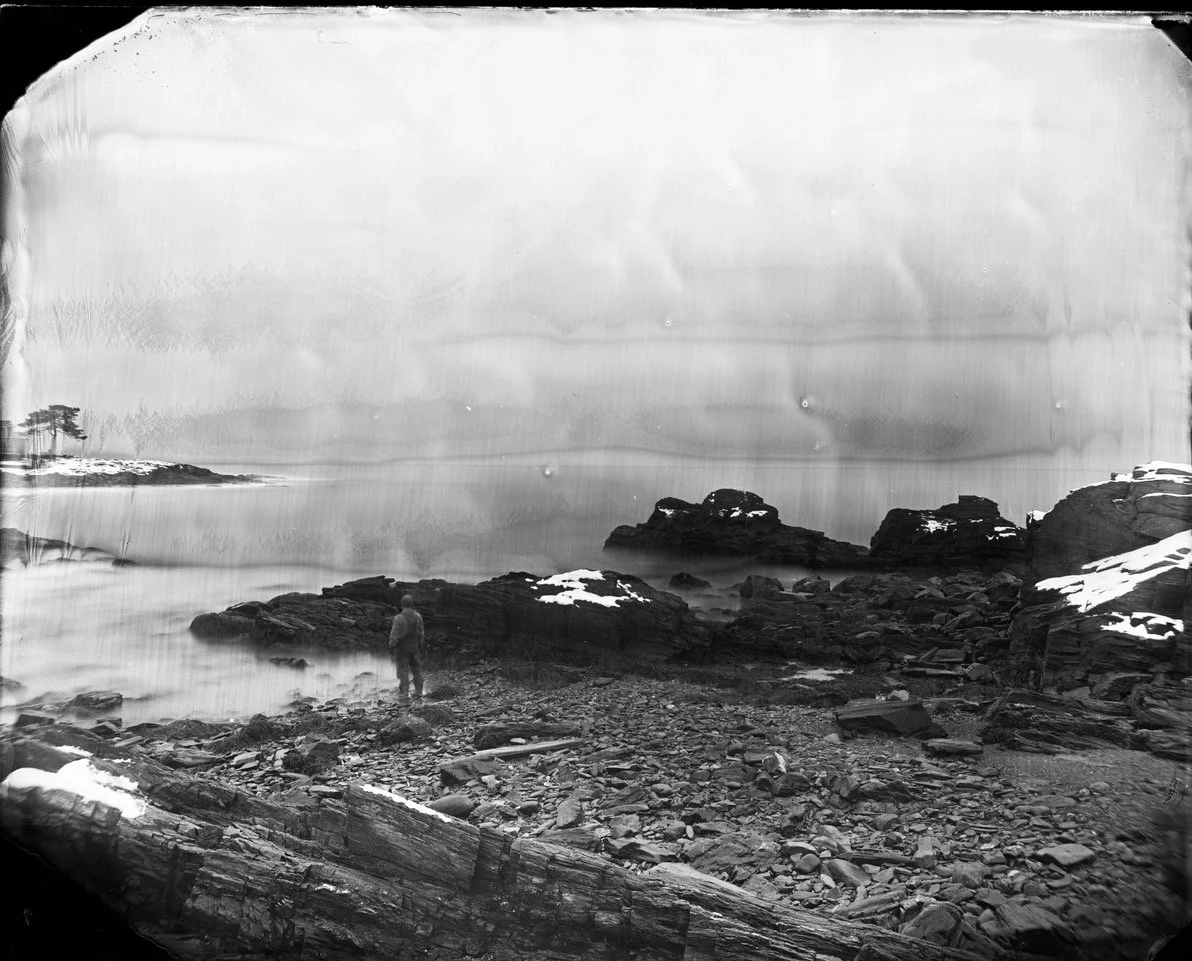
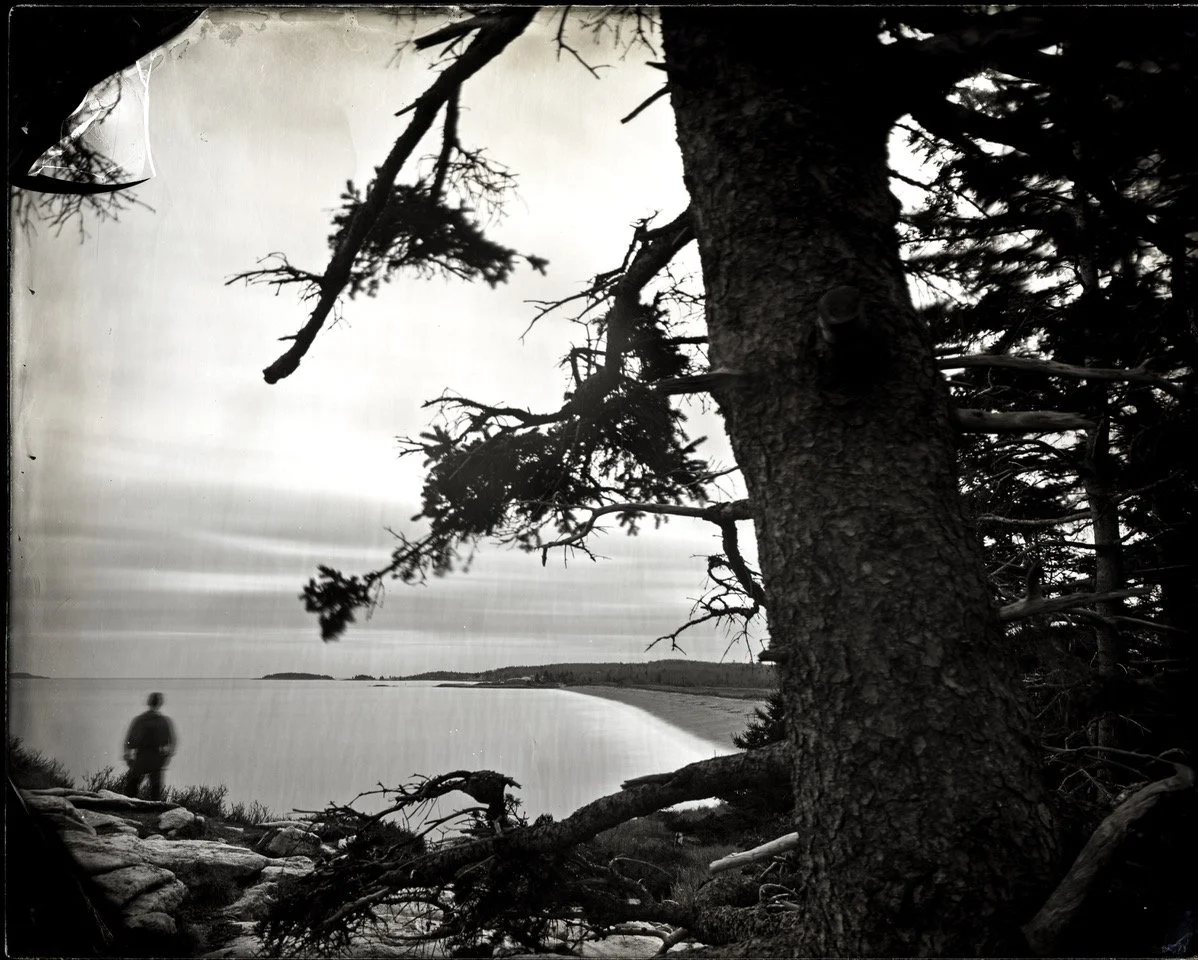
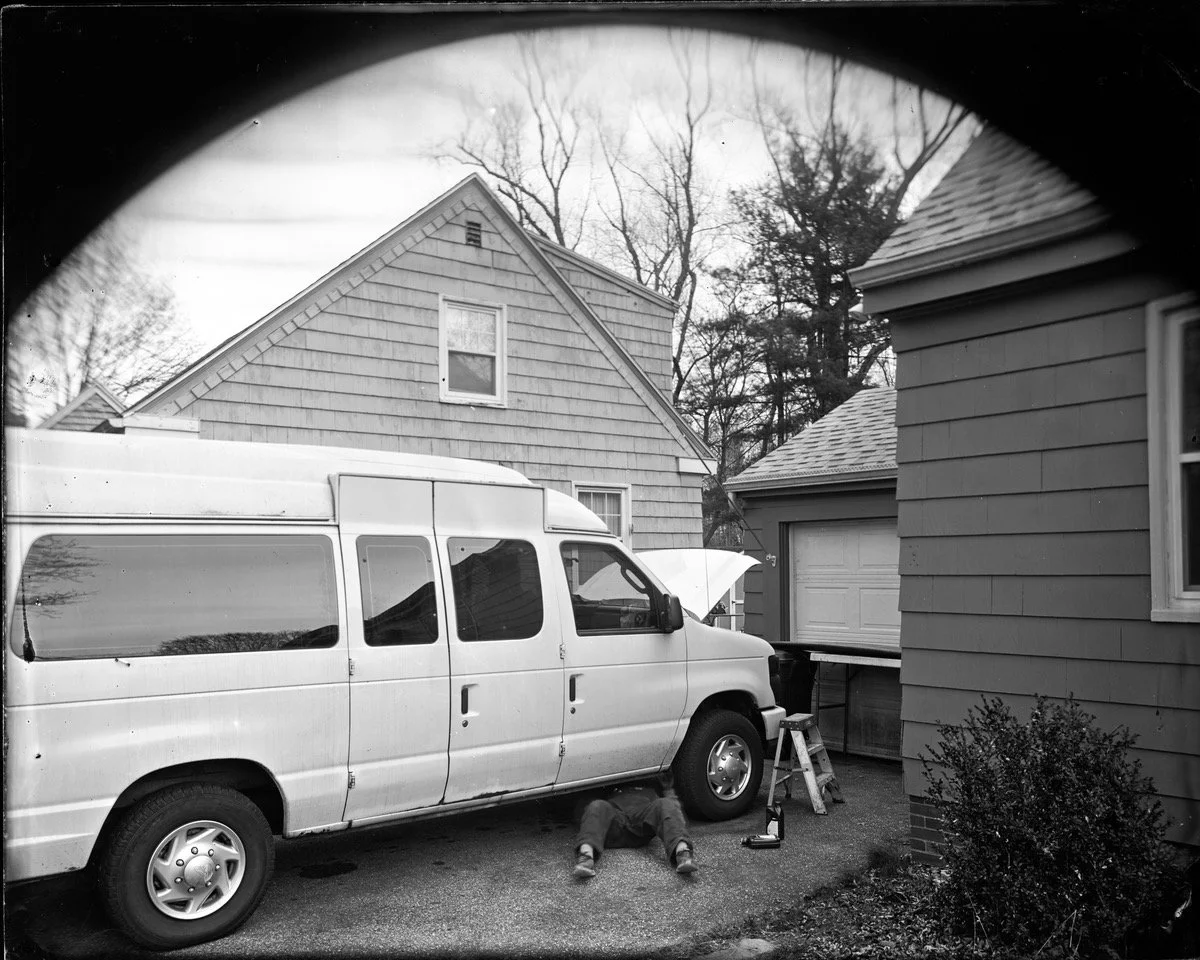
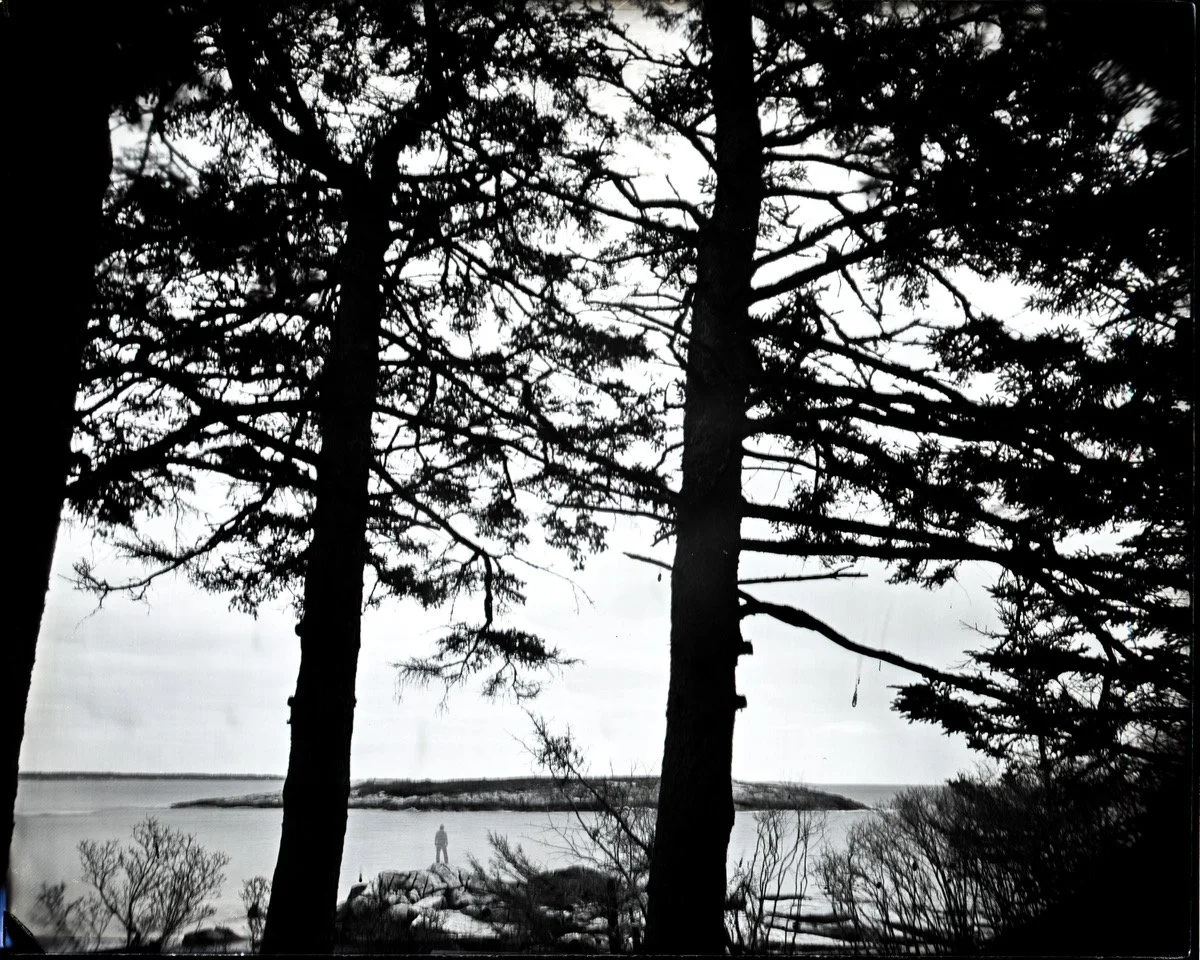
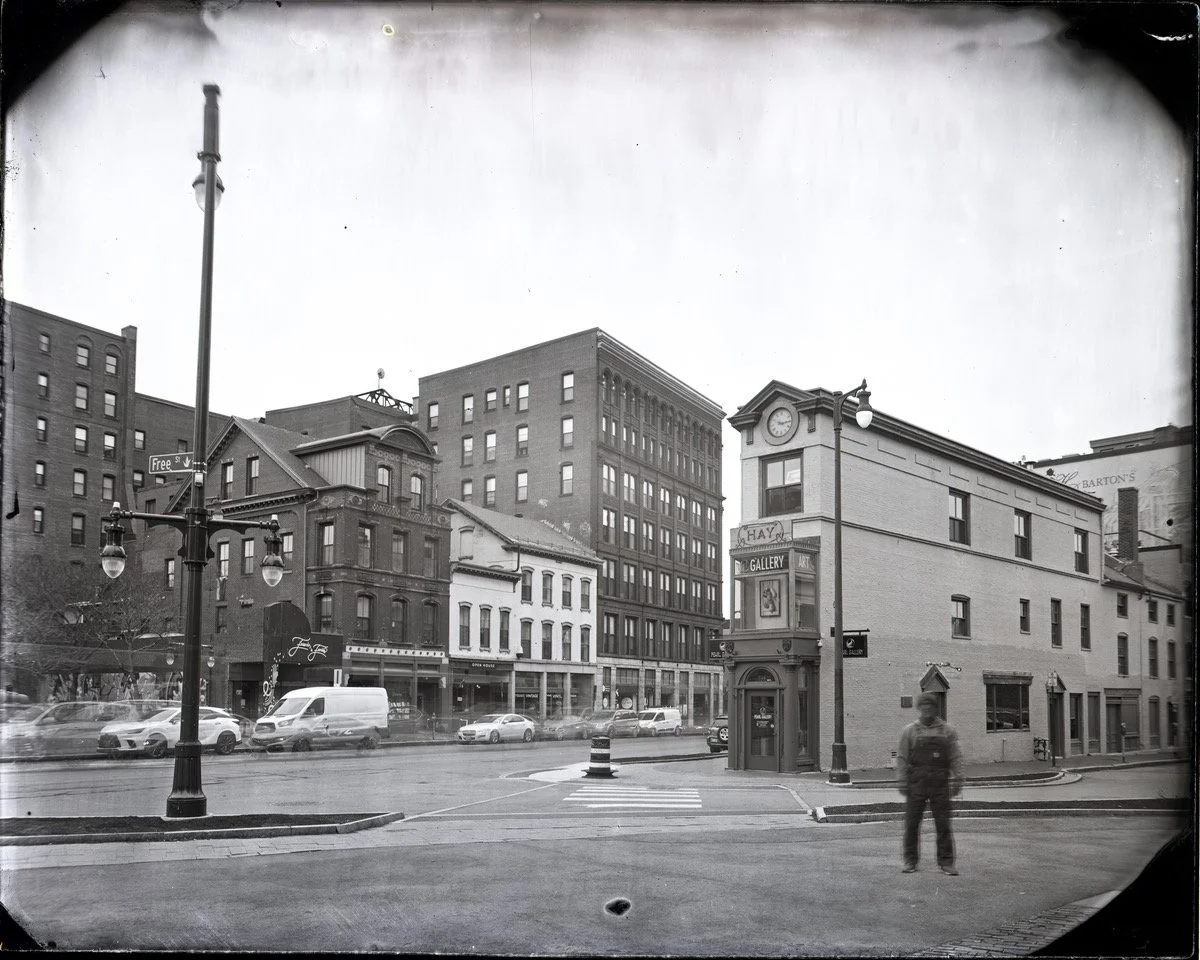
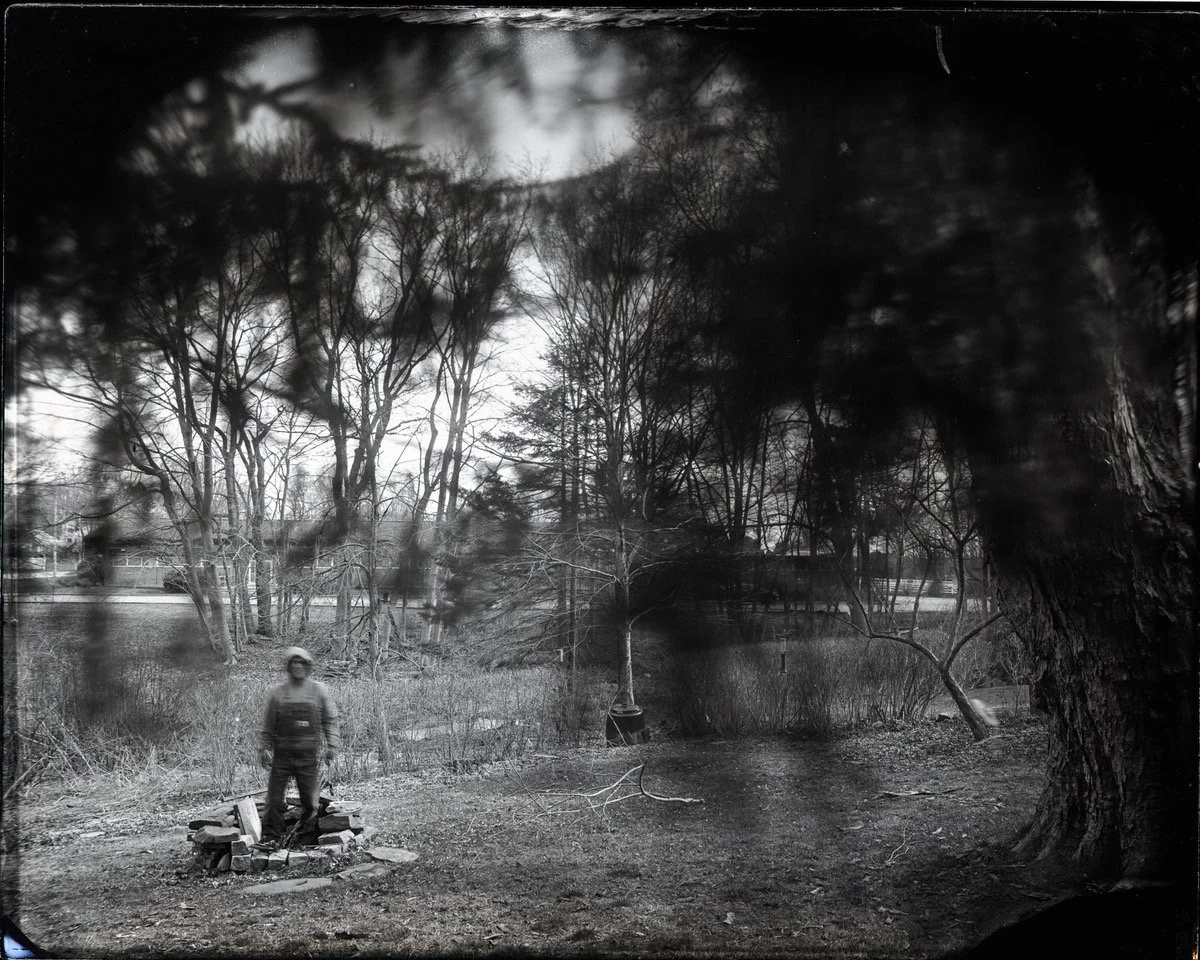
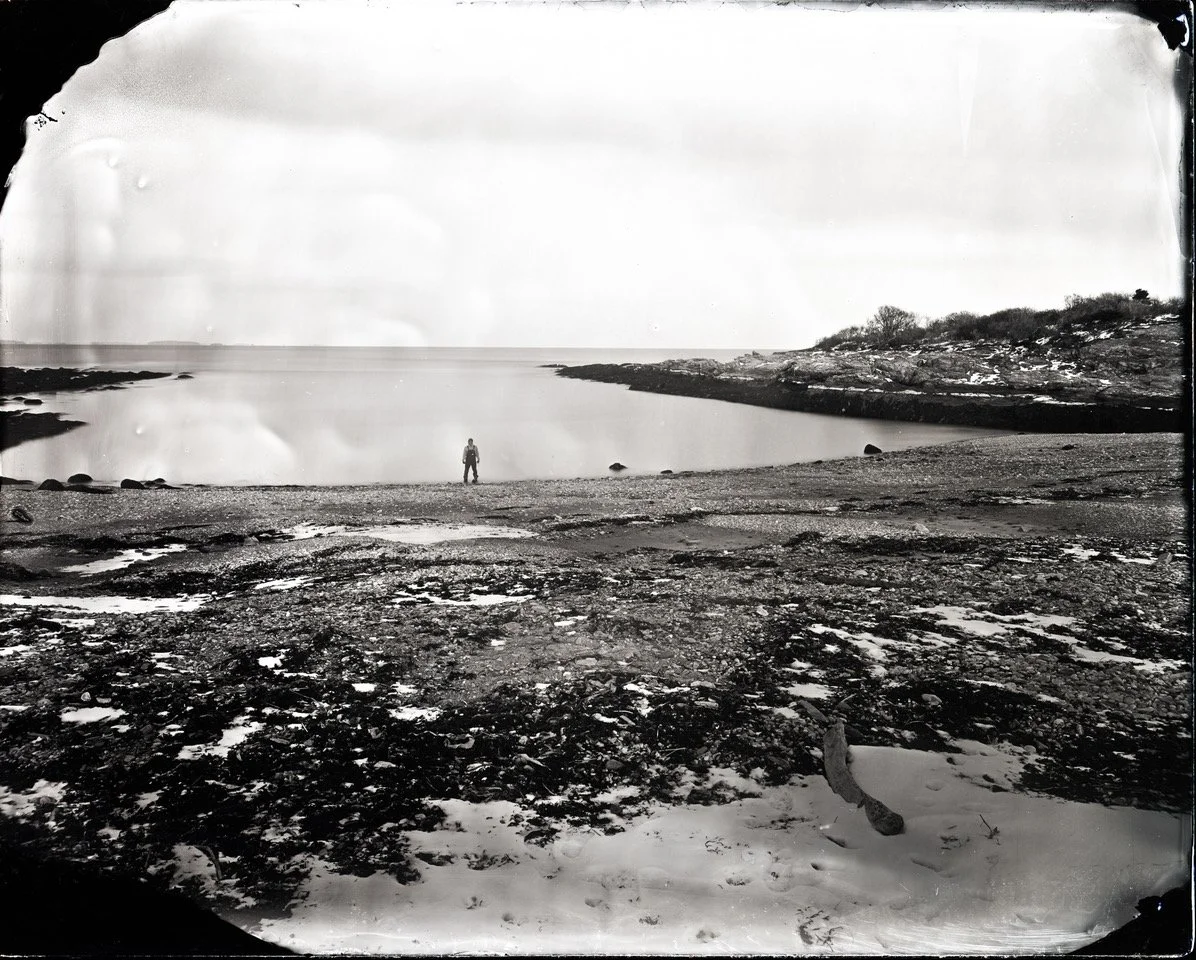
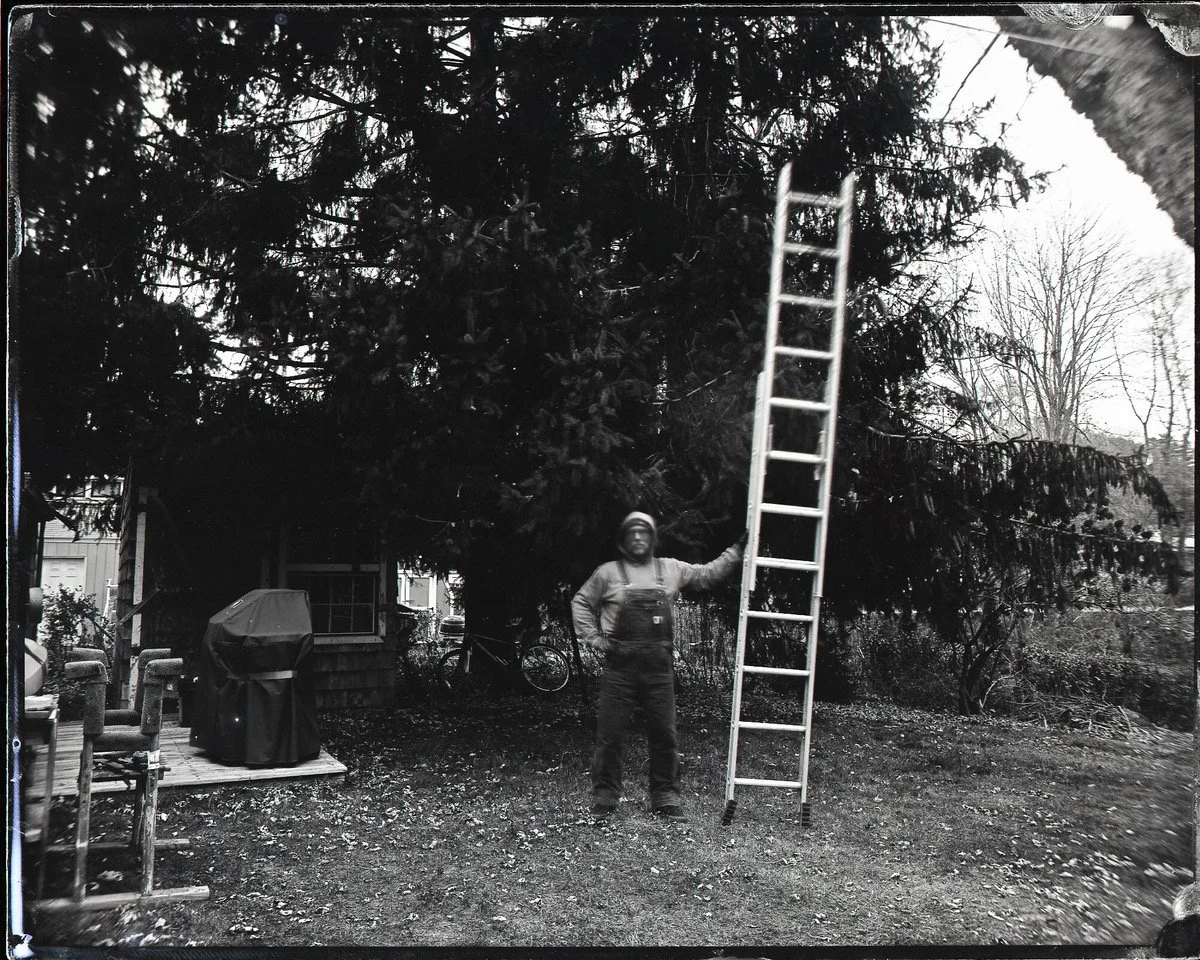
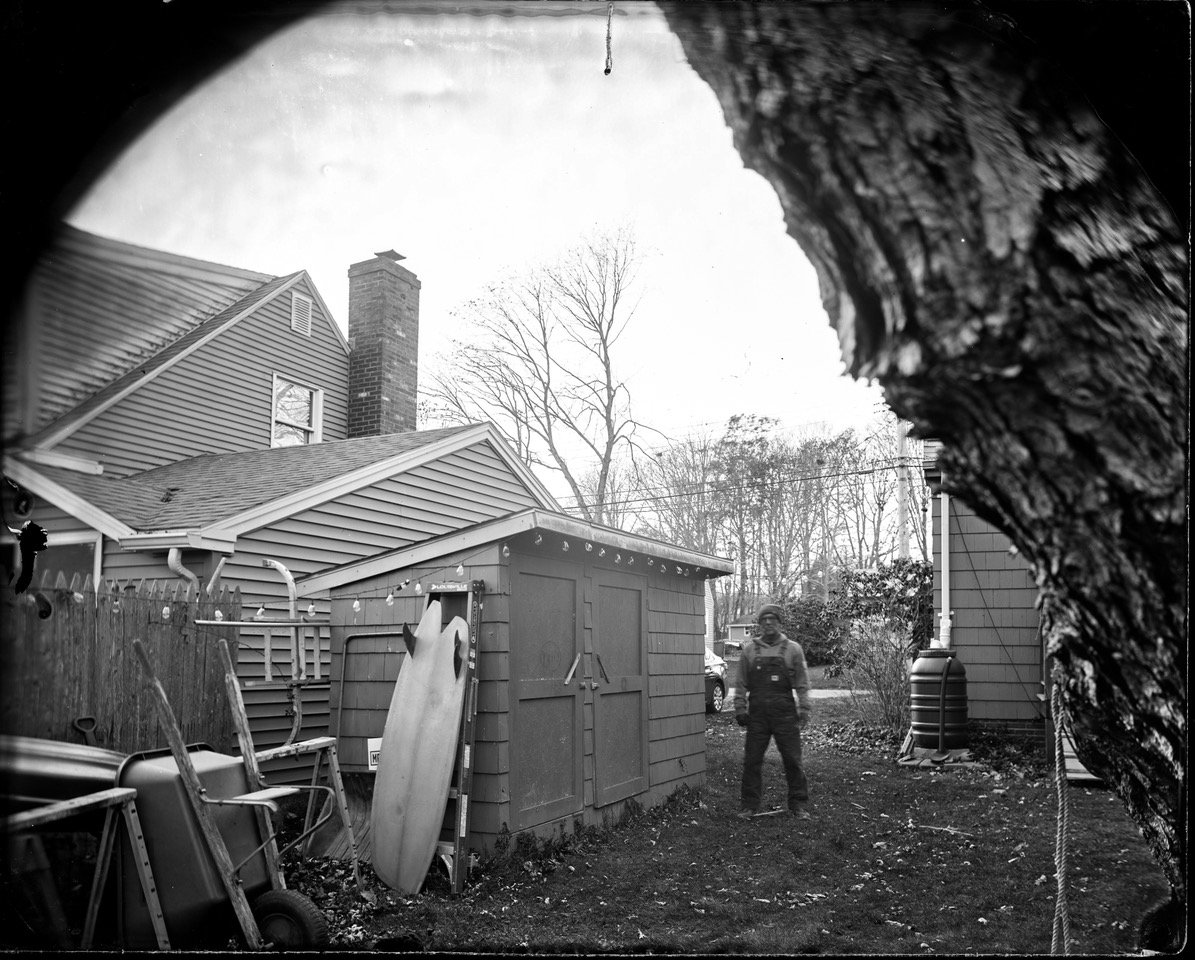
Eugene Cole, Self Portrait, Two Lights Ledge, 2025, Wet Plate Collodion Silver Gelatin Print, 8 x 10 inches, $400
This ongoing series uses the wet plate collodion process, in which each image must be made before the plate dries—within roughly fifteen minutes. If it dries, the image is lost. Within this constraint, each portrait is made during a ten-minute exposure in which I attempt to remain still. The attempt inevitably fails. Subtle movements and shifts in balance register on the plate, marking the gap between intention and control. Made throughout my daily life—from my backyard to the beach to downtown Portland—these images do not fix identity, but record time passing through the body. They are traces of endurance, shaped by chemistry, duration, and physical limits.
I am a Maine-based artist working primarily with analog and historical photographic processes. My work explores the intersections of landscape, time, and embodiment, often engaging with the material and temporal qualities of image-making itself. I studied photography at the San Francisco Art Institute and the Southeast Center for Photographic Studies. My work has been exhibited in solo and group exhibitions throughout New England and across the United States. My recent projects revisit and reinterpret historical photographic traditions through a contemporary, embodied lens, using process as a means to investigate presence, memory, and the physicality of perception. –E.C.
James Mullen
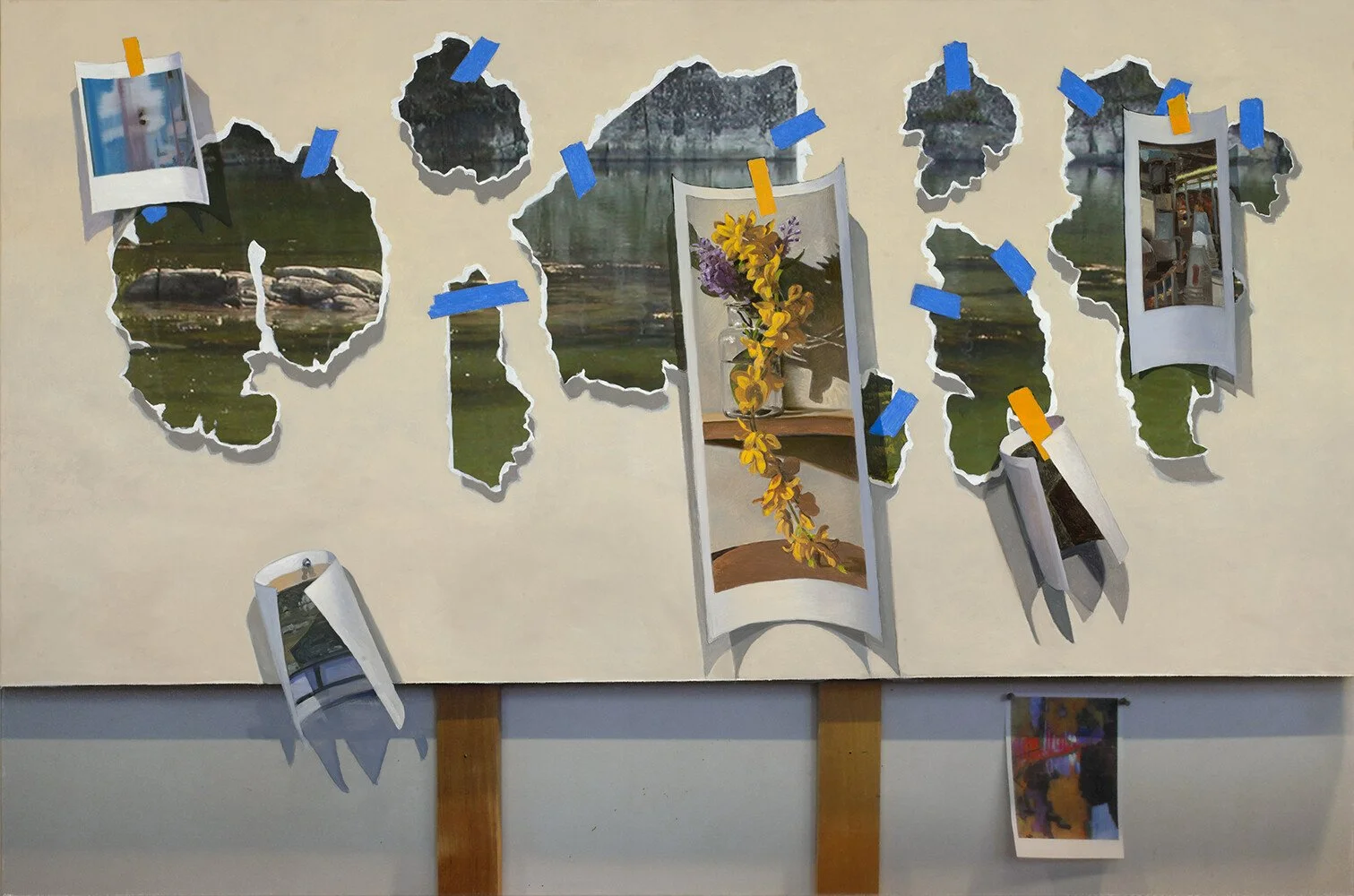
James Mullen, Schoodic, 1/1, 2025, Oil and Acrylic on Canvas, 40 x 60 x 1.5 inches, $15,000
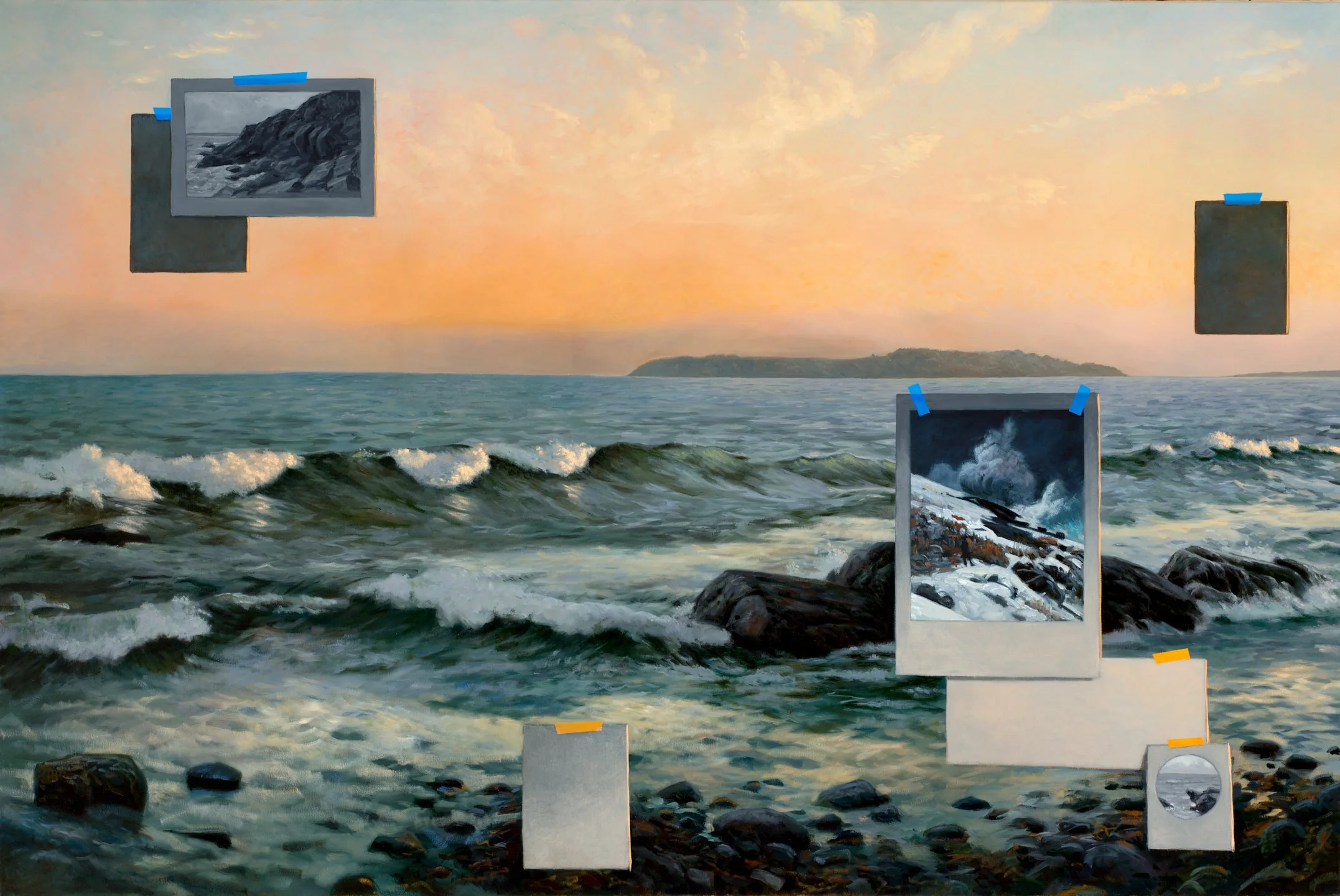
James Mullen, Prouts Neck, 1/1, 2025, Oil and Canvas, 40 x 60 x 1.5 inches, $15,000
My work revolves around the relationship between seeing and knowing.
I see the artist studio as a laboratory to explore how visual ideas generate meaning, with particular focus on the relationship between painting and photography. In this relationship I am compelled by photography’s ability to document, witness and construct visual meaning, and painting’s ability to reflect an accretion of experiences, time, and the human touch. My project explores the space between these media, and the relationship between primary experience and the virtual representation of those experiences. - J.M.
CHRIS SCHIAVO
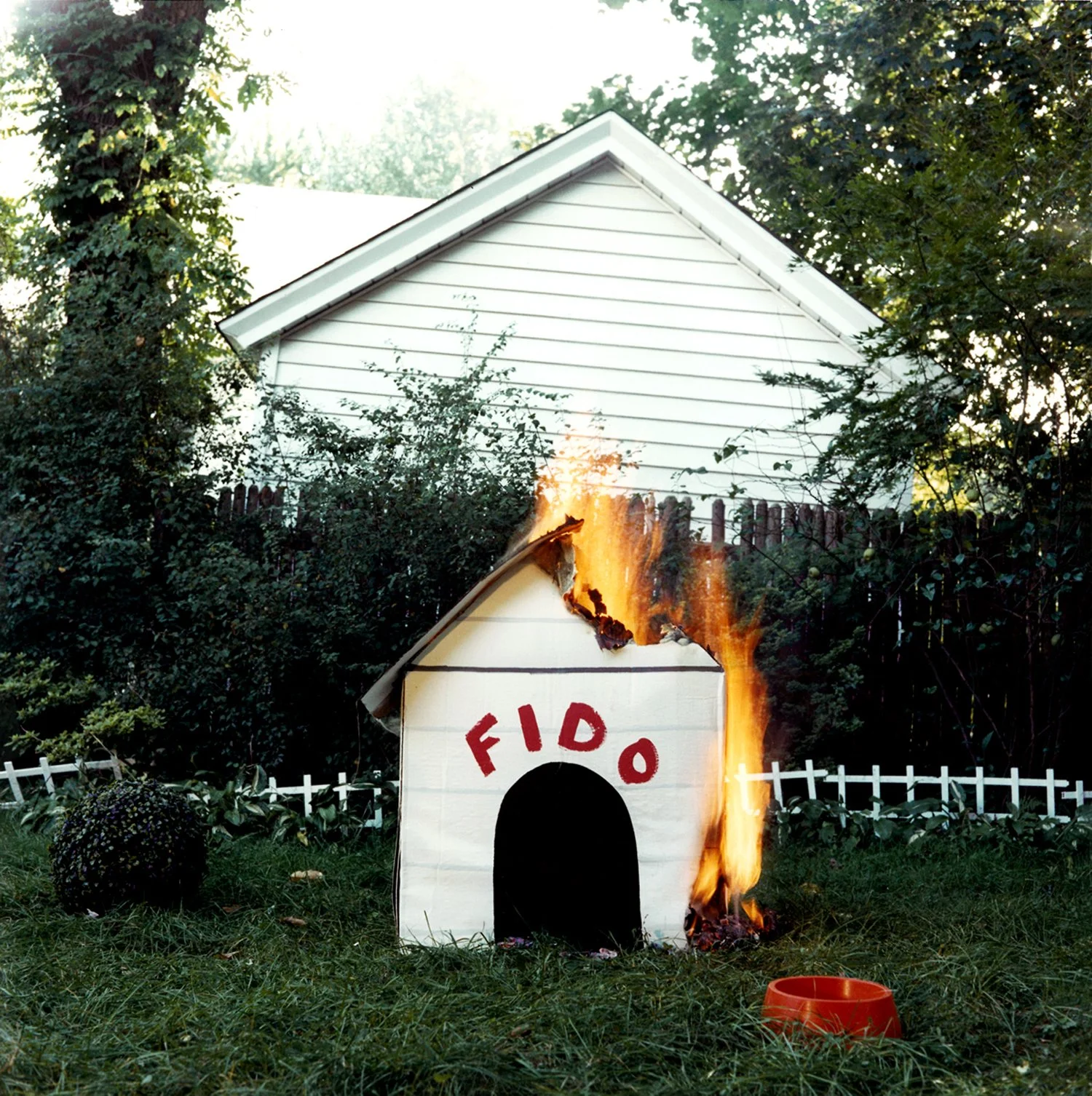
Christine Schiavo, FIDO, Backyard Series, 1989/2026, Digital Print, 40 × 40 inches, $8,000
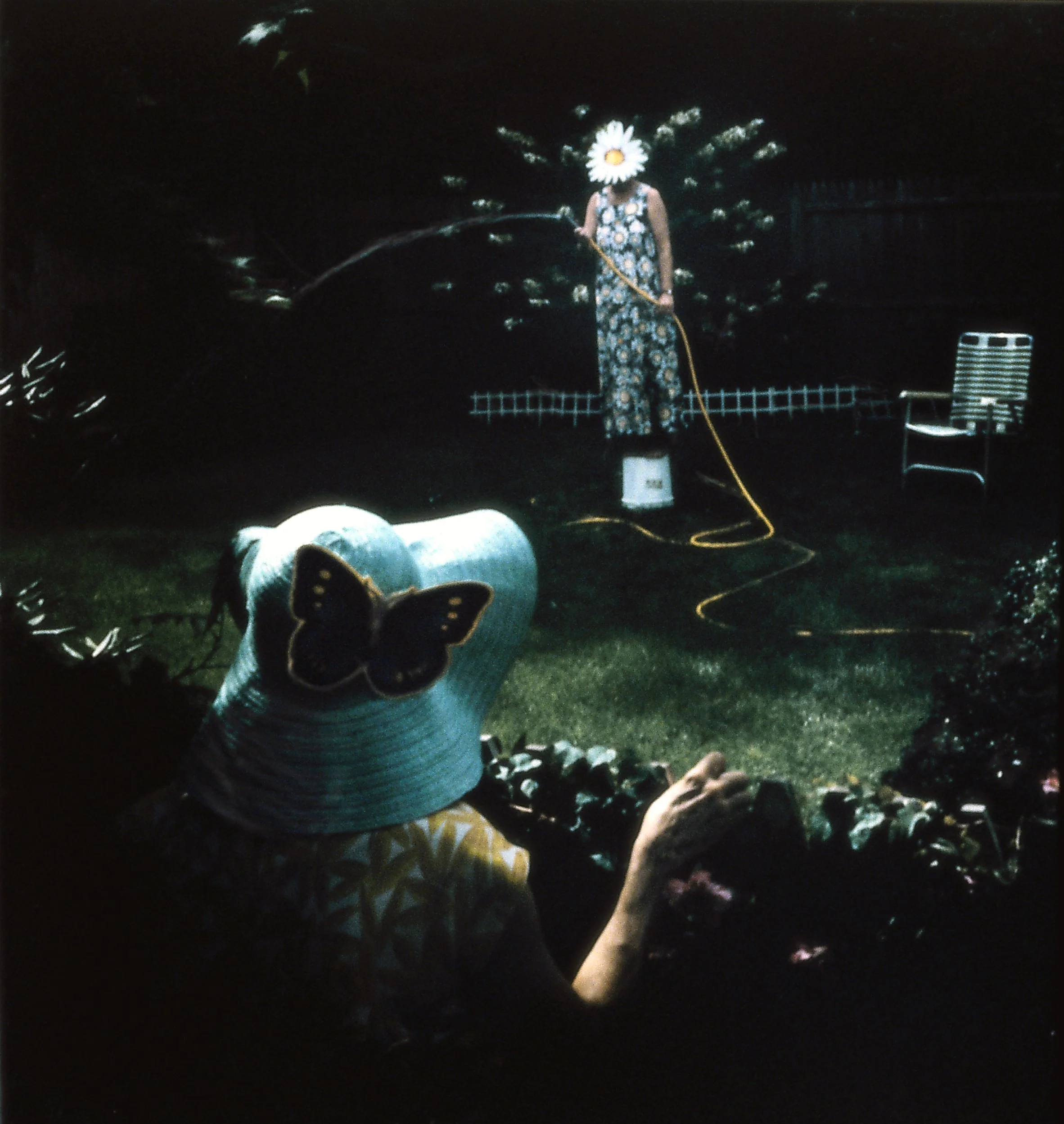
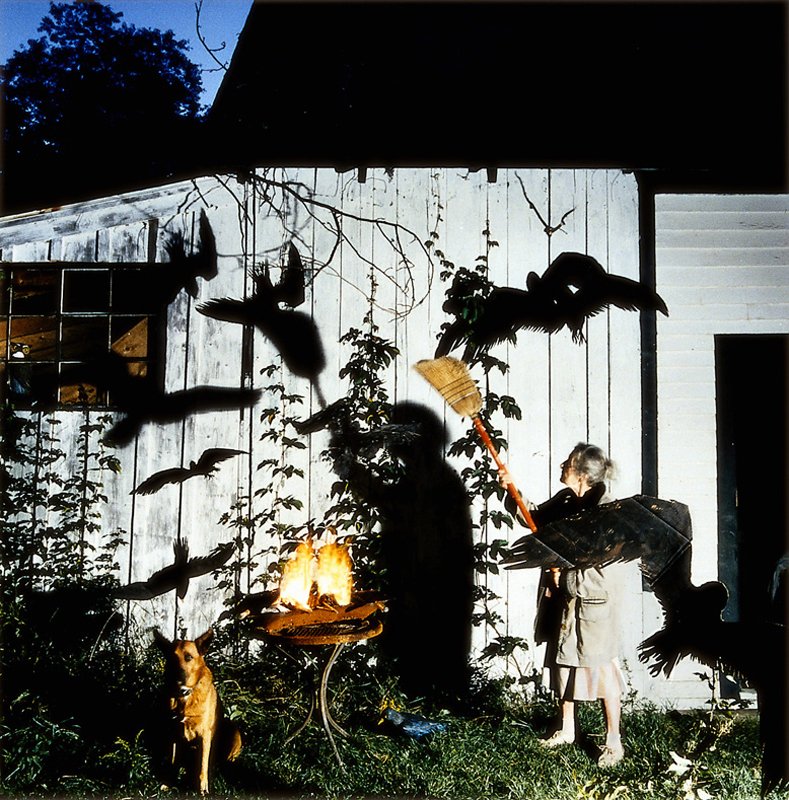
Chris Schiavo is a photographer, filmmaker and multi-media artist born and based in New York City. Schiavo is a storyteller and worldbuilder. Her interests in making art lie in work that evokes both personal and commonly experienced events or memories which linger in the subconscious revealing themselves as loose-forms of personal histories and the stories we tell of our collective lives. Schiavo has worked both as a solo artist and in collaboration with dance, opera, sound, written and spoken word, film and live performance. Even when working in solitude, she feels she is always in some form of collaboration with the environment or people or cultures around her. Dreaming of memories, chasing the ghosts. Her work is in the permanent collections of the Museum of Modern Art, NY, the Metropolitan Museum of Art, NY, the SF MOMA, Ca. among other noted public and private collections. She exhibits her film and photography work extensively in galleries, museums and film festivals internationally.
She has received fellowships from the New York Foundation of the Arts for Architecture and Environmental Spaces, the New York State Council of the Arts / Film, the English Council of the Arts/ Film and Environmental Installation, BCAT Multi-Media Award and most recently in 2022 was awarded a creative artists fellowship from the American Academy of Arts and Letters. Artists Residencies include Macdowell, Yaddo, Ucross, Saltonstall, Milay, VCCA, Stone Quarry Hill Art Park, Braziers and the Marie Walsh-Sharpe Studio Program, NYC. She has a BFA in visual art and Film from SUNY Purchase and an MFA from the Empire State College of NY. Schiavo premiered the first two chapters of a black and white, silent film titled “Rivet Girl; A constant coming of age story”, told in 12 interchangeable chapters at the Museum of Modern Art, NY. The film, a silent, black and white piece, uses super-eight, analog and digital film, drawing, photography and original music, to tell the coming-of-age story of a female protagonist in search of identity and unique sense-of-self within a subconscious, alternate reality. Schiavo is currently working on a three part film, photography and limited edition monograph titled “ Chasing Ghosts. NYC “. This multiple media work, produced over a decade of riding the NYC transit systems, uses a variety of Cellphone cameras and altered recording devices capturing an infinite loop of surreal and abstracted images of the brief glimpses and fractured narratives of ‘ familiar strangers ‘ encountered over a decades worth of daily commutes.
Emily Betz
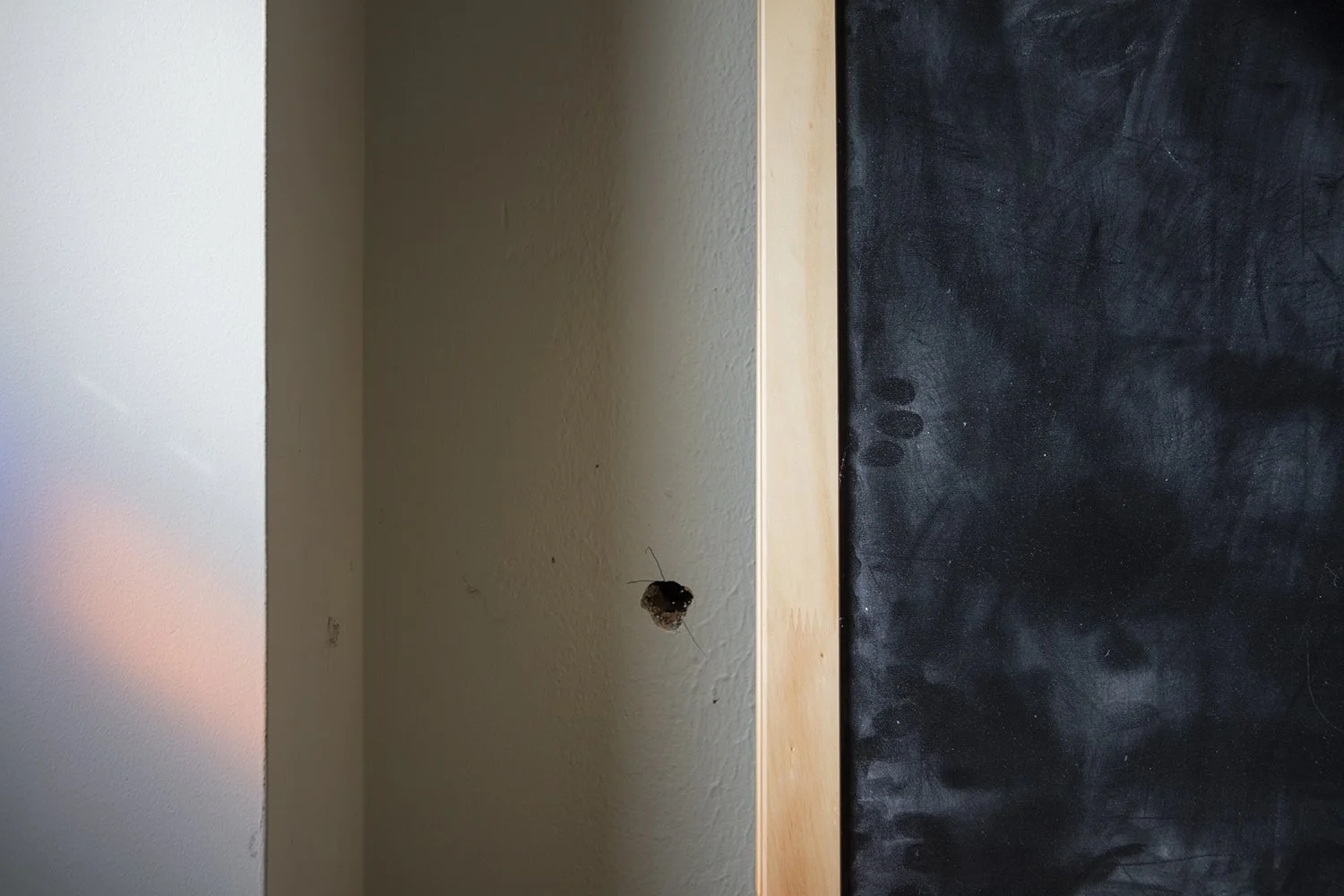
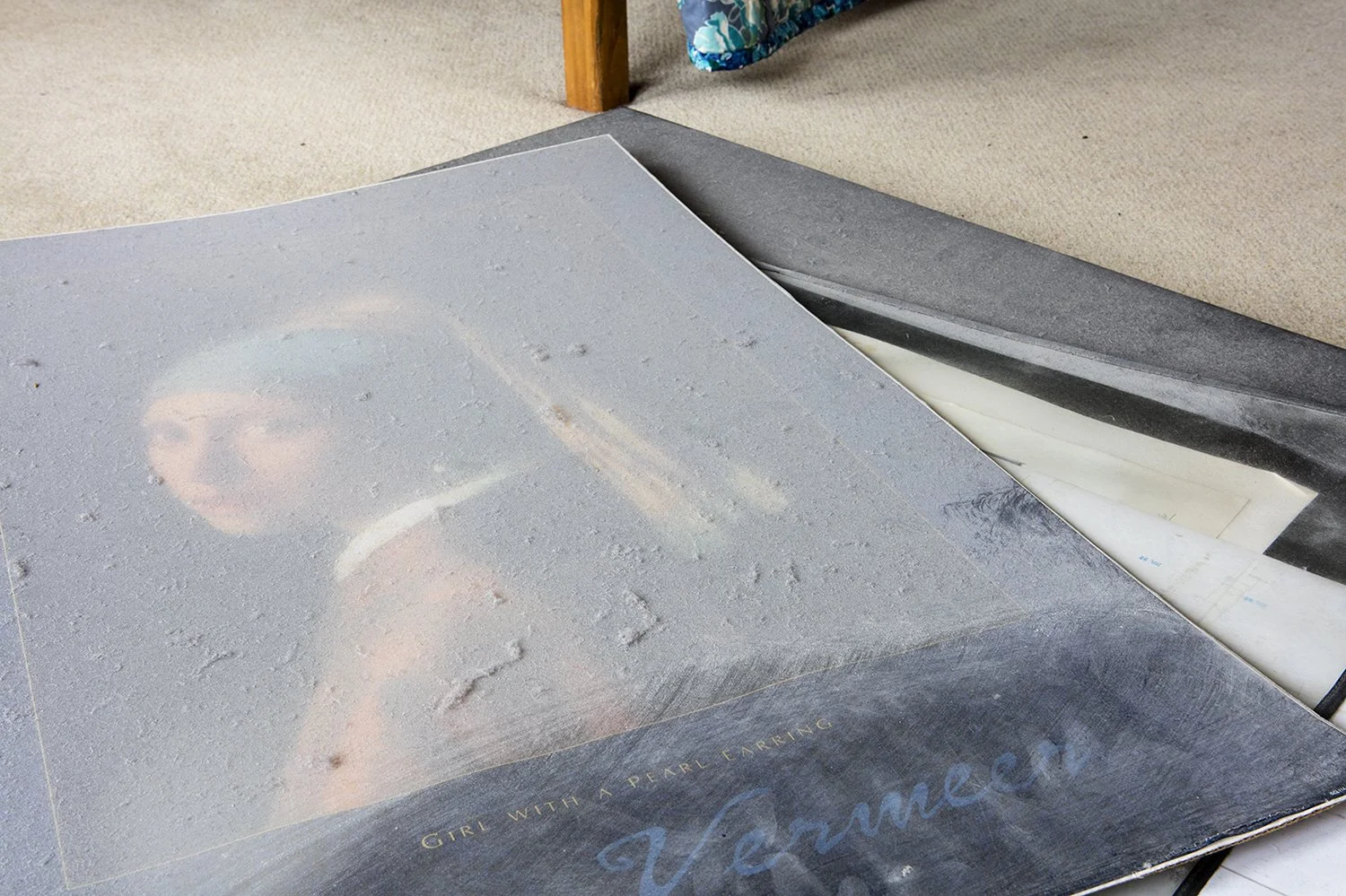
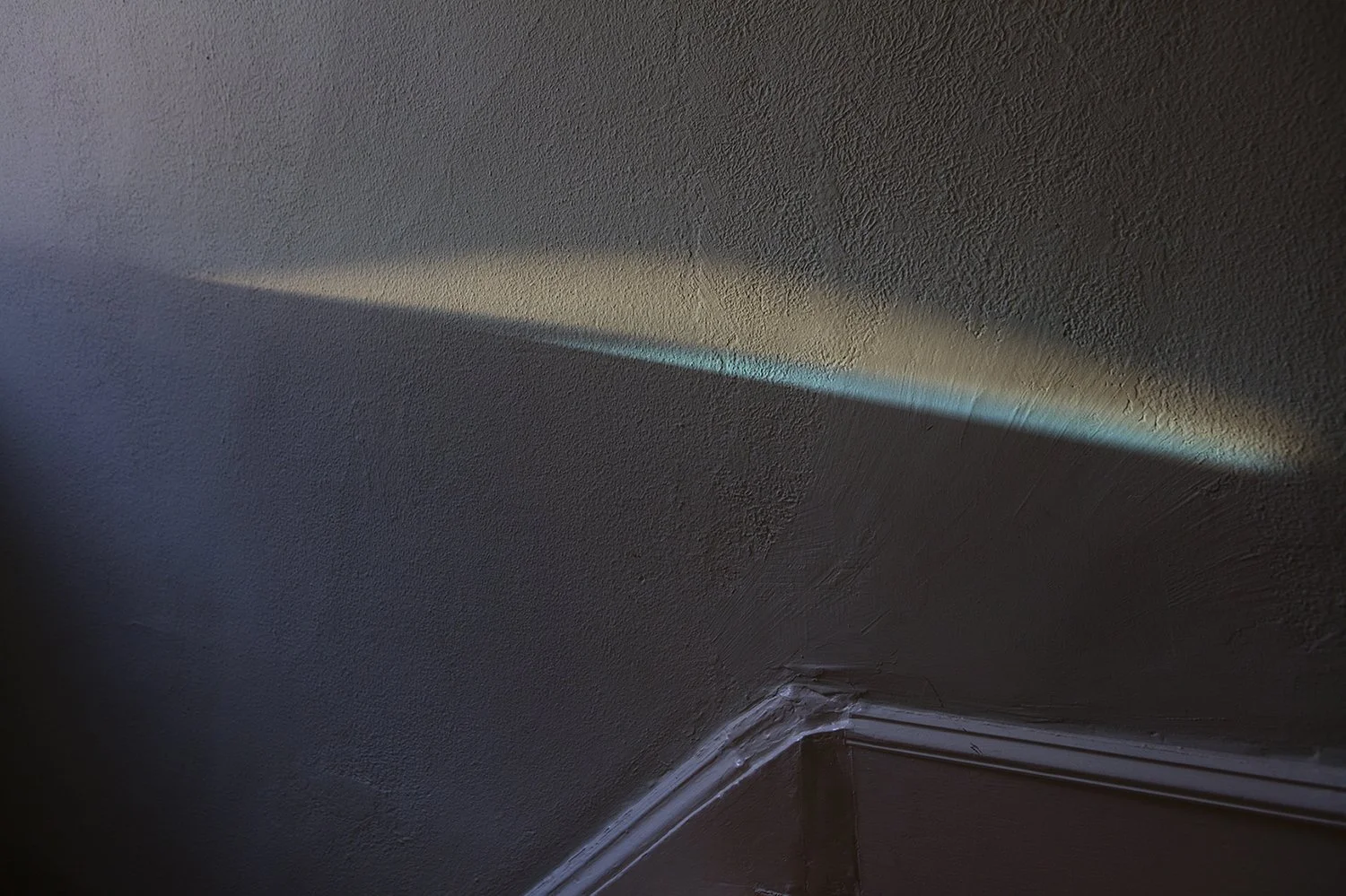
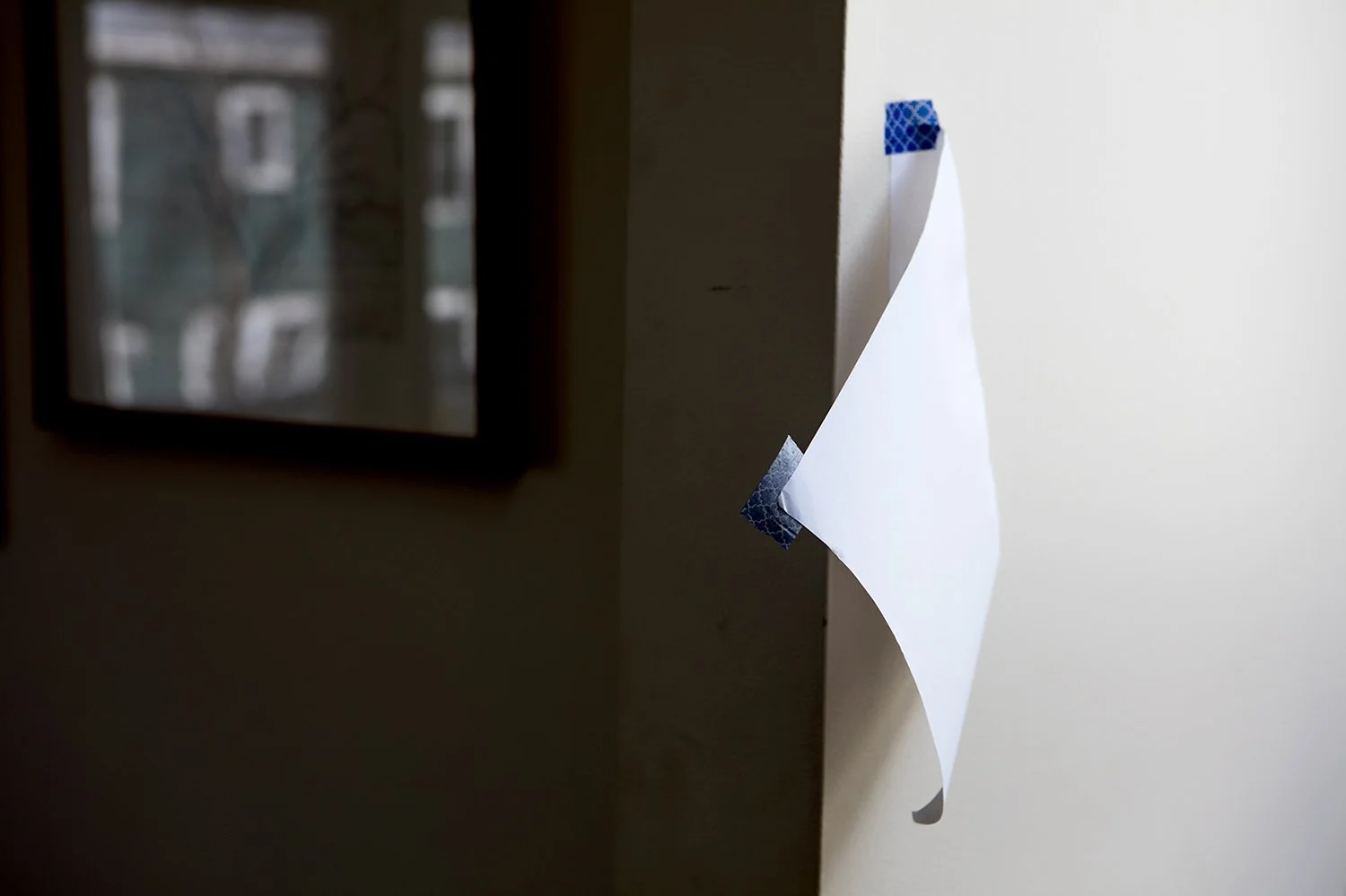
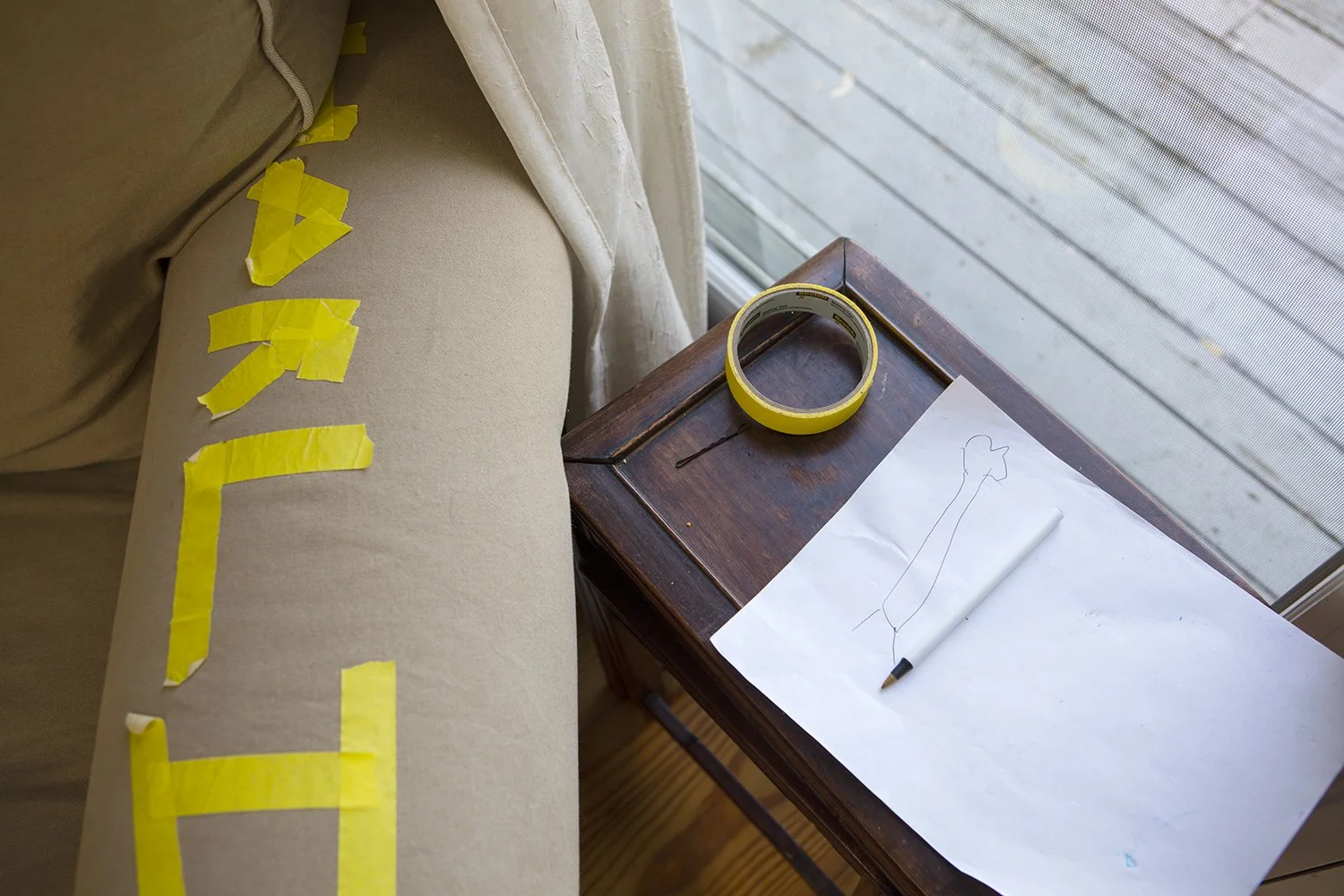
Forward From Where We Came is a photographic inquiry into the immaterial aspects of inheritance. These images were taken in three houses: my husband’s childhood home, the home my parents shared until my father’s death, and the house my son was born in. As I photograph, I think about the lives lived in these homes, and the stories that survive. Many of the images bear traces of the people who occupied these spaces: hairpins, a handprint on a chalkboard, a piece of paper taped to the wall about to fall down. I investigate these intangibles through the language of the lens. - E.B.
Emily Belz is a Boston-based independent photographer, educator, and curator. Her photographs focus on telling stories through the traces, objects, and slants of light that have been left behind. Belz has exhibited her photographs widely in both solo and group exhibitions at venues including the Danforth Museum, the Newport Art Museum, the Griffin Museum of Photography, and Gallery Kayafas.
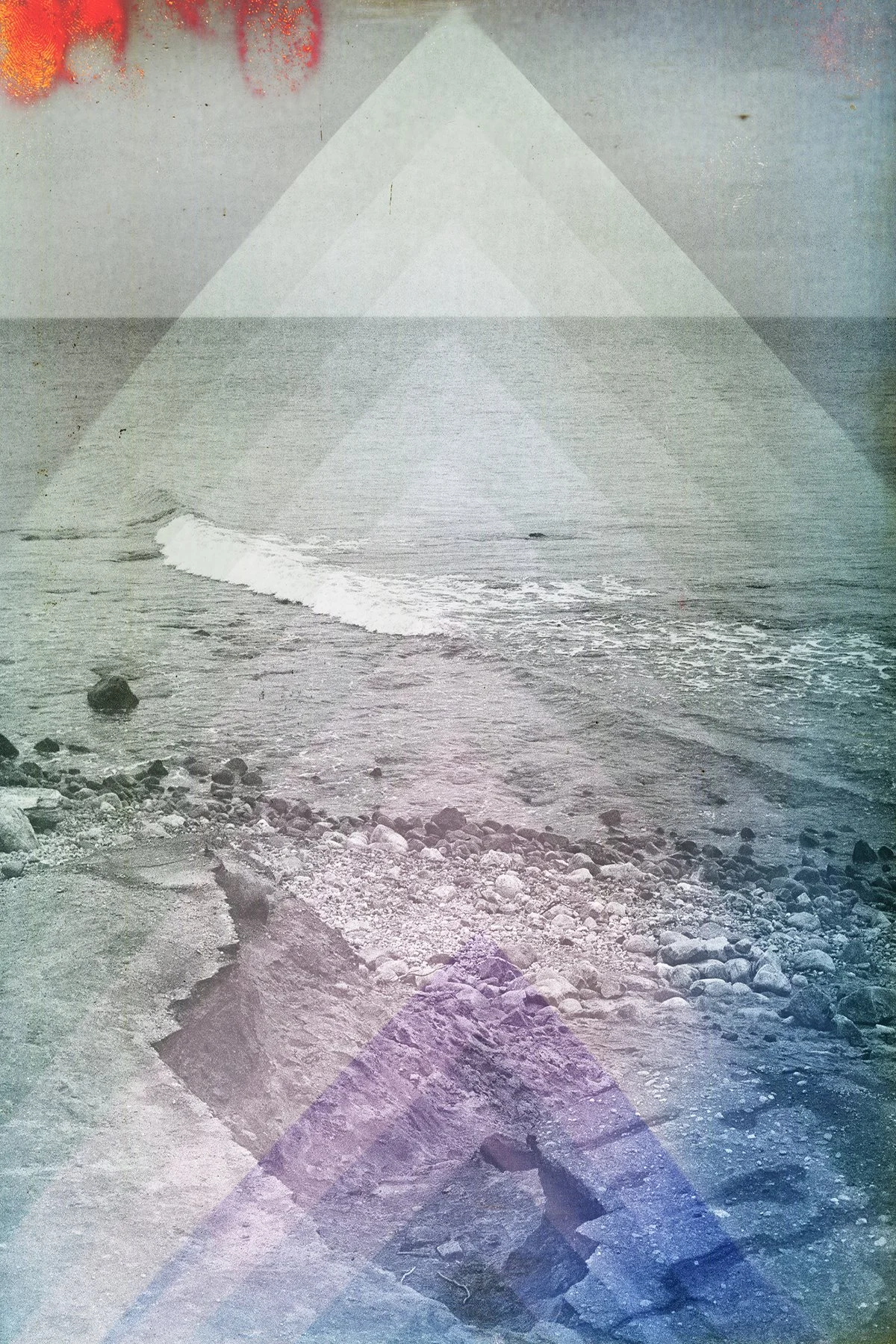
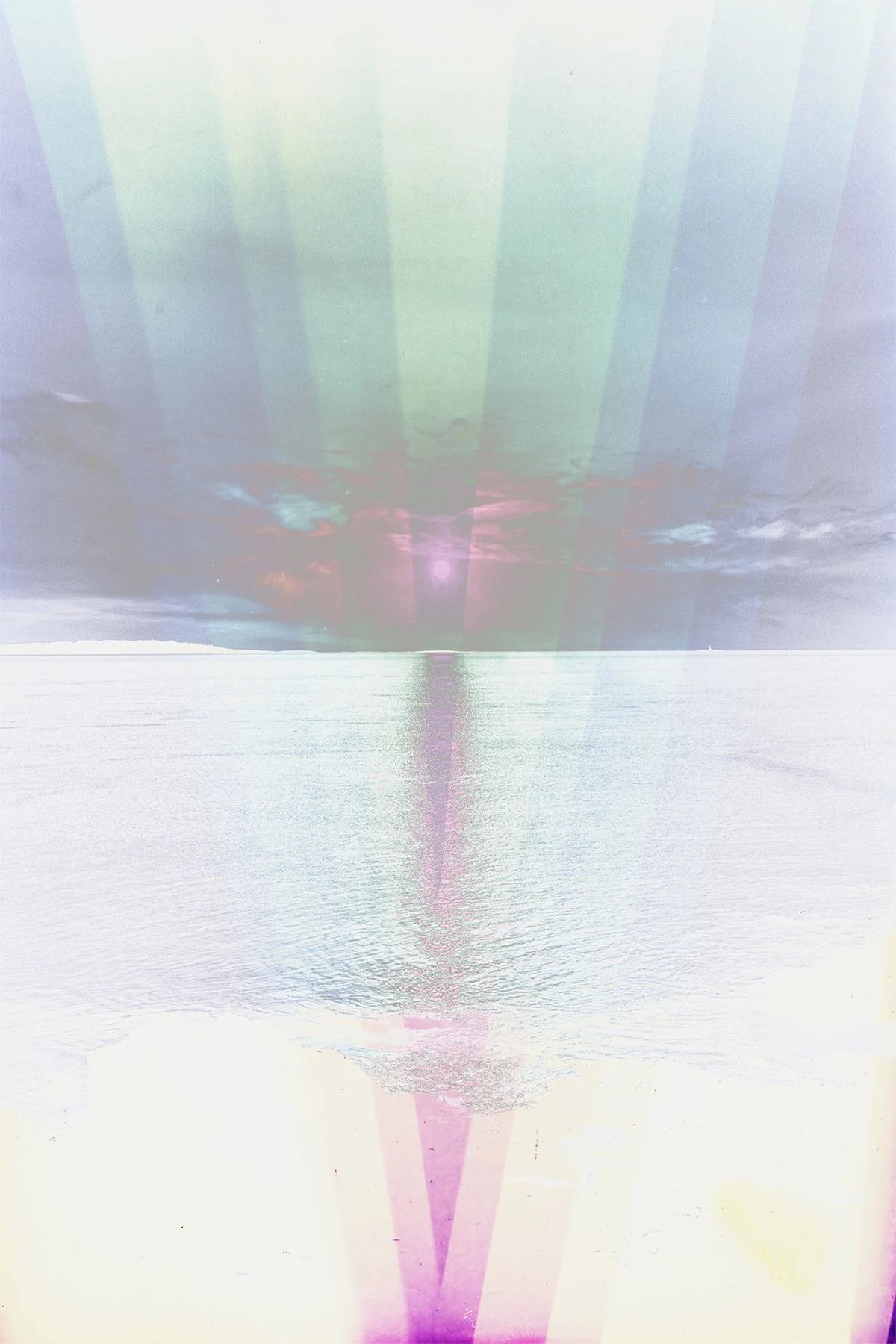
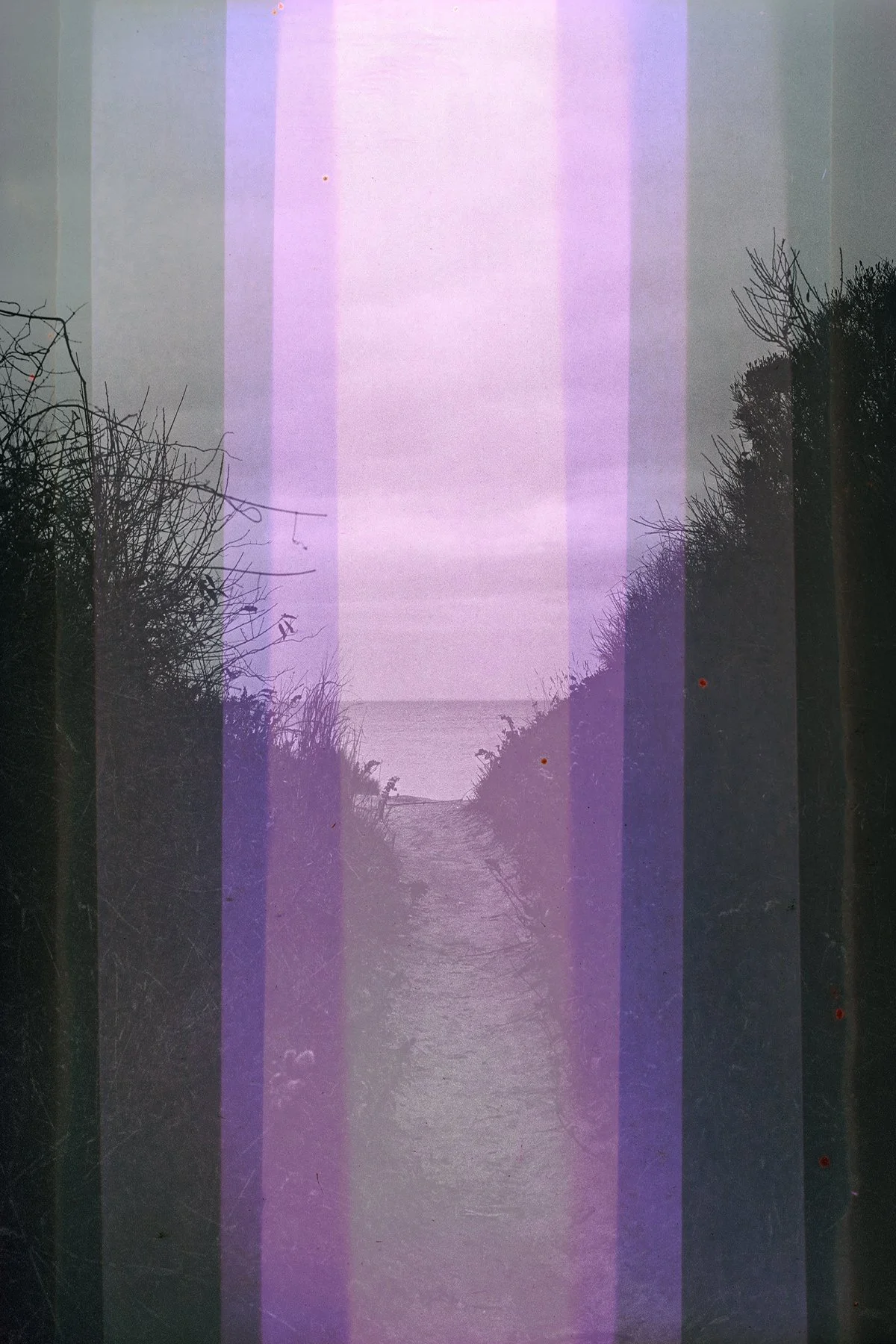
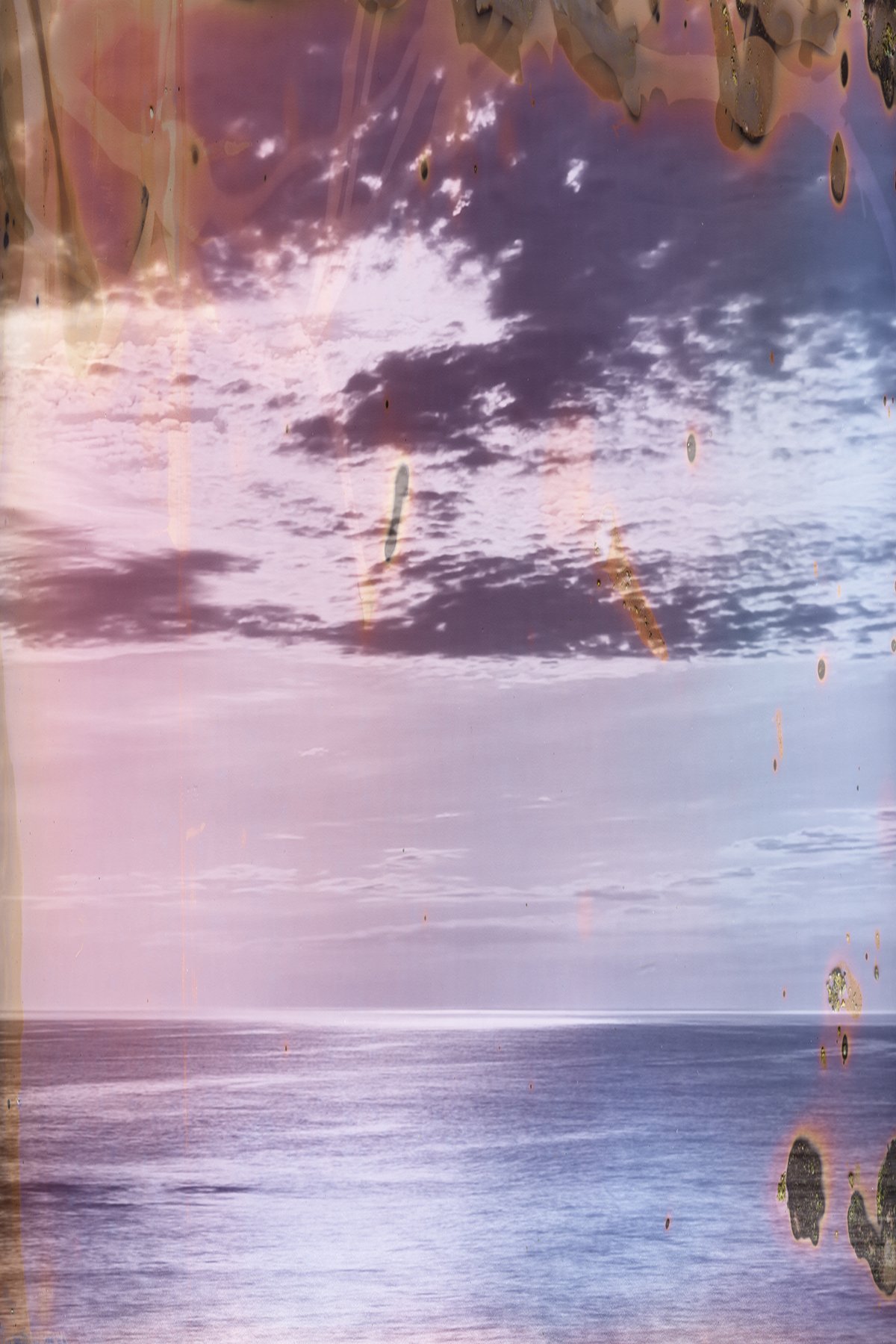
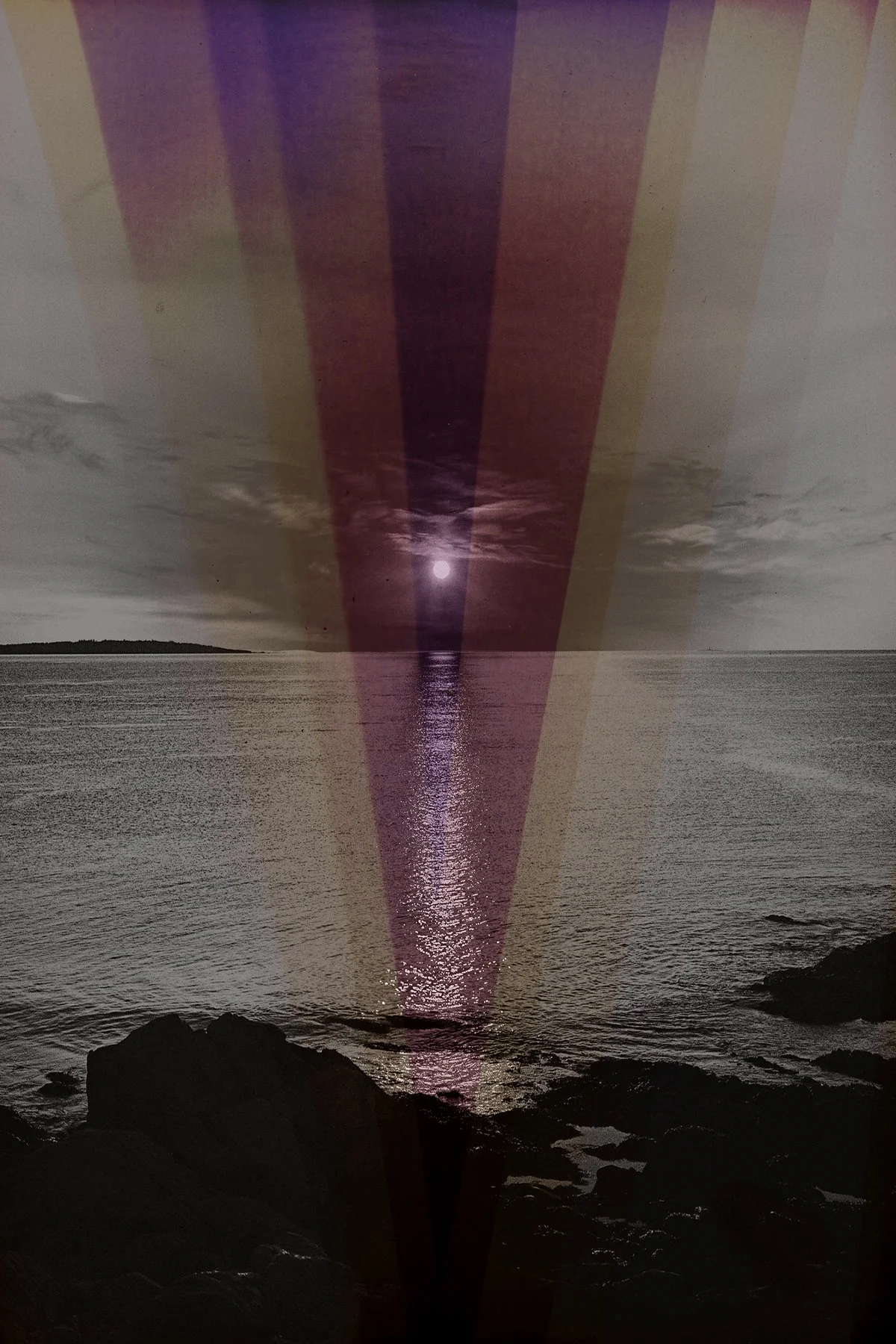
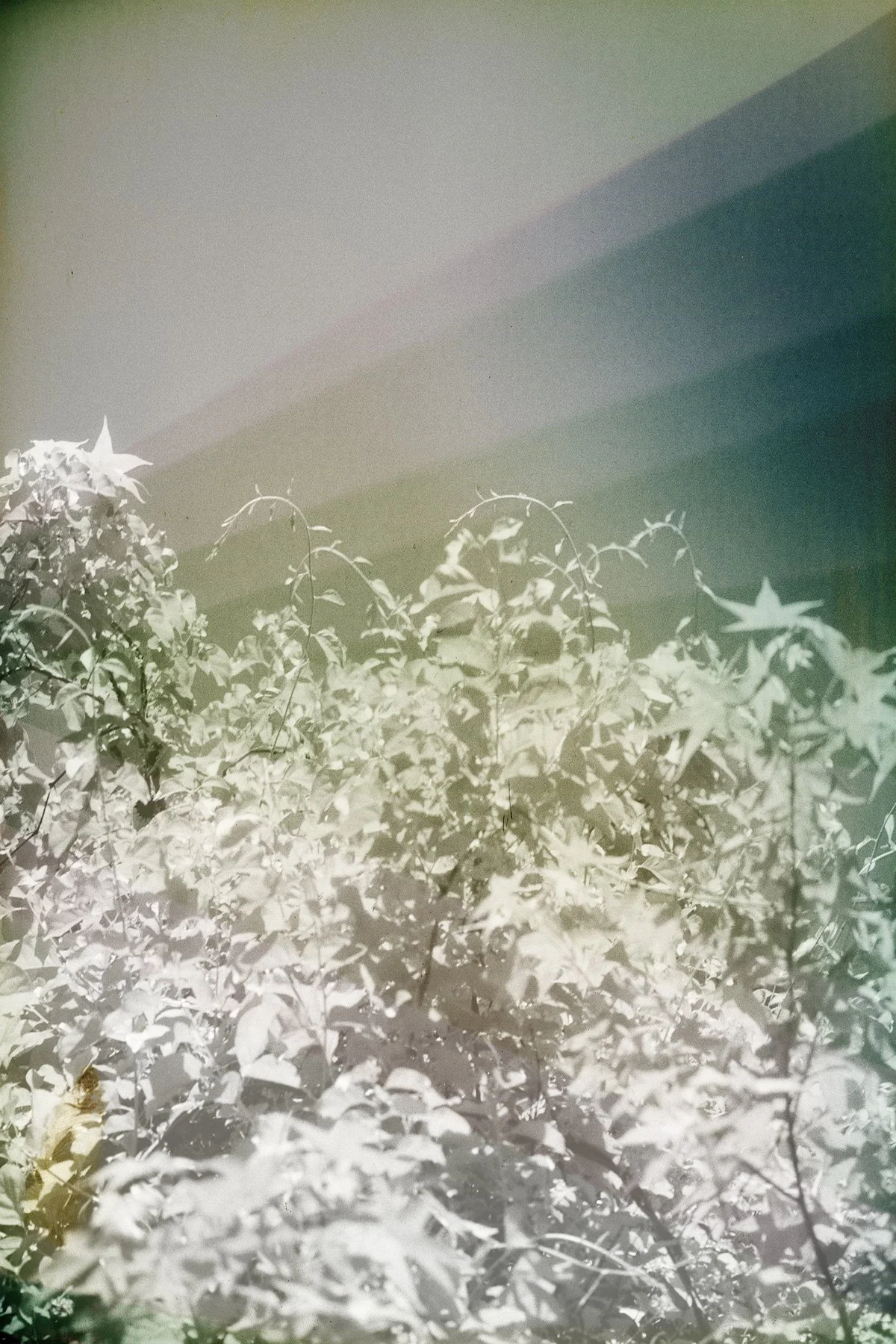
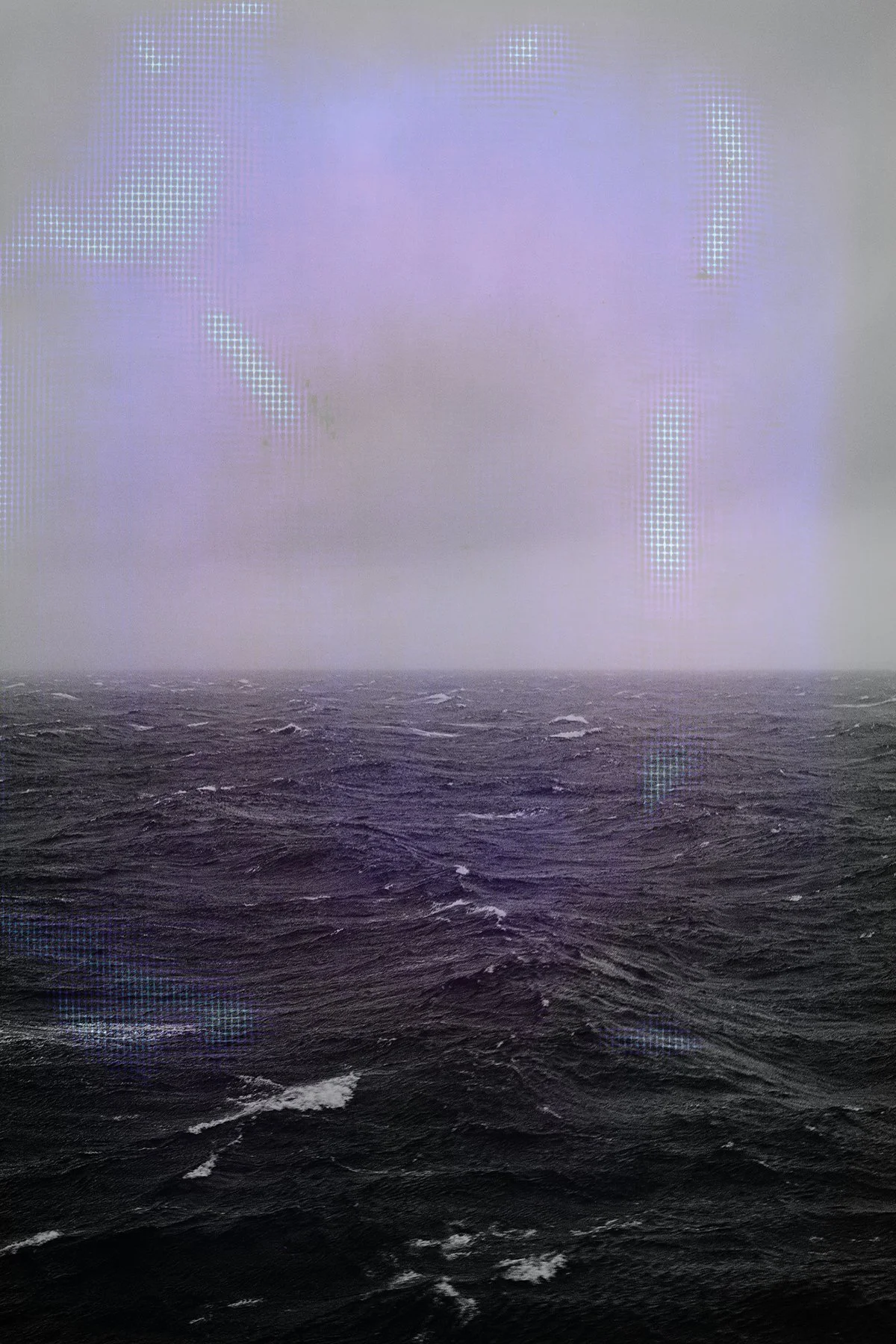
Cole Caswell
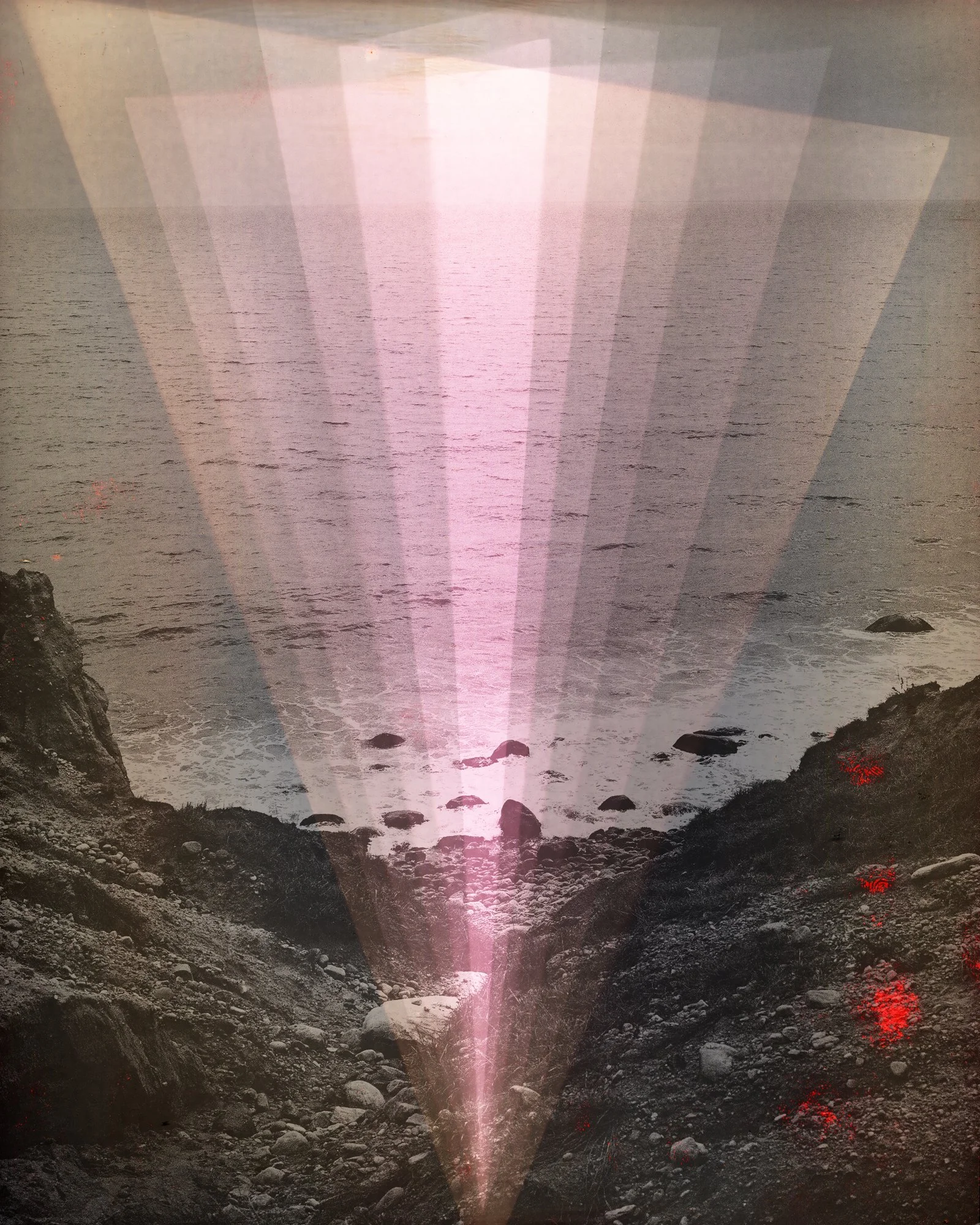
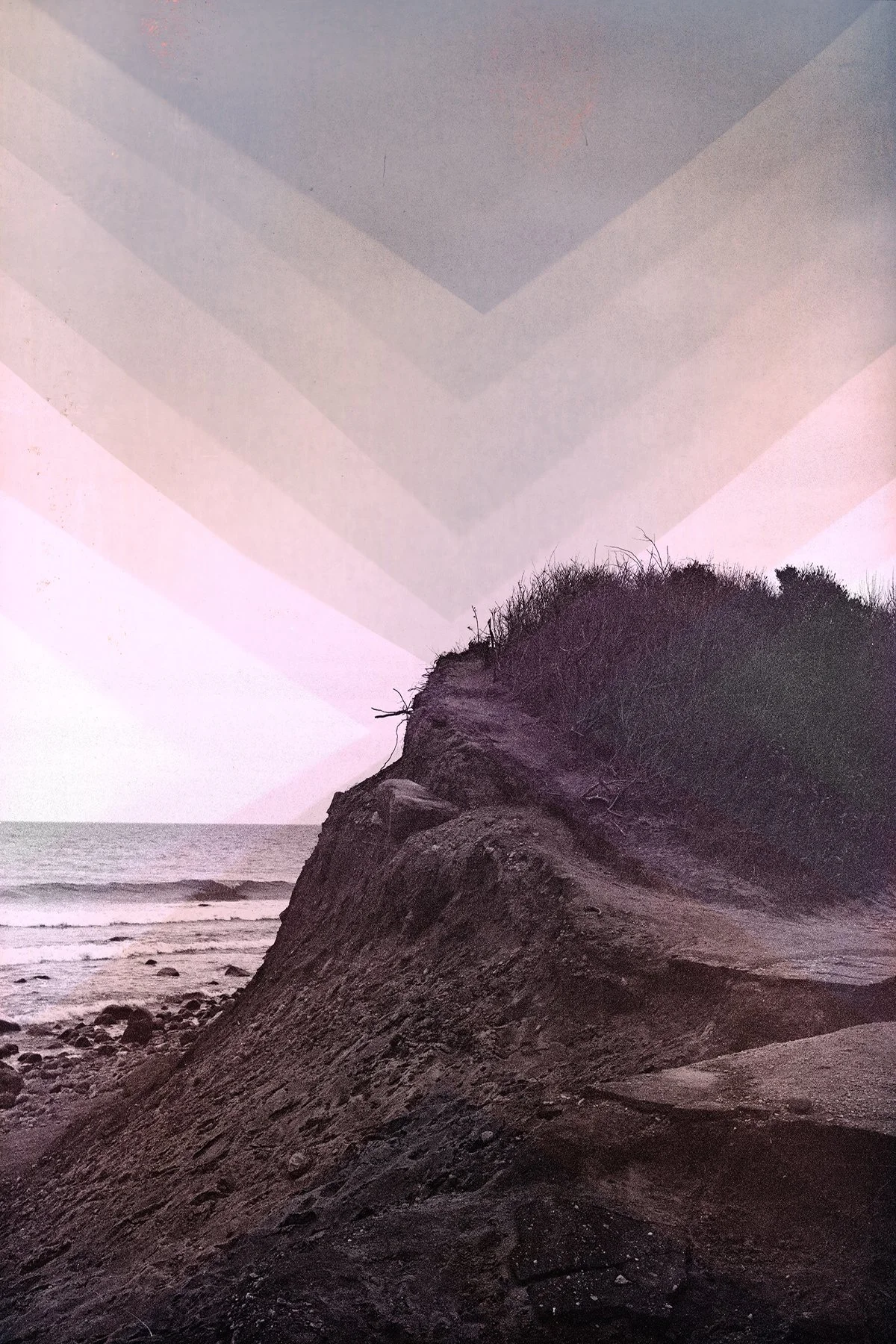
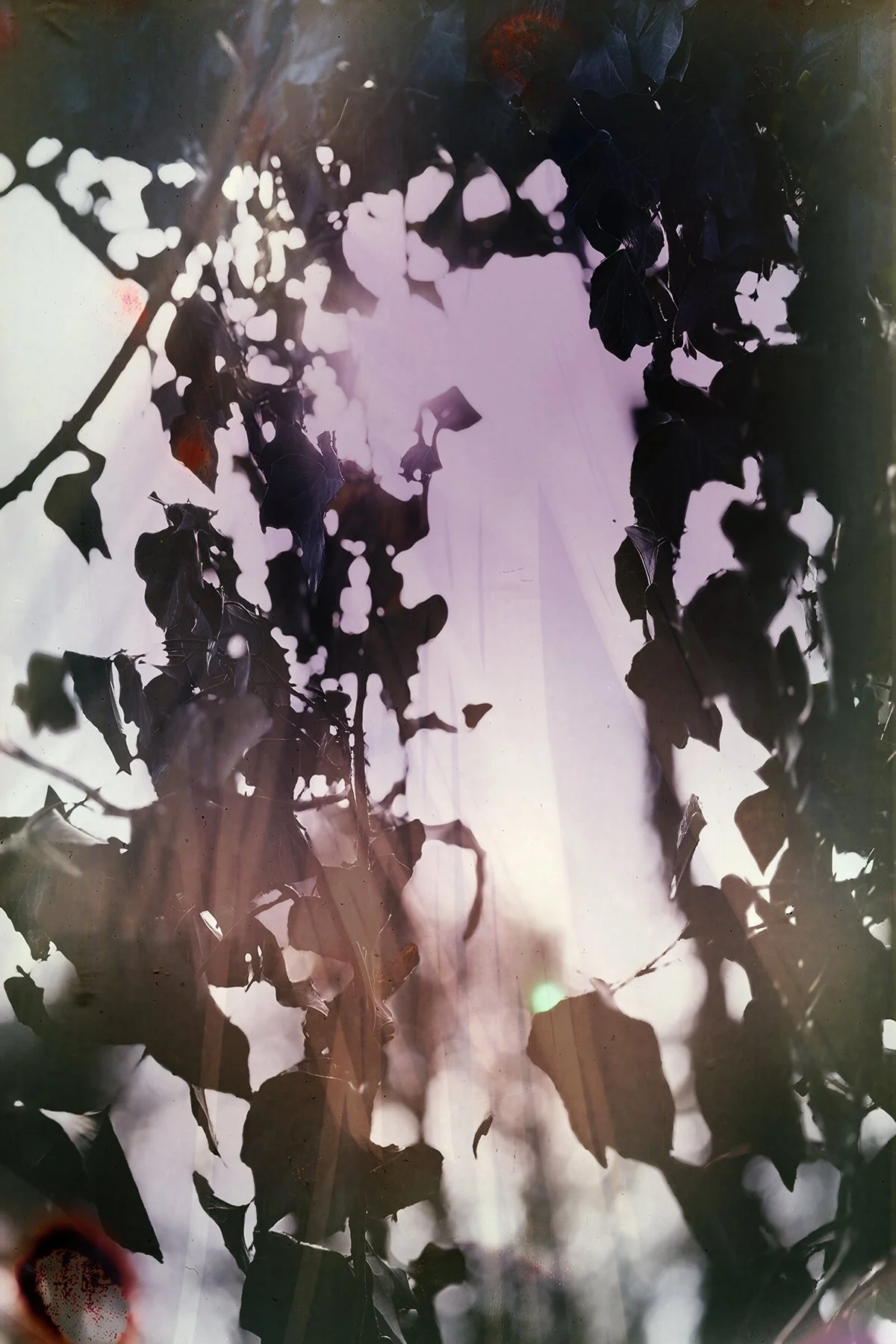
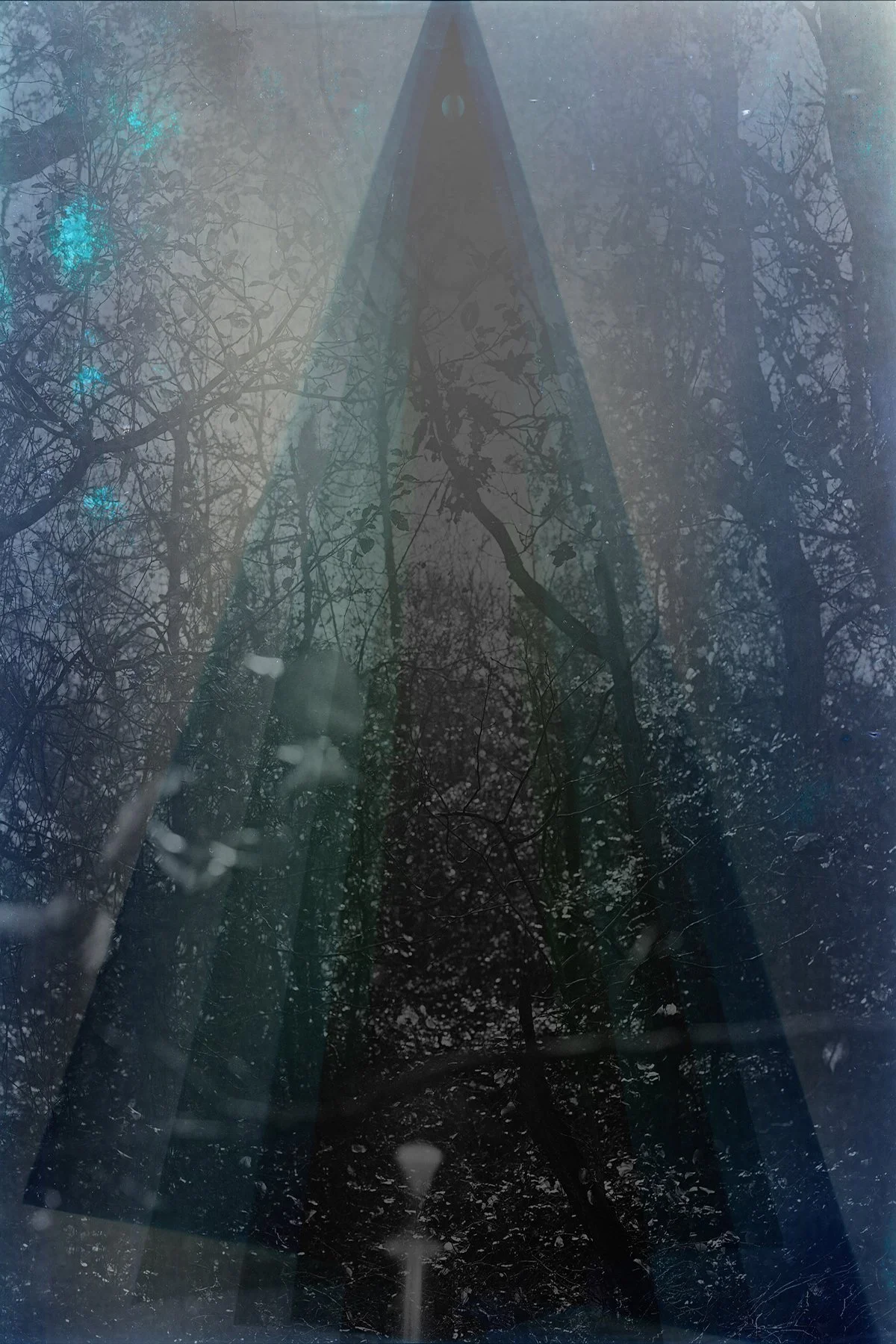
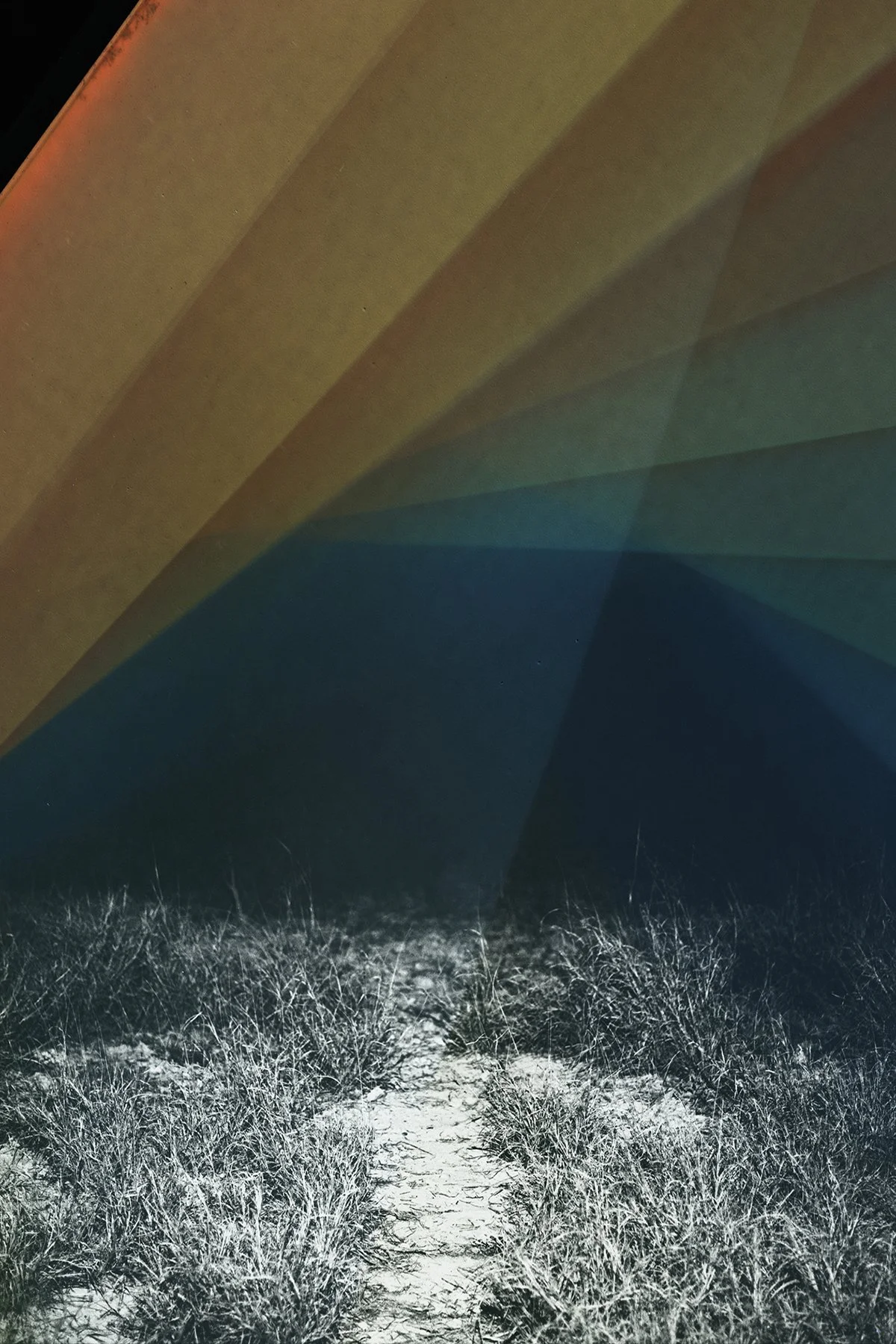
Cole Caswell, Before the Abyss, Beacon Sound, 2025, Pigment Print, 5.5 x 7.5 inches, $230
For the past decade Caswell has been living and working nomadically throughout the country, exploring man’s ability to subsist and create within our contemporary environment. Whether on the road or in his studio on Peaks Island, Maine, he continues his research and exploration into emergent and experimental photographic techniques, perspectives, and applications. The Event Horizon exhibition revels in these experimentations and questions how we perceive the modern landscape and our relationship to it. It is an accumulation of Cole Caswell’s observations on the shifting nature of reality.
Suzanne Theodora White
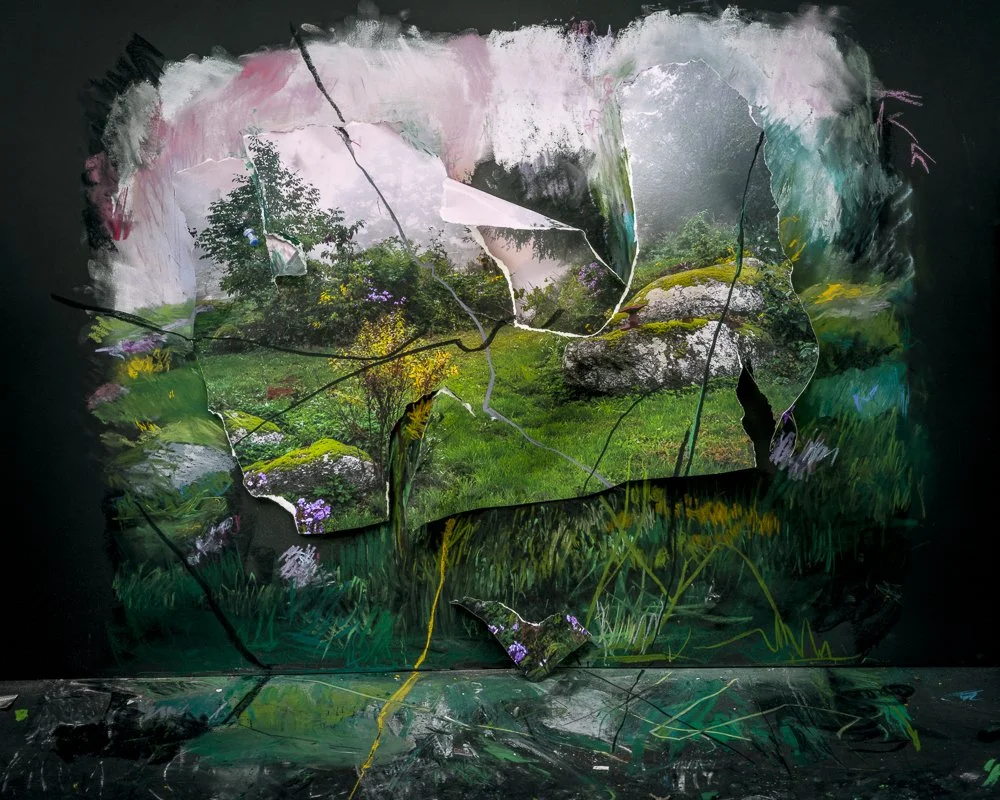
Suzanne Theodora White, Looking Back, 1/10, 2024, Archival Pigment Print, 25 × 31 inches, $1900
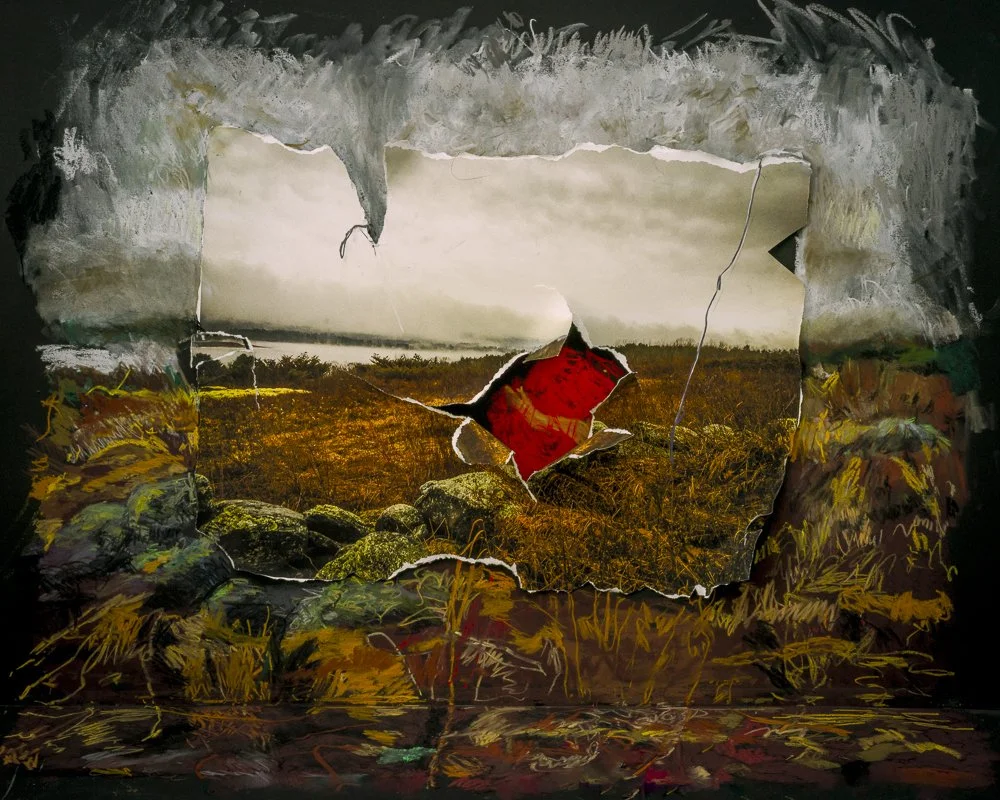
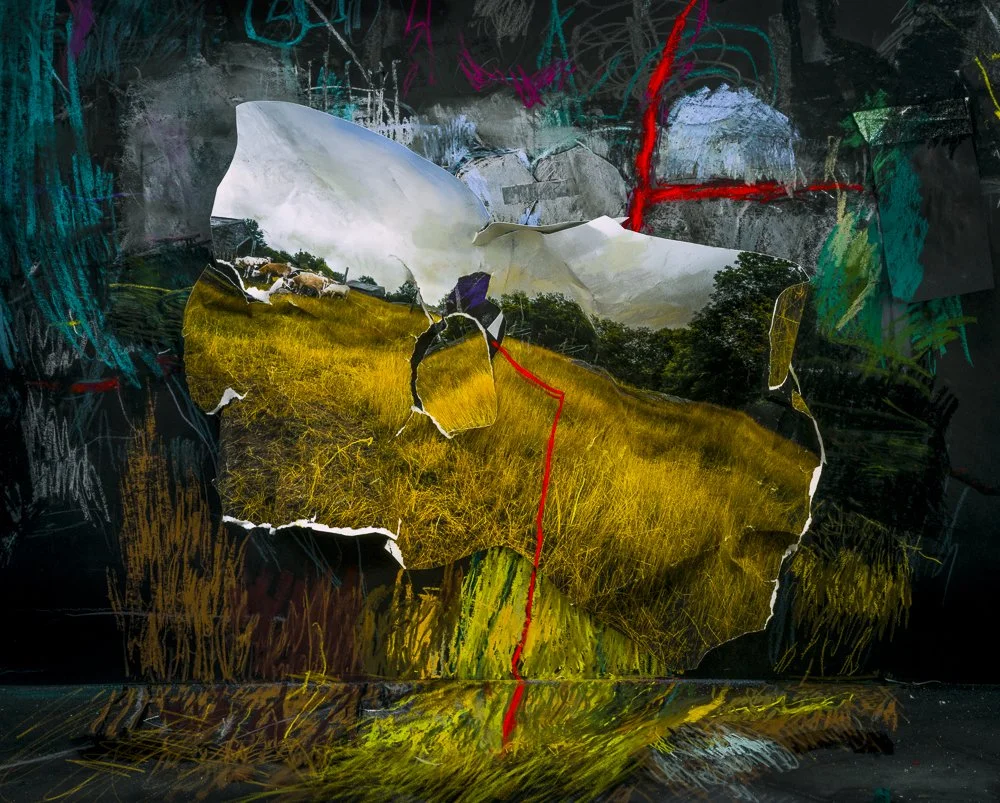
My constructed theaters are both imagined landscape and still life. Still life in the spirit of vanitas paintings where the remains of a lavish repast symbolize carelessness and indifference towards life’s abundance, and we see the remnants that remain. Landscape’s history as it is written on the fields and forests where I reside. Living in the Anthropocene era I see it as a chance to challenge the nature of our connection to the natural world. My journey embraces a yearning and hope for reconciliation and healing. This series is the last in a trilogy of projects begun in 2019 which includes The Weight of Memory and The Unguarded Moment. - S.T.W
Justin Kirchoff
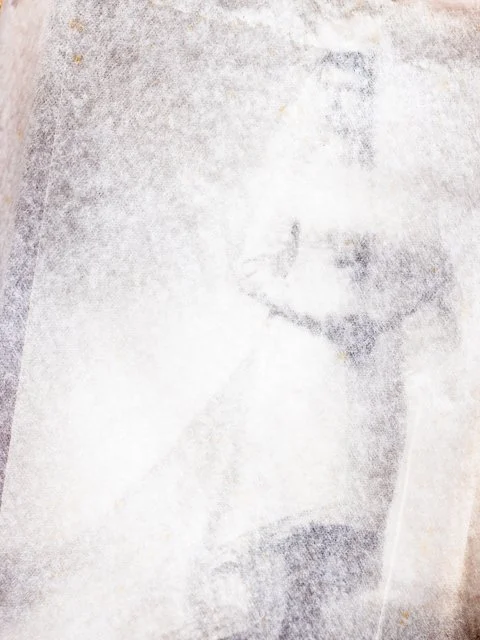
Justin Kirchoff, Moms Wedding Announcement, 1/9, 2025, Archival Inkjet Print, 31 x 23 inches, $1800
Justin Kirchoff is an artist whose work explores the built landscape, personal identity, and the material and emotional resonance of the photographic print. He received his BFA from the Maryland Institute College of Art and his MFA from the Massachusetts College of Art. He has taught at the Maine College of Art and Design since 1998.
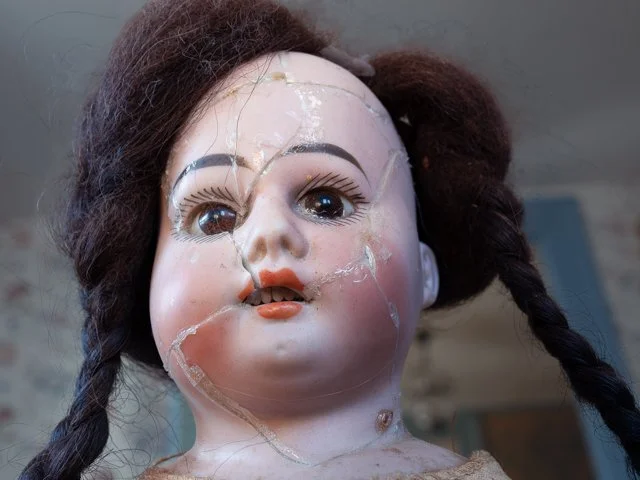
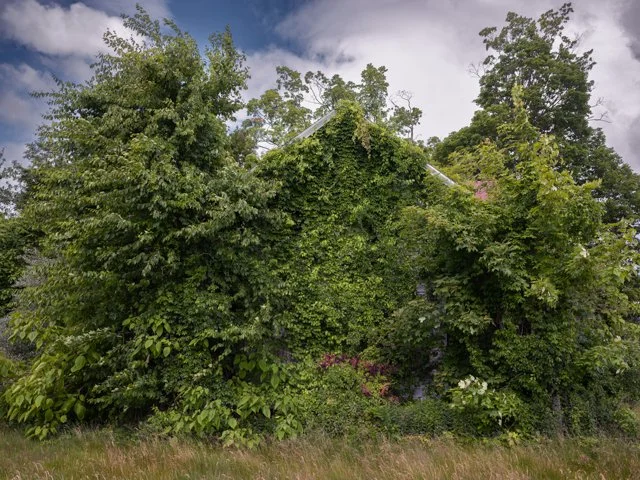
Under Bare Poles is the third and most comprehensive body of work in an unplanned trilogy, preceded by Inherit Traits followed by Half-Life. This most recent body of work emerges from the death of my parents and the subsequent process of sorting through what remains after life. These circumstances become both subject and catalyst, creating a visual and emotional foil to images of my daughter, who is beginning to navigate adulthood.
While the work is grounded in mourning, death, and loss, it expands beyond my family and their objects to include landscape imagery. These landscapes function as an emotional barometer: photographs made in transit, during visits, hospital trips, and the eventual hospice experience. They reference the passage of time and a shifting psychological state of grief.
Ignoring my self consciousness of yet another artist’s body of work centered on loss. I embrace a compulsion to respond to a lifetime of accumulation, to my parents’ obsessive collecting, and to the lingering presence and burden of their choices. Through this process, I attempt to understand their histories, their secrets, and their influence. — J.K.
Jim Nickelson
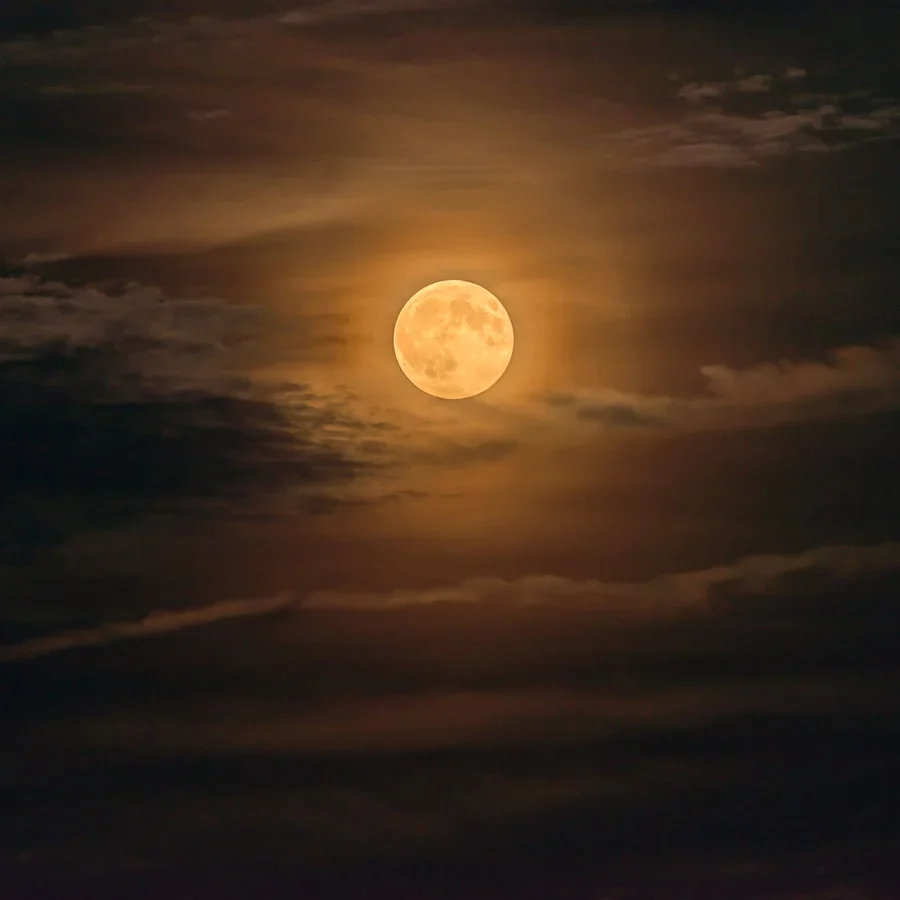
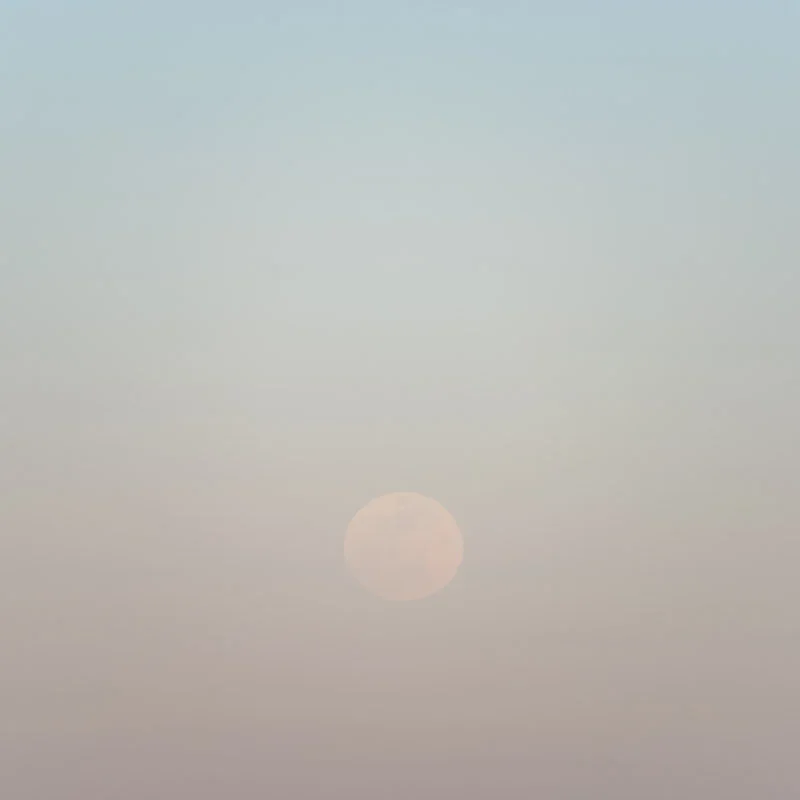
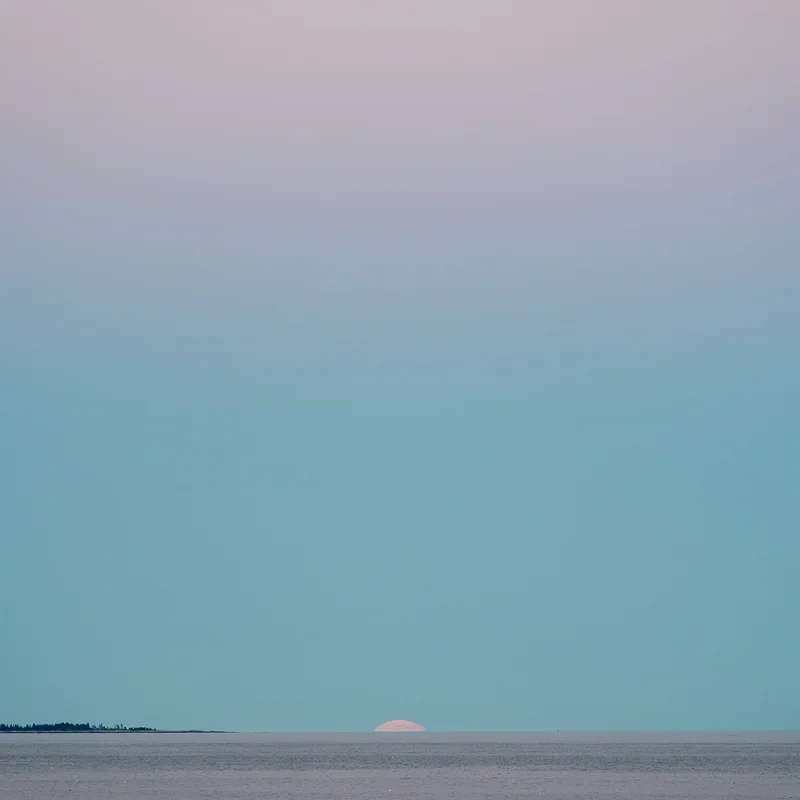
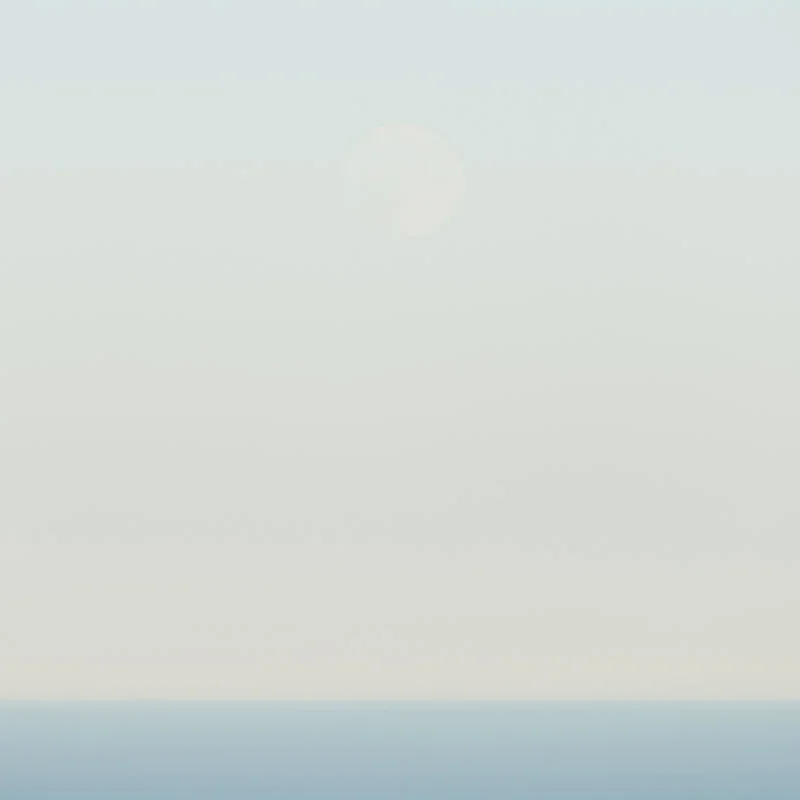
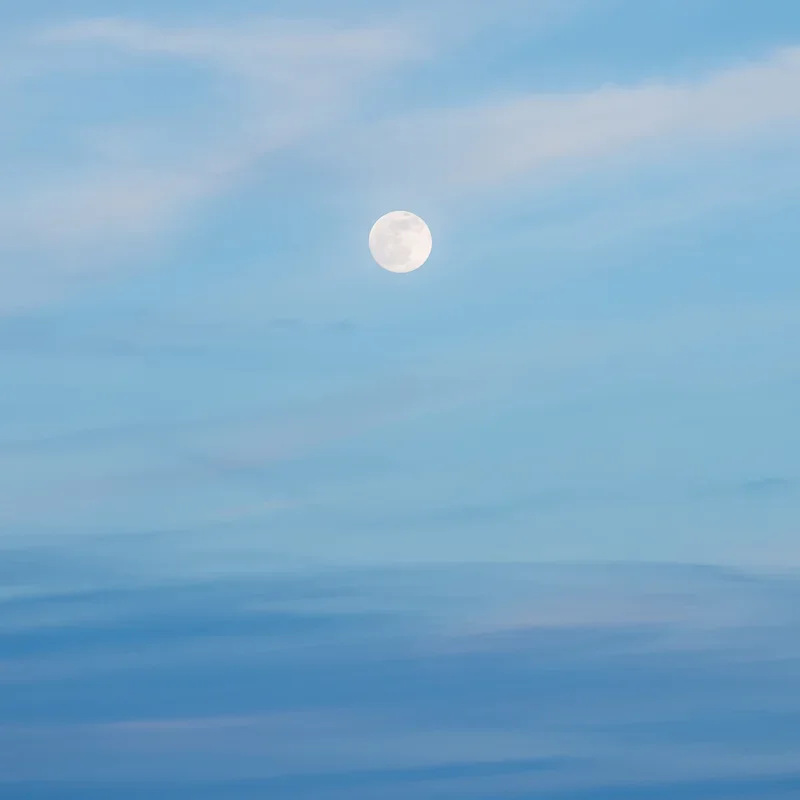
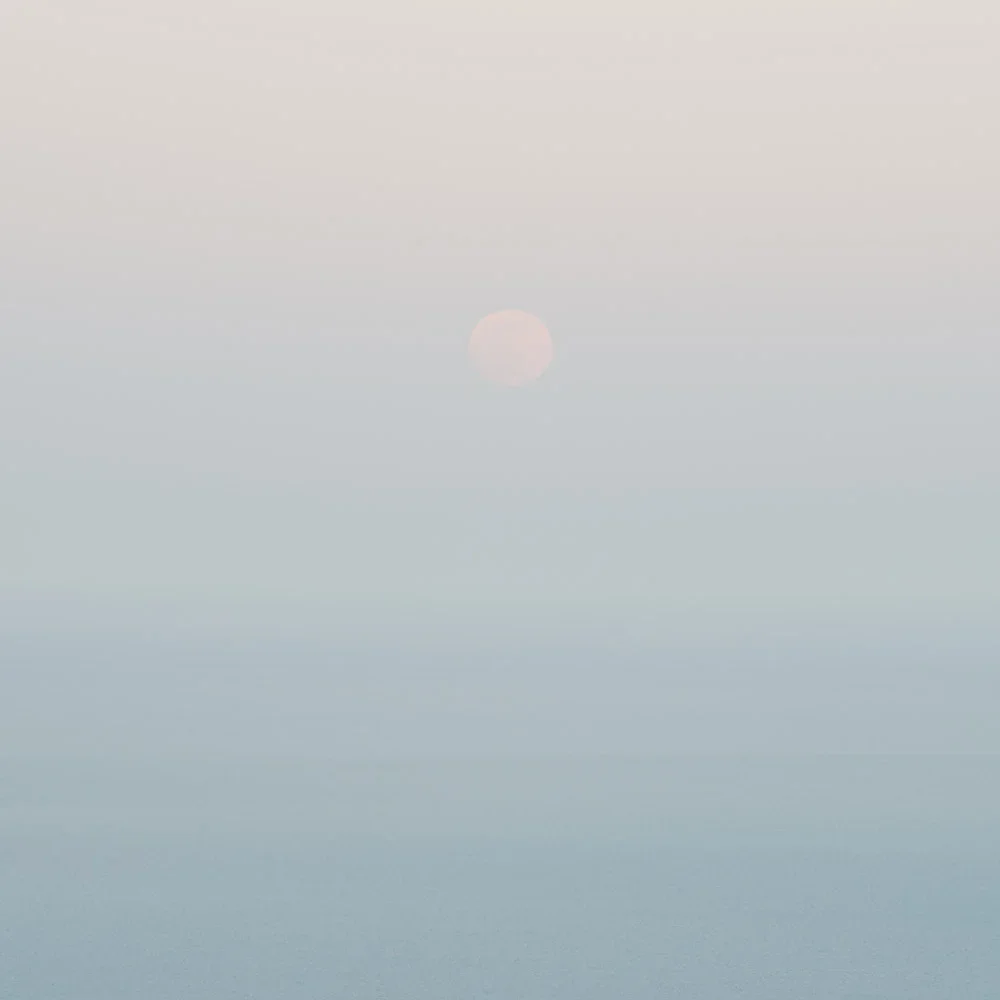
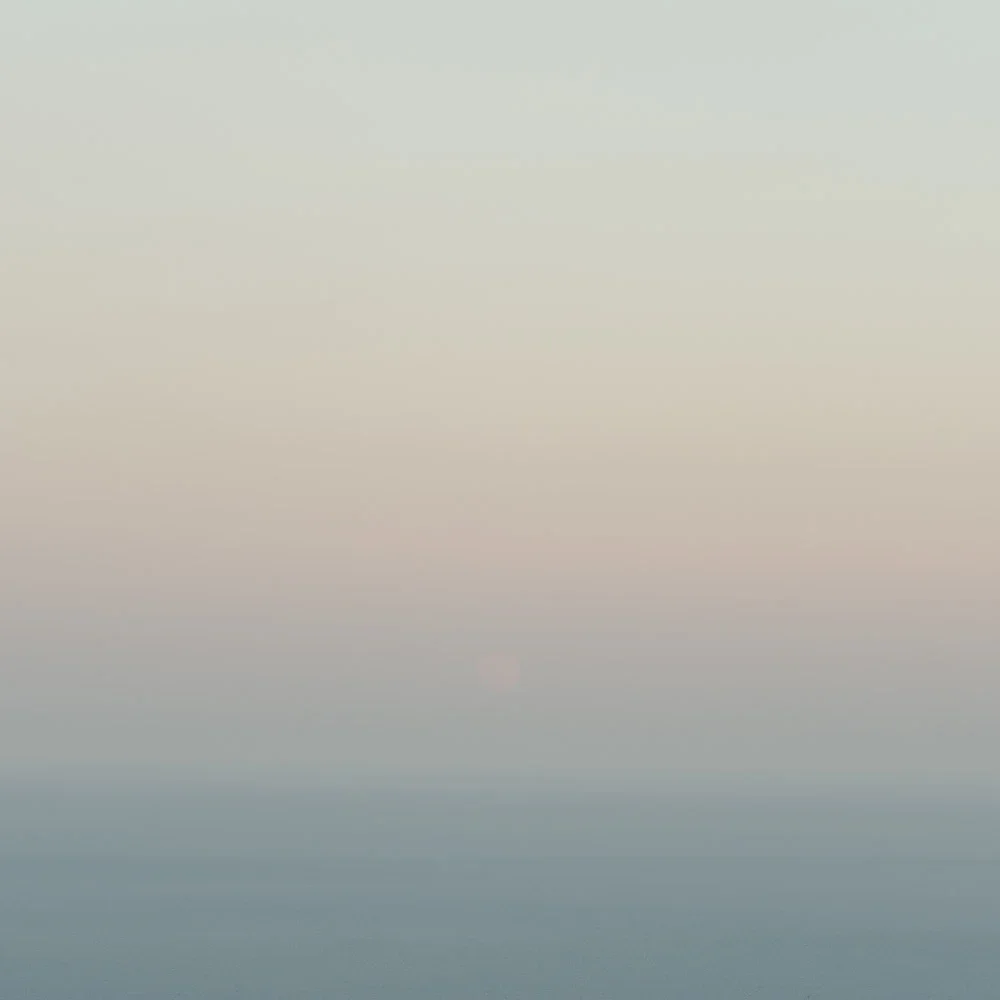
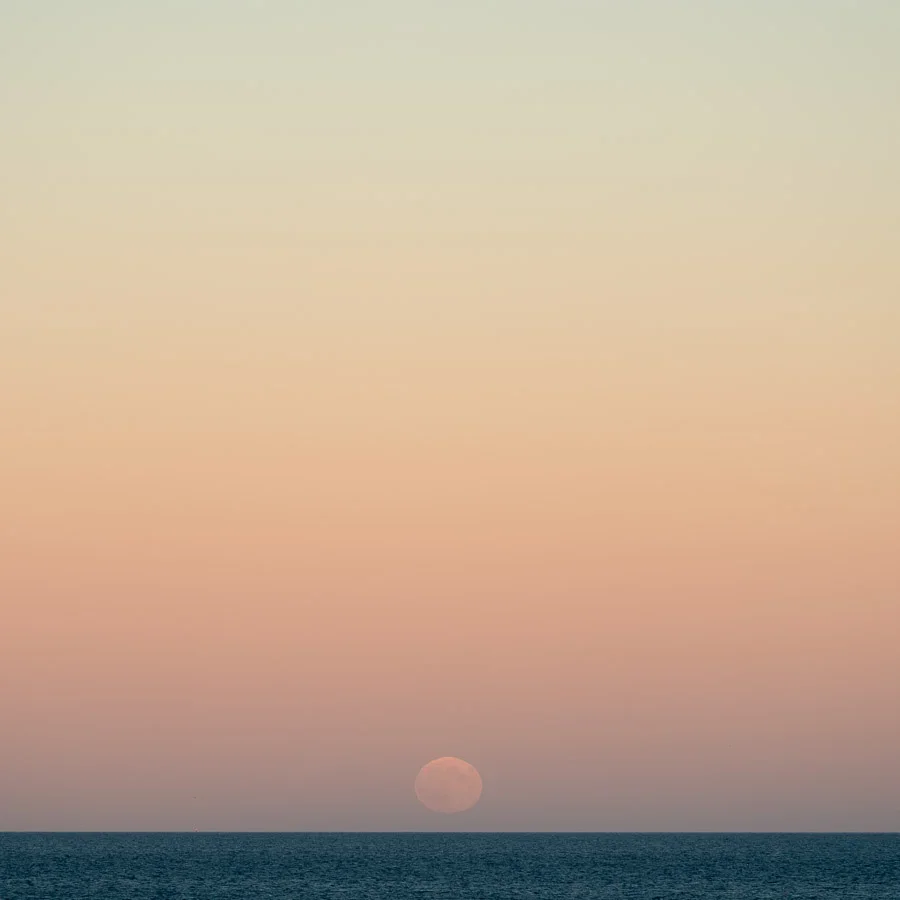
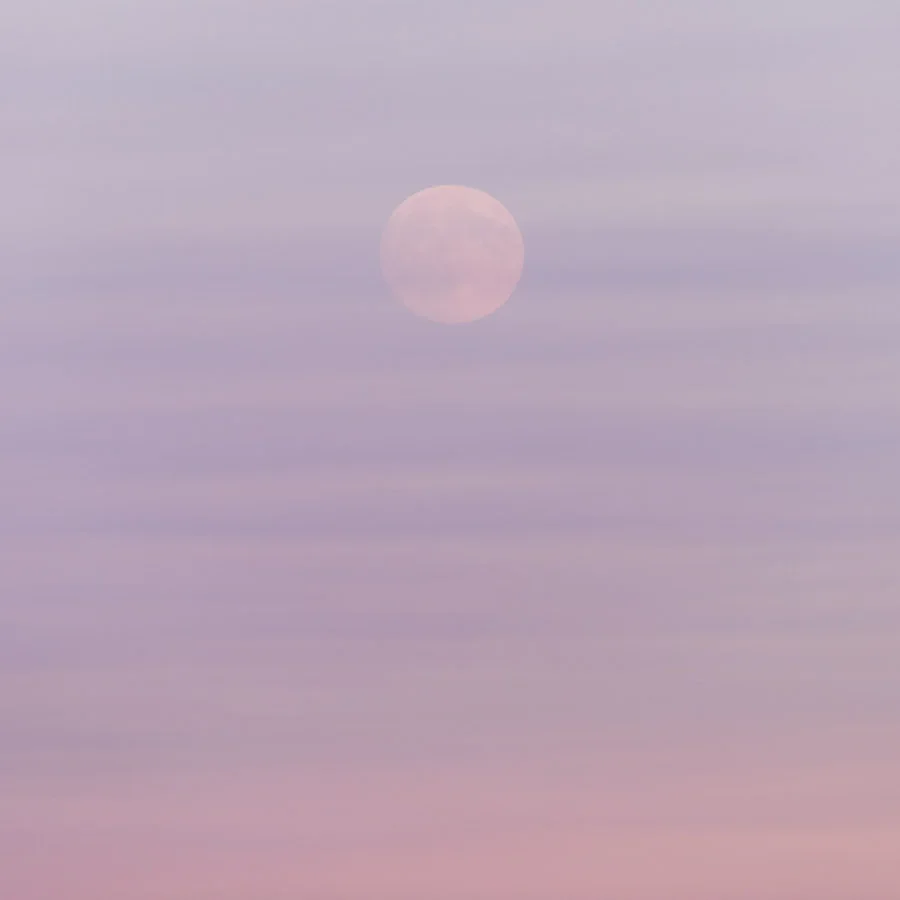
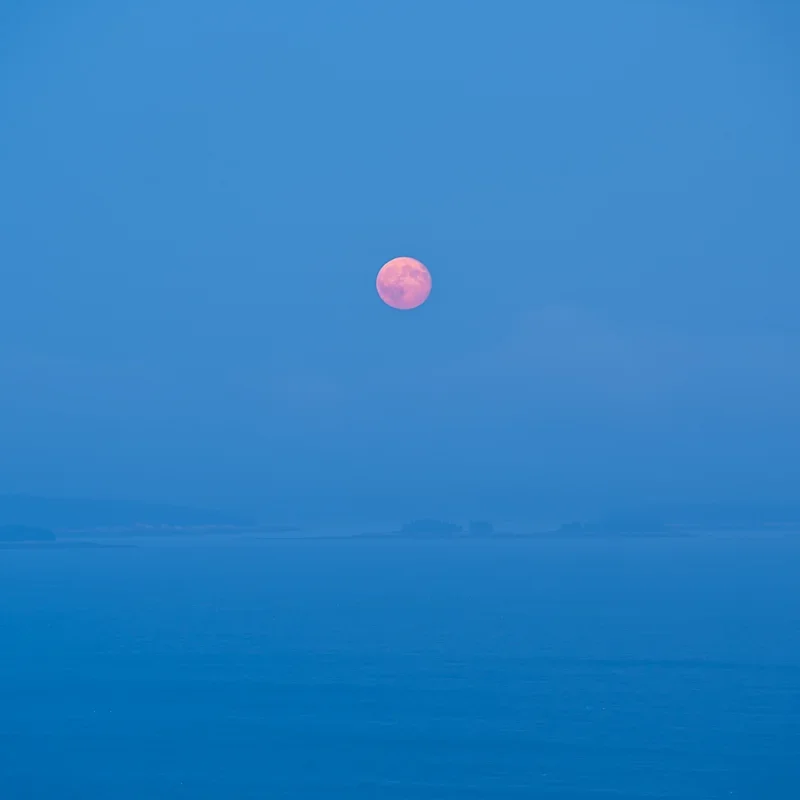
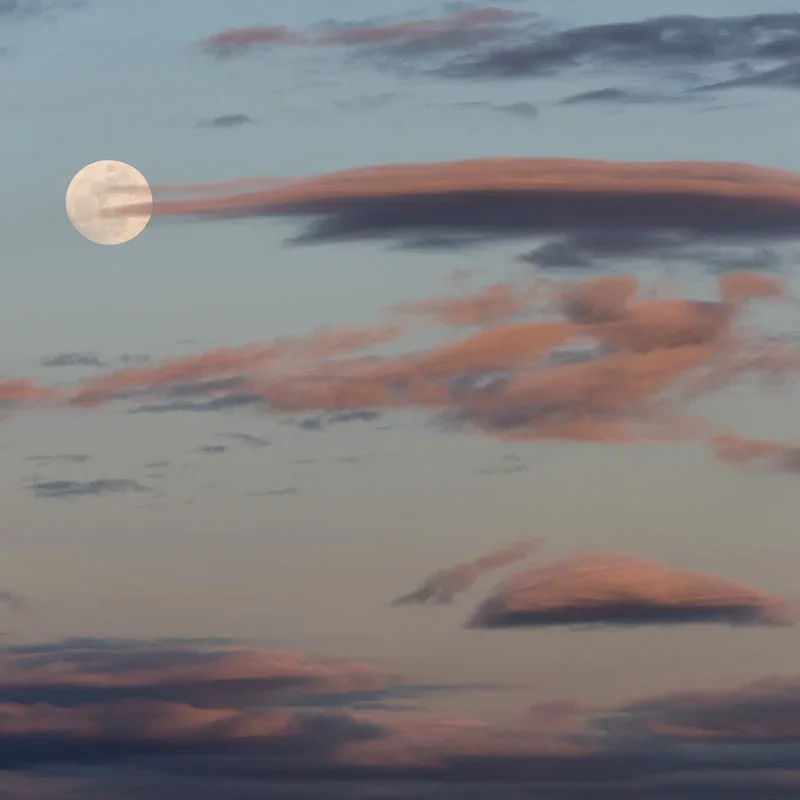
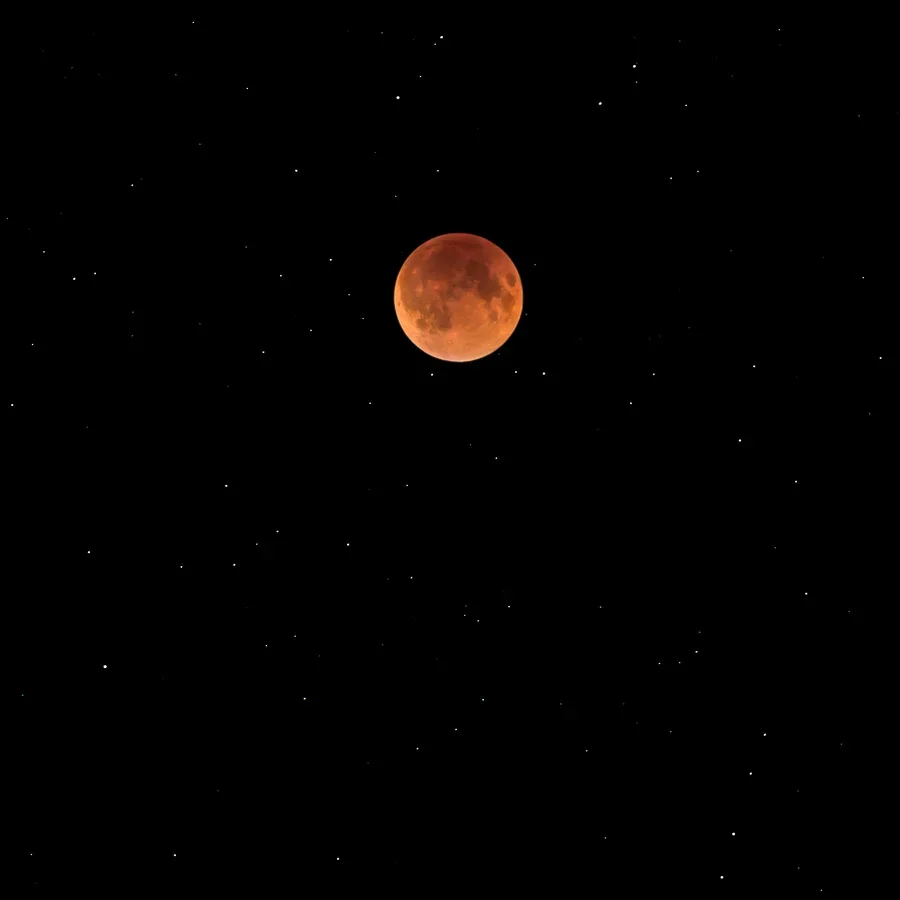
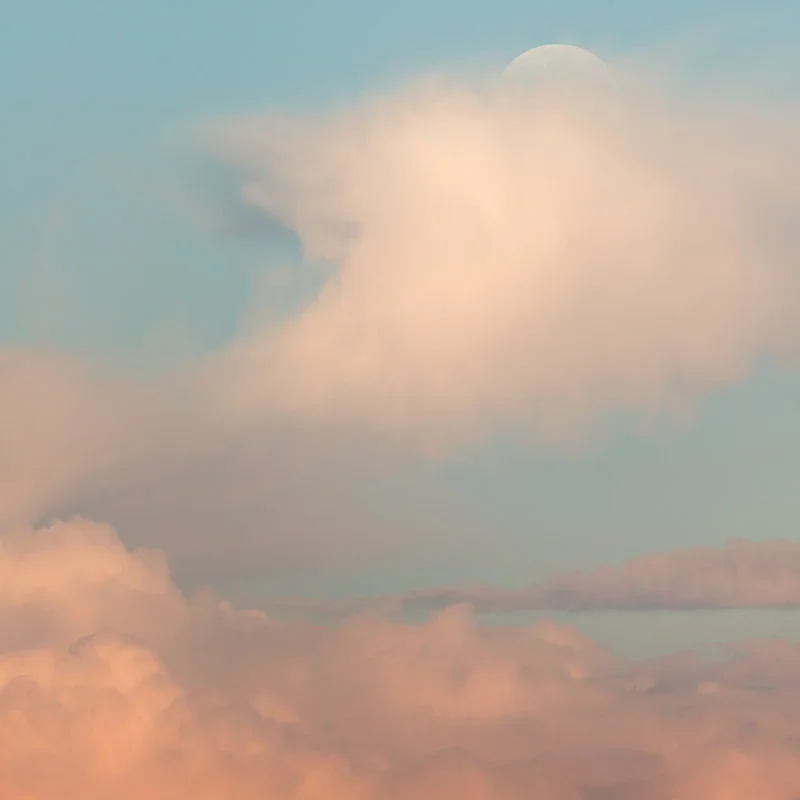
Jim Nickelson, Moon Of the Ripening 1, 1/8, 2011, Archival Pigment Print, 24 x 24 inches, $1,400
My Adventures in Celestial Mechanics project is based on my quest to capture each full moon of the year, at moonrise or moonset, from somewhere in the Maine landscape. The project name derives from the delightfully-named textbook (written by my professor, Dr. Szebehely) that captured the beauty and majesty of the equations underlying orbital mechanics. For moonrise of the full moon results from an important phase of the celestial dance between the Earth, Sun, and Moon – when all three bodies are aligned and one can stand on the Earth with the sunset at your back and moon rising right in front of you. (Moonset results from a similar alignment at sunrise).
The fascinating names of each full moon, each rooted in the history of the land and its peoples, provide further inspiration for my endeavors.
Moonrise and the cycles of the moon happen endlessly, month after month, year after year, and their repetitive nature results in many becoming numb to the magic of the moon hanging above. With this project, I hope to reignite in viewers a passion and interest in the passage of the moon through the sky and its importance to peoples throughout history, just as this project has reignited those same passions in myself.
In my aerospace engineering program, the workload was relentless with homework in each class every night. Notwithstanding that, Dr. Szebehely had a long-running joke where he refused to give us any homework on the night of a full moon as he would instead tell us with his thick Hungarian accent: “No homework tonight. It is full moon. You have more important things to do.” I’m not sure I did then, but I certainly do now – every full moon now finds me out there with tripod and camera, seeking out the rising or setting moon. - J.N.
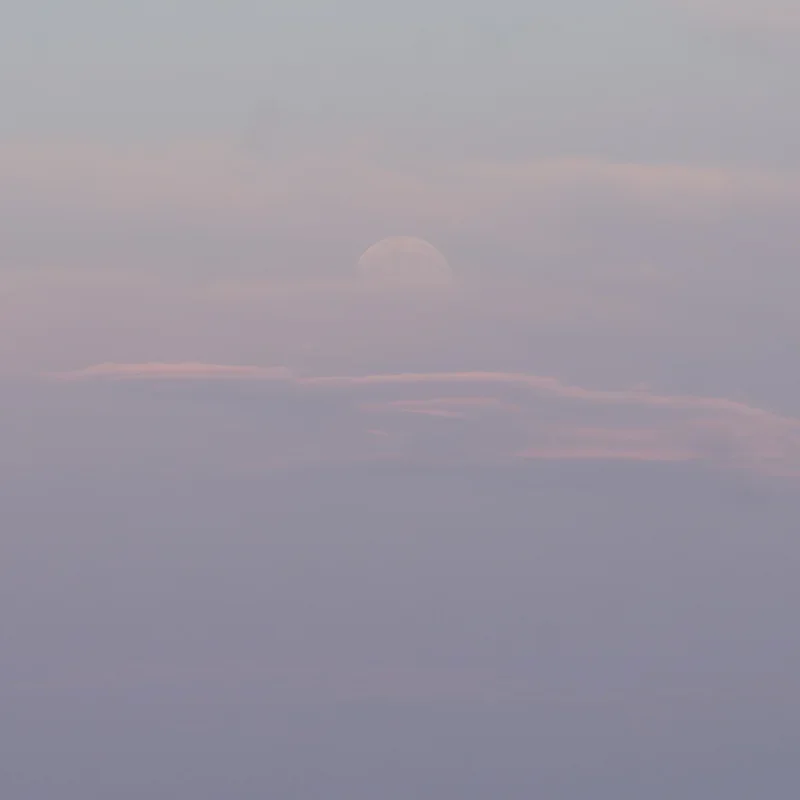
Barry Morse
This audio accompaniment to the “Home + Place” photographic exhibition is a kind of “soundscape” composition. Soundscapes were defined and promoted by Canadian composer R. Murray Schafer (1933-2021) as exercises to encourage people to really hear the surrounding environment as well as to record for posterity the sounds that make each place unique before societal and industrial change render them extinct. Two challenges facing the composition for this show were: 1. What does “home” sound like and 2. How to support the visuals without becoming the object of attention. In the first case since “home” usually implies human interactions of family and friends, at least to me, many excepts from old movies of families conversing, arguing, celebrating, etc. were originally inserted. This idea was dropped in favor of simple household sounds as being too literal. The second challenge was answered by removing many “noises” and “sound effects” which perhaps threatened to draw one’s attention in a not so positive way. These noises, voices and electronic manipulations are a hallmark of musique concrete, or ‘tape music” technique, attributed to composer Pierre Schaeffer (1910-1995). (This original version can be heard on my Bandcamp site). The resulting compromise as performed in this exhibition is an “ambient” version, that is, as according to composer Brian Eno’s (b. 1948) definition of the term, “is as interesting to listen to as to ignore,” or better yet is more akin to Eric Satie’s (1866-1925) “furniture music.” Like some of the best film music, the sounds, it is hoped, will support the photographic artwork subliminally without calling undo attention to itself.
Barry Morse (b. 1961), a native of Maine, is a composer of soundscapes and electronic music with recordings found online at Bandcamp. In 2023 he composed the soundscape installation for the Maine Museum of Photographic Arts “Spiritual Ecology” exhibition. With graduate degrees in Music Composition and Landscape Architecture he has written about the synthesis of the two art forms. His Landscape Architecture Master’s thesis, Indeterminacy, the I Ching and John Cage, A New Design Method for Landscape Architecture was published in book form by Jenny Stanford Publishing earlier this year.
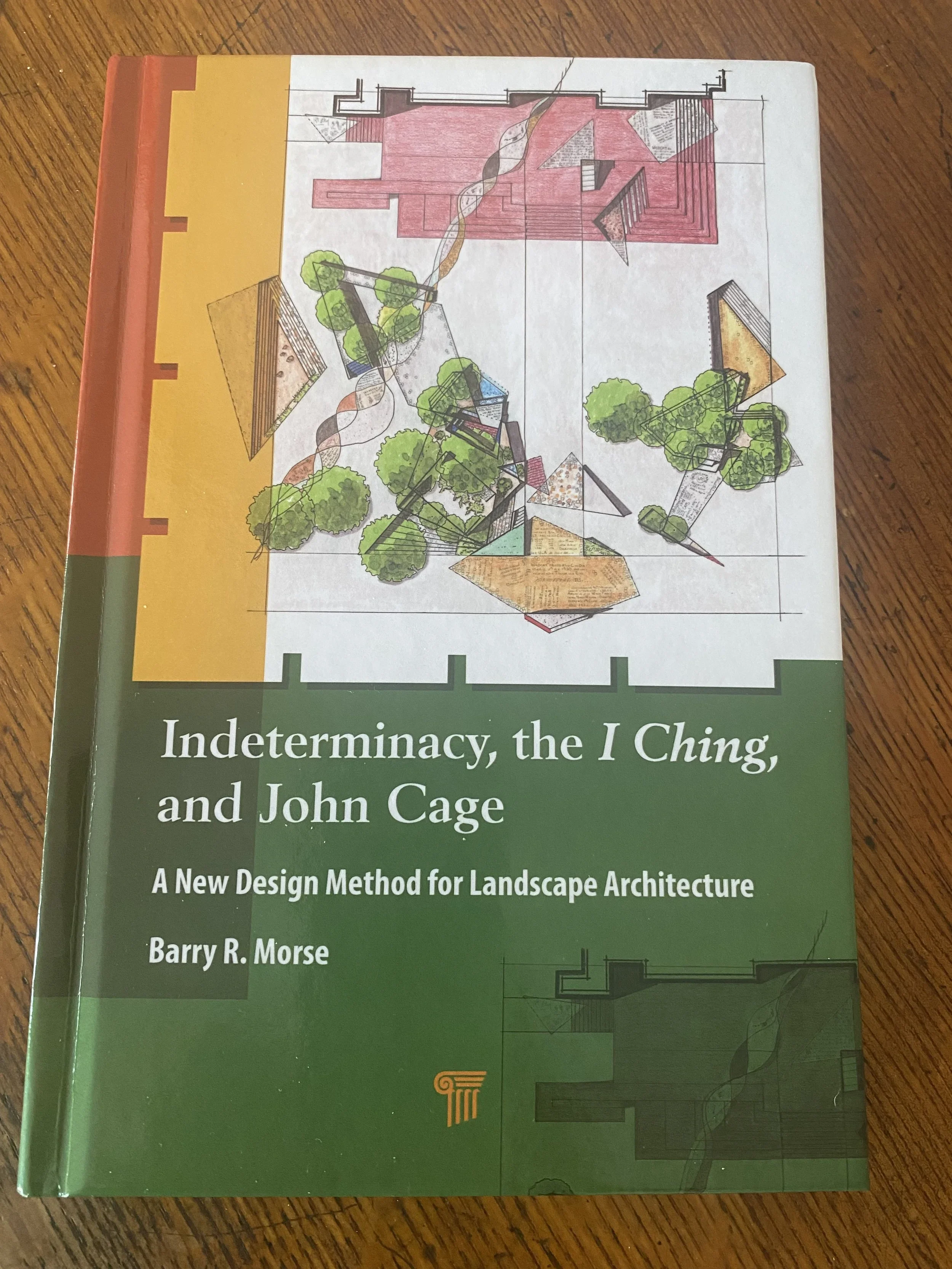
Barry R. Morse, Indeterminacy, the I Ching, and John Cage, A New Design Method for Landscape Architecture, 2025, Hard-Cover, 218 pages, 6 x 0.56 x 9 inches, Price to be Decided
The creative use of indeterminacy, that is, “chance,” is an often-overlooked design opportunity despite the universality of chance in art, nature, science, and life. How can “chance,” a seemingly capricious phenomenon, be made to work for someone? One controlled use of chance is through the Chinese I Ching “chance operations” method of composer and artist John Cage (1912–1992). This book addresses the questions of how one might approach using this method in landscape architectural design, what the outcome of such an indeterminate design would be, and whether or not it could lead to a viable constructed landscape.
In addition, this book answers the question: What is the relationship between the I Ching, John Cage, and the constructed landscape anyway? The final product of the exploration of this method is a new hypothetical redesign of an existing plaza using Cage’s techniques and a comparative evaluation of the new indeterminate concept and the two pre-existing designs, using the original program objectives as a guide against which the three designs can be judged for effectiveness.